
How to Cook Basmati Rice on the Stove: 3 Methods That Work
Why basmati needs its own method
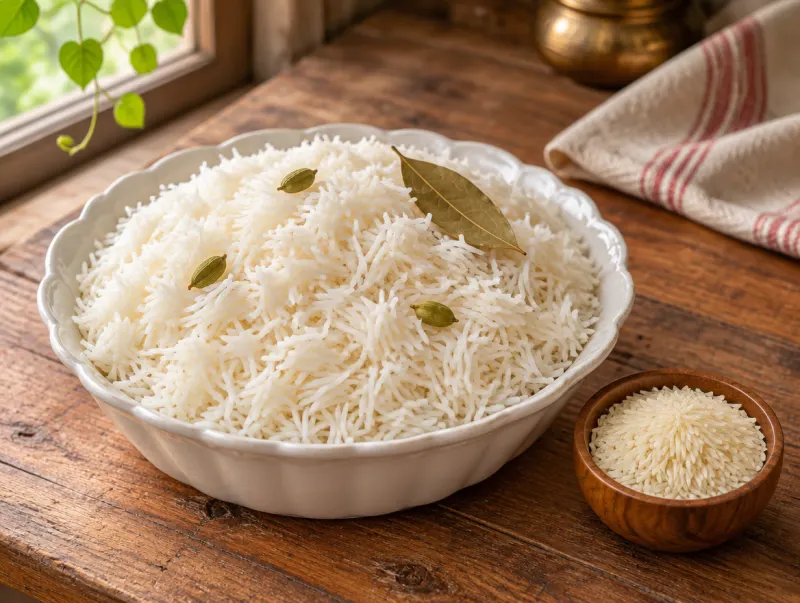
Basmati is a long, slender grain grown in the foothills of the Himalayas in India and Pakistan. Good basmati is aged before it is sold, which dries the grain and lets it grow long and stay separate when cooked. That is what you want: tall, fluffy grains that do not stick together, with the light floral smell basmati is known for.
Treat it like ordinary long-grain rice and it can turn out sticky, broken or chalky in the middle. Three things decide the result: how much starch you rinse off, how much water the grain gets, and how gently you treat it at the end. Everything below comes back to those three.
There are three reliable ways to cook it on the stove, and each suits a different kind of meal.
| Method | Best for | Water | Texture |
|---|---|---|---|
| Absorption (covered pot) | Everyday rice with curries and stews | Measured: 1 : 1.5 by volume, or 1 : 1.25 if soaked | Soft, fluffy, separate |
| Boil and drain | Biryani, zurbian and other layered rice dishes | Lots: at least 6 times the rice | Firm, very separate, par-cooked |
| Pilaf (fried first) | Pulao, rice served with grills | Measured, usually stock | Nutty, glossy, separate |
Method 1: the absorption method (everyday rice)
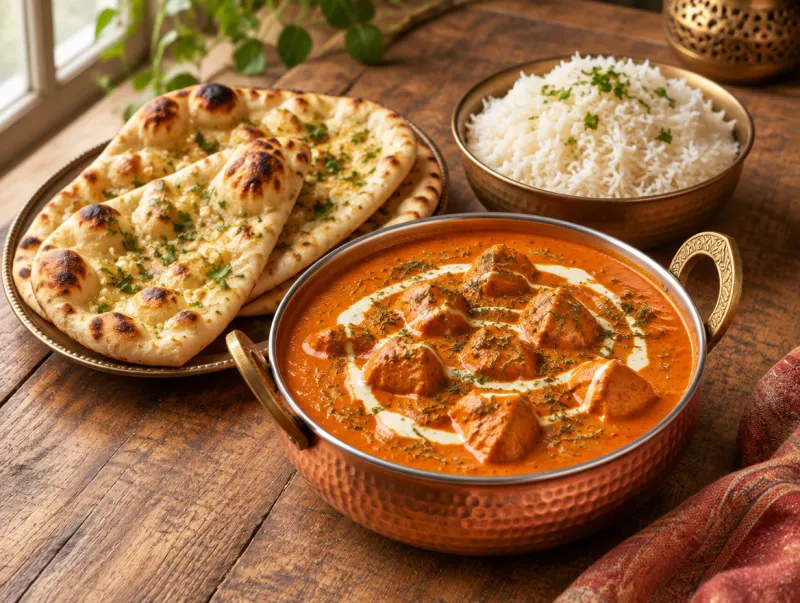
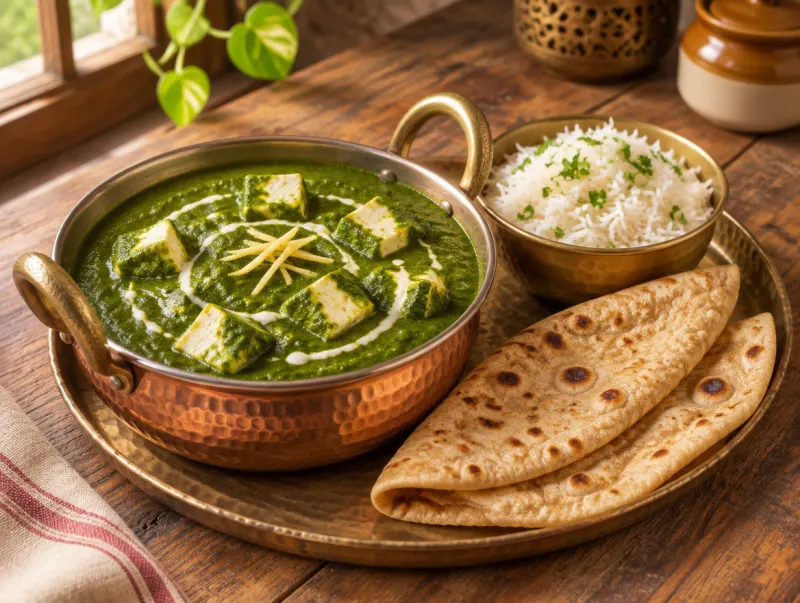
This is the method to use when you want a pot of plain rice next to a curry like butter chicken or palak paneer.
- Rinse. Put the rice in a bowl, cover with cold water, swirl with your hand and pour off the cloudy water. Repeat three or four times until the water is almost clear. This removes loose surface starch, the main cause of sticky rice.
- Soak (optional). Cover with fresh water and leave for 20 to 30 minutes, then drain well. Soaked grains cook more evenly and grow longer. If you soak, use less water in the pot.
- Measure the water. Use the same cup for rice and water. For unsoaked rice use 1.5 cups of water per cup of rice. For soaked, drained rice use about 1.25 cups. Add a pinch of salt and, if you like, a teaspoon of butter, ghee or oil.
- Bring to a boil, then cover. Bring the pot to a boil uncovered, then put on a tight lid and turn the heat to the lowest setting.
- Cook. Leave it alone for 12 to 15 minutes. Do not lift the lid or stir: the steam is doing the cooking.
- Rest. Take the pot off the heat and leave the lid on for 10 minutes. The grains firm up and the last moisture spreads through the pot.
- Fluff gently. Use a fork or a flat rice paddle and lift the rice from the bottom rather than stirring it.
A 250 ml cup of basmati is about 200 g and is enough for two to three people as a side.
Method 2: boil and drain (for biryani and layered rice)
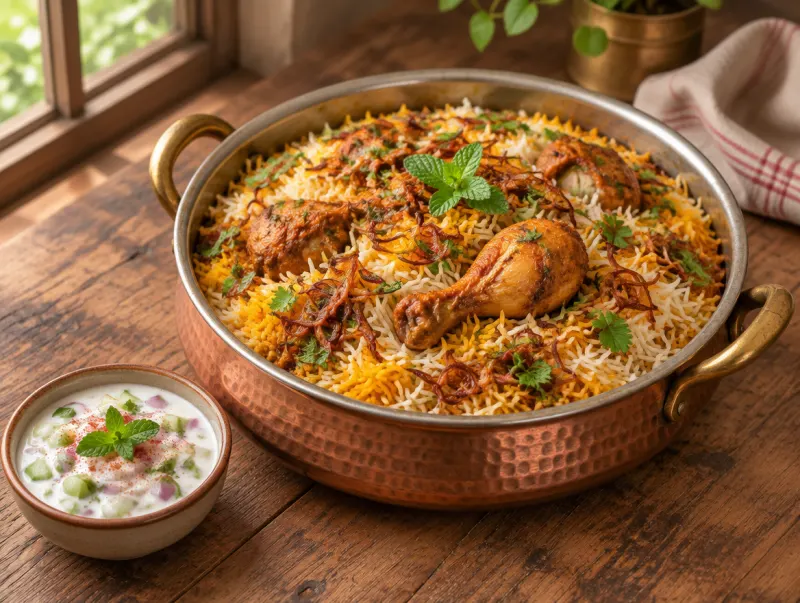
This is how rice is usually handled for dishes where it finishes cooking on top of meat or sauce, like Hyderabadi chicken biryani or Yemeni zurbian. It is the most forgiving method, because you do not need an exact ratio.
- Rinse and soak the rice for 30 minutes.
- Bring a large pot of water to a rolling boil, at least six times the volume of the rice. Salt it well, so it tastes pleasantly salty. Whole spices such as green cardamom, cloves, bay leaf and a cinnamon stick go in here for biryani.
- Add the drained rice and boil uncovered. Start testing after 4 minutes.
- For a layered dish, drain when the grain is about 70 to 80 percent cooked: soft outside, with a firm, thin core when you bite it. It will finish cooking under the lid on top of the meat. For plain rice, boil until fully tender, about 8 to 10 minutes in total.
- Drain in a colander and use straight away, or return plain rice to the pot, cover and leave it for 5 minutes to dry slightly.
Method 3: the pilaf method (rice fried in fat first)
For pulao and rice served alongside grilled meat, many cooks fry the rice before adding liquid. Heat a tablespoon or two of ghee or oil, fry a sliced onion or a few whole spices for a minute, then add the rinsed, drained rice and stir gently for two to three minutes until the grains turn opaque and smell toasty. Add hot water or stock in the same ratio as the absorption method, bring to a boil, cover, cook on the lowest heat for 12 to 15 minutes and rest for 10.
Coating the grains in fat helps keep them separate and gives a nuttier taste. It is a good choice when the rice is the star of the plate rather than a background for a sauce.
Basmati rice water ratio at a glance
The right amount of water depends on the rice as much as on the method. Newly harvested rice holds more moisture and needs less water; well-aged rice is drier and can take more. Brands vary, so treat these as starting points and adjust by a few tablespoons next time.
| Rice | Water per 1 cup of rice | Cook covered on low | Rest |
|---|---|---|---|
| White basmati, rinsed, not soaked | 1.5 cups | 12 to 15 min | 10 min |
| White basmati, soaked 20 to 30 min | 1.25 cups | 10 to 12 min | 10 min |
| Brown basmati, rinsed | 2 to 2.25 cups | 35 to 40 min | 10 min |
| Boil and drain (any white basmati) | Plenty, at least 6 cups | Uncovered, 4 to 10 min | Drain |
How to fix common basmati problems
| Problem | Likely cause | Fix next time |
|---|---|---|
| Sticky or gluey rice | Not rinsed enough, too much water, or stirred while cooking | Rinse until the water is nearly clear, cut the water a little, do not stir |
| Hard or chalky centre | Too little water, heat too high so the water boiled off, or not rested | Add 2 to 3 tbsp hot water, cover and steam 5 more minutes on the lowest heat |
| Broken grains | Stirred hard, fluffed with a spoon, or rubbed too roughly while rinsing | Swirl gently when rinsing, lift with a fork or paddle |
| Burnt bottom | Heat too high, thin pot | Use a heavy pot and the lowest heat, or set the pot on a heat diffuser |
| Bland rice | No salt in the water | Salt the cooking water, especially for the boil-and-drain method |
If the rice is already cooked and a little wet, take the lid off and leave it on the lowest heat for two or three minutes so the steam can escape, then rest it covered with a clean tea towel under the lid.
What to serve with basmati rice
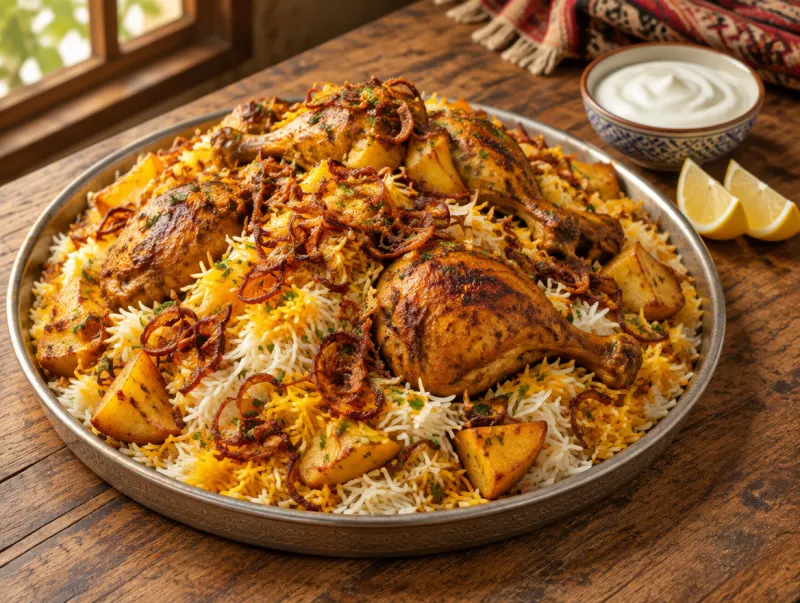
Plain basmati is made for dishes with plenty of sauce. It is the usual partner for Indian curries such as butter chicken and palak paneer, where the separate grains soak up the gravy without going mushy. In the Gulf and Yemen, basmati is the base of festive rice dishes like zurbian, where it steams on top of spiced meat and potatoes.
FAQ
What is the water ratio for basmati rice on the stove?
Use 1.5 cups of water for every cup of rinsed, unsoaked white basmati, measured with the same cup. If you soaked the rice for 20 to 30 minutes, drop to about 1.25 cups, because the grains have already taken up some water.
Do you have to soak basmati rice?
No, but it helps. Soaking for 20 to 30 minutes lets the grains cook more evenly and grow longer, which matters most for biryani. If you skip soaking, use the higher water ratio and rest the rice for the full 10 minutes.
Why is my basmati rice sticky?
Usually because surface starch was not rinsed off, there was too much water, or the rice was stirred while it cooked. Rinse until the water is nearly clear, measure the water, and leave the lid on without stirring.
How long does basmati rice take to cook?
White basmati takes 12 to 15 minutes covered on low heat, plus 10 minutes resting off the heat. Soaked rice is a few minutes quicker. Brown basmati needs 35 to 40 minutes.
Should you salt basmati rice water?
Yes. A pinch is enough for the absorption method. For the boil-and-drain method salt the water generously, since most of it is poured away.
 India
 Yemen