

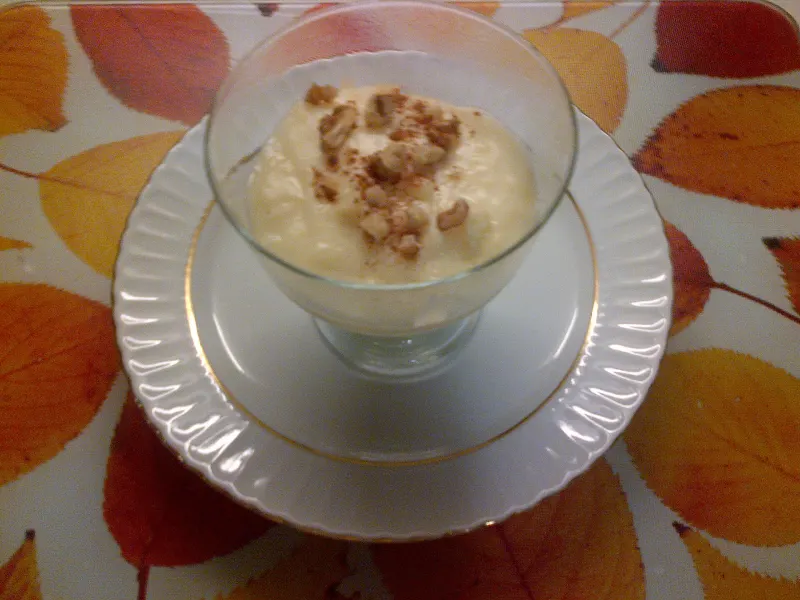
Keşkül Recipe: Turkish Almond Milk Pudding
 Turkey
Keşkül is a Turkish milk pudding flavoured with ground almonds, thickened with rice flour and served cold in small bowls, usually under a snow of ground pistachios. It belongs to the family of Ottoman milk desserts alongside sütlaç and muhallebi, and it is sold in every muhallebici (pudding shop) in Istanbul.
Prep 10 min · Cook 20 min · Dessert
Method
- Step 1 of 8
Mix the cold base
Pour about 200 ml of the cold milk into a bowl and whisk in the rice flour and the egg yolk until completely smooth, with no dry specks. Starting cold is what keeps keşkül free of lumps.
You needwhole milkrice flouregg yolk - Step 2 of 8 · 6 min
Warm the rest of the milk
Put the remaining milk, the sugar, the ground blanched almonds and the pinch of salt in a heavy saucepan over medium heat. Stir until the sugar dissolves and the milk is steaming and just starting to bubble at the edges.
You needwhole milksugarground blanched almondssaltslivered almonds - Step 3 of 8
Whisk in the rice flour mix
Whisk the rice flour mixture once more, then pour it into the hot almond milk in a thin stream, whisking all the time so the starch spreads evenly before it thickens.
You needwhole milkground blanched almondsrice flourslivered almonds - Step 4 of 8 · 12 min
Cook and stir until thick
Turn the heat to medium-low and stir constantly with a wooden spoon or spatula, scraping the bottom and corners. The pudding thickens gradually, then bubbles slowly. It is ready when it coats the spoon thickly and a line drawn through it holds for a moment.
- Step 5 of 8
Whisk until silky
Take the pan off the heat and whisk hard for about a minute. This smooths out any small lumps and gives the pudding its glossy, silky finish. It should still pour.
- Step 6 of 8 · 30 min
Pour into bowls
Ladle the hot pudding into 6 small bowls. Tap each one on the counter to level the top. Leave them uncovered until they stop steaming so no water drips back onto the surface.
- Step 7 of 8 · 3 h
Chill until set
Cover the cooled bowls and chill them in the fridge until the pudding is cold and softly set all the way through.
- Step 8 of 8
Finish and serve
Just before serving, scatter the ground pistachios thickly over each bowl and add a few toasted slivered almonds. Serve the keşkül cold.
You needground blanched almondspistachiosslivered almonds
About this dish
Its full name, keşkül-ü fukara, refers to the bowl that wandering dervishes carried, and the dessert is still served in a bowl rather than turned out. Almonds make it richer and nuttier than plain muhallebi, and a single egg yolk gives the pale ivory colour and a softer, custard-like body.
The method is short but needs your attention. Whisk the rice flour into cold milk first so it cannot form lumps, then stir without stopping as it heats. Take it off the moment it coats a spoon thickly: keşkül sets firmer as it cools, so it should still flow when you pour it into the bowls.
Tips
- Grind the almonds as finely as you can. Fine almond flour gives a smooth pudding; coarse almonds give a pleasant grain, but they sink a little.
- Do not stop stirring once the rice flour goes in. The starch catches on the bottom of the pan within seconds and burnt milk flavours the whole batch.
- Judge it by the spoon, not the pan. Keşkül firms a lot as it chills, so take it off while it still flows like a thick custard.
- For extra almond flavour, soak whole blanched almonds overnight, blend them with some of the milk and strain the almond milk into the pan instead of using ground almonds.
Variations
- Coconut keşkül: many modern Turkish home recipes add 2 tbsp desiccated coconut with the almonds and scatter more on top.
- Without egg: leave out the yolk and add 1 extra tbsp rice flour. The pudding is whiter and a little firmer.
- Hazelnut keşkül: a Black Sea style swap of ground hazelnuts for the almonds.
- Wheat starch: some cooks thicken with wheat starch instead of rice flour for a denser, firmer set; it is then no longer gluten-free.
Storing and reheating
Keeps 3 days covered in the fridge. Add the pistachios just before serving so they stay green and crisp. It does not freeze well; the texture turns grainy.
What to serve with it
- Turkish tea or Turkish coffee
- On its own, after a meal or as an afternoon sweet
Questions
What is keşkül made of?
Keşkül is made from milk, sugar, ground almonds and rice flour, which thickens it. Many recipes add an egg yolk for colour and a softer set. It is served cold in bowls, topped with ground pistachios or slivered almonds, sometimes with coconut.
What is the difference between keşkül and sütlaç?
Sütlaç is Turkish rice pudding, made with whole cooked rice grains and often browned on top in the oven. Keşkül uses rice flour and ground almonds instead, so it is smooth, nutty and pale, and it is never baked.
What does keşkül-ü fukara mean?
It is the full traditional name of the dessert. Keşkül is the bowl carried by wandering dervishes, and fukara means the poor, so the name points to that bowl. Today keşkül and keşkül-ü fukara mean the same almond pudding.
Why is my keşkül lumpy?
Lumps form when rice flour hits hot milk directly or when the pudding is not stirred while it thickens. Always whisk the rice flour into cold milk first, pour it in slowly, stir constantly, and whisk hard off the heat at the end.
Is keşkül gluten-free?
Yes, as written. Rice flour, almonds, milk, sugar and egg contain no gluten. It stops being gluten-free if you thicken it with wheat starch, which some Turkish recipes use, so check the starch you buy.
 Yemen
 Saudi Arabia