

AI Recipe Generator from Ingredients: Get Recipes That Work
What an AI recipe generator actually does
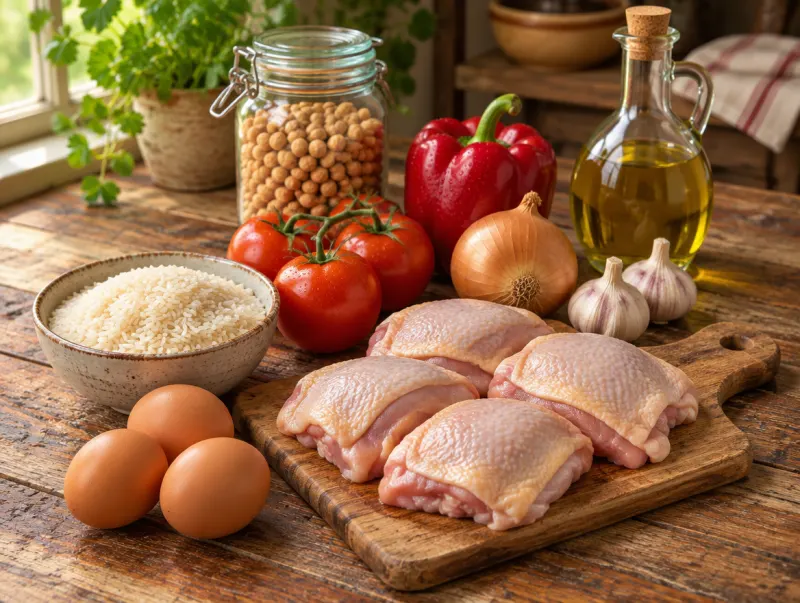
You type what is in your fridge, say chicken thighs, rice, an onion and half a tin of tomatoes, and the tool returns a dish name, an ingredient list with amounts, and numbered steps. Most also let you add a cuisine, a diet or a time limit.
Behind the page is a language model. It has read a huge amount of food writing, so it is very good at producing text that looks like a recipe: the right order of steps, believable amounts, familiar flavour pairings. What it does not do is cook. Nobody has made the dish it just wrote, tasted it, or checked that the rice is done when step 6 says it is.
That is the honest trade-off. You get a recipe shaped exactly around your ingredients, instantly. In exchange, you are the first tester. Which dishes that works for, and which it does not, is covered in are ChatGPT recipes reliable?.
Two ways to cook from what you have
There are two different tools that people search for with the same words, and it helps to know which one you are using.
| AI recipe generator | Ingredient recipe finder | |
|---|---|---|
| What it gives you | A new recipe written for your list | Existing recipes that use your ingredients |
| Has the dish been cooked before? | No, it is generated on the spot | Yes, it is a written and tested recipe |
| Uses all your ingredients? | Usually, even odd combinations | Only the recipes that fit |
| Best for | Odd leftovers, ideas, strict diets | A dependable dinner tonight |
| Main risk | Wrong quantities or times | Missing one or two ingredients |
Srbiny's What can I cook? page is the second kind. It is not AI: you add the ingredients you have, and it shows recipes from this site that use them, with what you are still missing. The ingredient pages work the same way, for example recipes with eggs, chicken, chickpeas and rice.
Many people use both: a finder first, and an AI generator when nothing on the list fits.
How to get a better recipe out of an AI generator
The answer is only as good as the request. A few habits make a big difference.
- List amounts, not just foods. "500 g chicken thighs, 2 cups rice, 1 onion" gets you a recipe that uses what you actually have, instead of one that quietly needs a whole extra kilo.
- Say what you do not have. No oven, no blender, only one pan, no fresh herbs. Generators assume a full kitchen unless told otherwise.
- Name the staples you keep. Salt, oil, garlic, soy sauce, spices. Otherwise the tool either skips them or adds things you need to buy.
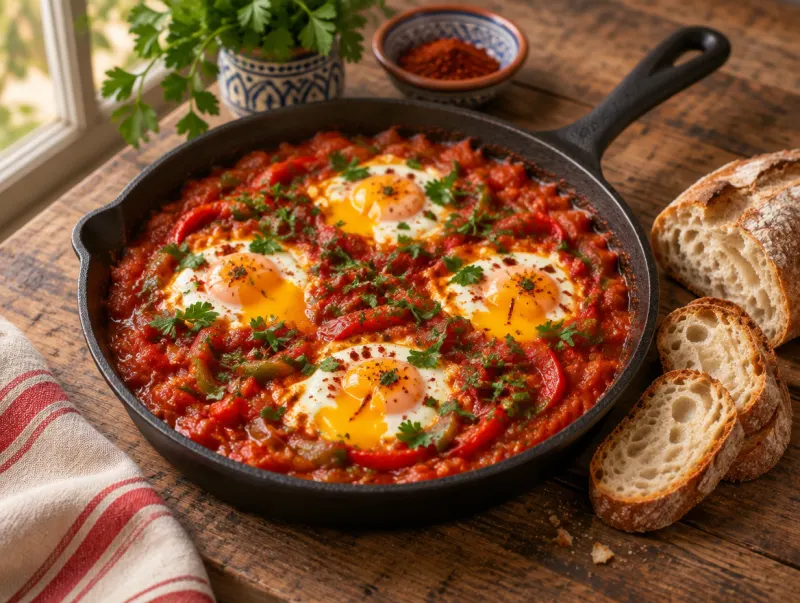
- Ask for a known dish when one fits. "Make me a shakshuka with these" usually gives a sounder result than "invent something", because the model leans on many real versions of a real dish.
- Ask it to explain the doneness cues. "How do I know the chicken is cooked?" pushes the recipe toward checks you can see and smell, not just minutes.
That fourth point matters most. Eggs, tomatoes, peppers and onion are the base of a classic shakshuka and of Turkish menemen. If those are what you have, a tested version of either is a safer bet than a brand-new invention.
Check the recipe before you cook
Read the whole thing once before you turn on the stove. These are the mistakes that show up most often in generated recipes, and they are easy to catch.
| Check | What to look for |
|---|---|
| Liquid for grains | Rice and other grains need roughly the right amount of liquid for the type. Too little and it burns, too much and it turns to mush |
| Cooking times | Times that look too short for the cut, such as bone-in chicken "done" in 10 minutes |
| Meat and eggs | A clear sign of doneness, and a thermometer reading if the recipe gives one |
| Baking | Cakes, bread and pastry depend on exact ratios; treat generated baking recipes with extra care |
| Salt | Salt added several times in different forms, for example stock cubes, soy sauce and salt together |
| Missing steps | An ingredient in the list that is never used, or a step that uses something not on the list |
Baking is where generated recipes fail hardest, because there is little room for error. A pizza dough, for example, depends on the ratio of flour, water, salt and yeast, and a tested margherita pizza recipe gives you weighed amounts and a rise you can check by eye.
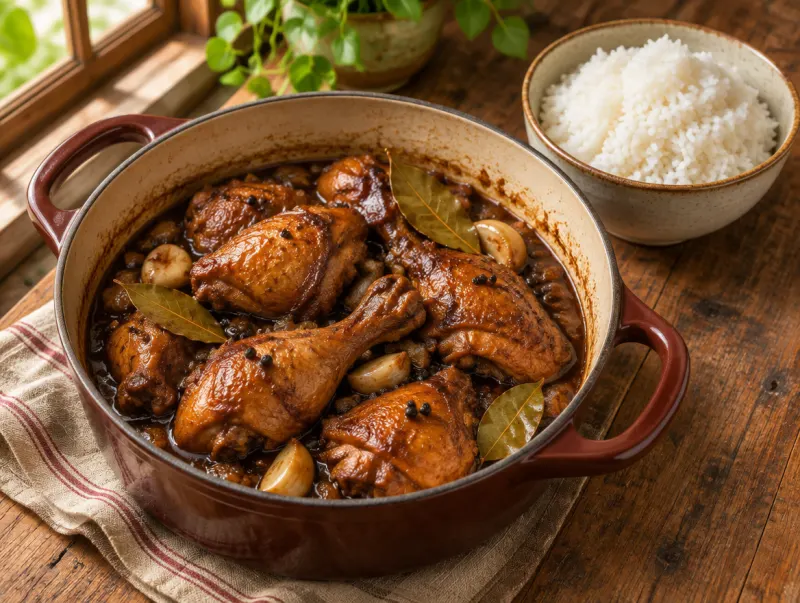
Savoury stews and braises are far more forgiving. Chicken thighs, garlic, vinegar and soy sauce, for instance, already make Filipino chicken adobo, one of the most pantry-friendly dishes there is.
When a tested recipe is the better choice
Use an AI generator when your ingredients are unusual, when you need to stretch leftovers, or when you want to explore. Choose a tested recipe when:
- You are cooking for guests or for someone with an allergy.
- The dish is baked, fried in deep oil, or involves raw or lightly cooked fish, meat or eggs.
- You are learning a dish for the first time and want to know what "right" tastes like.
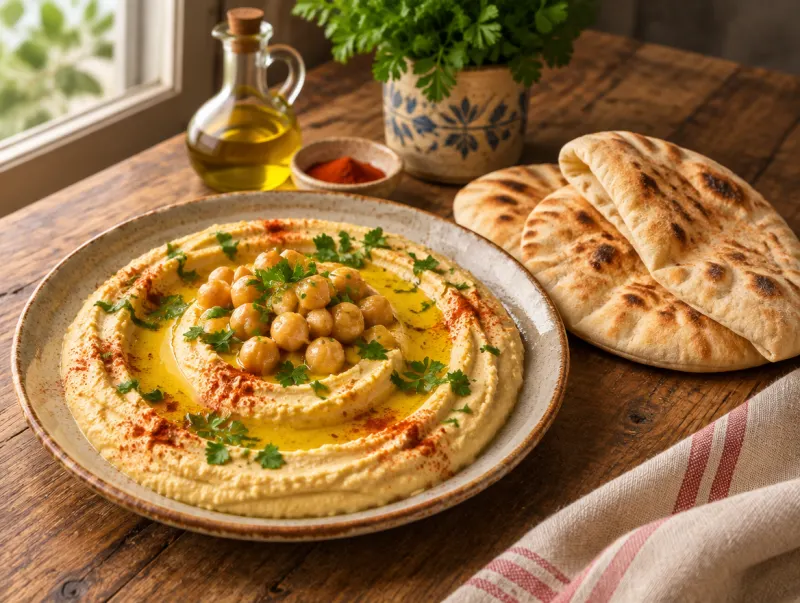
- The cuisine has a classic version people care about. A generated "hummus" may skip the step that makes it smooth; a tested hummus from dried chickpeas explains why you cook the chickpeas with baking soda.
A good middle path is to start from a tested recipe and ask an AI tool to adapt it: halve it, swap an ingredient you lack, or make it in one pan. You keep the proven base and still get the flexibility.
Do AI recipe generators get nutrition right?
Treat any calorie or protein numbers from a chat tool with caution. They are estimates written by a language model, not calculated from a food database, and they can be far off. On Srbiny, every recipe's nutrition panel is calculated from USDA FoodData Central values for each ingredient as written, so you can see where the numbers come from.
FAQ
Is there a free AI recipe generator from ingredients?
Yes, several websites and chat assistants will write a recipe from a list of ingredients at no cost, usually with limits on daily use. Check each site's current terms, and read the recipe through before you cook it.
Can an AI recipe generator use only the ingredients I have?
It can try, but you have to say so clearly. List the staples you keep, such as salt, oil and spices, and ask it not to add anything else. Without that, many tools add an ingredient or two you need to buy.
Are AI-generated recipes safe to cook?
Most savoury recipes are fine if you check them, but nobody has tested them. Look for clear doneness cues for meat, poultry and eggs, sensible cooking times, and the right amount of liquid for grains. Be extra careful with baking, deep frying and allergies.
What is the difference between an AI recipe generator and a recipe finder?
A generator writes a new recipe for your ingredients. A finder searches existing recipes and shows the ones you can make. Srbiny's What can I cook? page is a finder: it matches what you have against tested recipes and shows what is missing.
What should I make with eggs, tomatoes and peppers?
Shakshuka or menemen. Both are classic dishes built on exactly those ingredients, with an onion and a little oil, and both are ready in under an hour.
 Tunisia
 Philippines
 Lebanon

 Italy