

Are ChatGPT Recipes Reliable? What Works and What Fails
The short answer
A chat assistant writes a recipe the way it writes everything else: by predicting text that looks right. It has read a vast amount of cooking writing, so the result usually reads like a real recipe, with sensible ingredients in a sensible order. Most of the time it is close.
"Close" is the problem. A recipe is a set of instructions where small numbers matter. A stew forgives a wrong number. A cake does not. The recipe also comes with the same calm, confident tone whether it is right or wrong, so the text itself gives you no warning.
Reviewers who have cooked ChatGPT recipes and written about it tend to report the same pattern: simple everyday dishes come out fine, while baked goods, copycat recipes and anything that depends on technique are hit and miss. That matches how the tool works, and it gives you a practical rule for when to trust it.
Which dishes ChatGPT handles well, and which it does not
Think of reliability as a question of how much room for error a dish has.
| Type of dish | How reliable | Why |
|---|---|---|
| Soups, stews, curries, braises | Usually good | Times and amounts are flexible; you taste and adjust as you go |
| Stir-fries and simple pasta sauces | Usually good | Short, visual cooking where you can see when it is done |
| Salads and dressings | Usually good | No cooking; ratios are easy to fix by tasting |
| Marinated or roasted meat | Check carefully | Marinating and cooking times are often too short for the cut |
| Rice and grains | Check carefully | The liquid ratio depends on the type of rice and is often off |
| Classic national dishes | Check carefully | Tends to blend many versions into one and drop the key step |
| Bread, cakes, pastry | Least reliable | Exact ratios of flour, fat, liquid and leavening decide success |
| Deep frying, preserving, canning | Least reliable | Safety depends on precise temperatures and methods |
The top rows are where AI recipes are genuinely useful, especially for using up leftovers. The bottom rows are where a tested recipe saves you a wasted afternoon.
Where AI recipes usually go wrong
Classic dishes lose their defining step
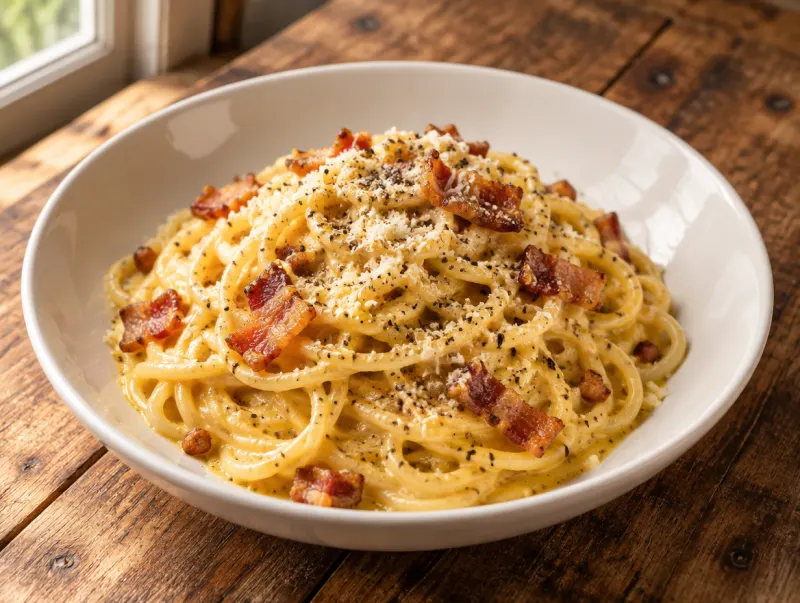
Ask for a carbonara and you may get cream, garlic or a pan kept on high heat. Those show up because many online versions include them. A Roman spaghetti carbonara uses only eggs, pecorino, guanciale, black pepper and pasta water, and the whole dish depends on taking the pan off the heat so the eggs turn glossy instead of scrambling. A generated recipe that misses that point still reads well and still fails.
Baking ratios drift
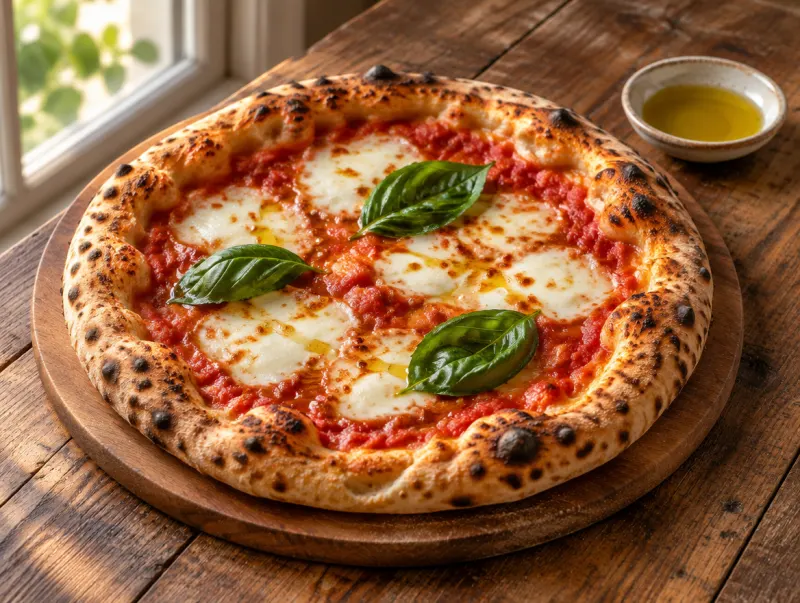
Bread and pastry work by ratio. A dough with too little water will not stretch; too much yeast and it over-proofs. A tested margherita pizza recipe weighs the flour, water, salt and yeast and tells you what the dough should look like at each rise. Generated baking recipes often give cup measures, round numbers and rise times without the cue to check them, which is why they fail more than savoury dishes.
Times are too short for the cut
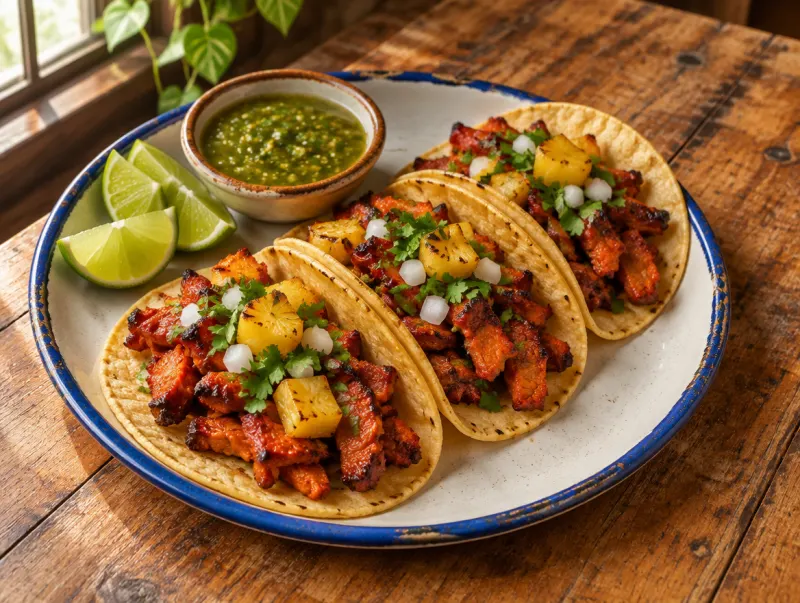
Long marinades and slow roasts get squeezed. Real tacos al pastor need the pork shoulder to marinate for at least 4 hours, then roast until the stack is charred outside and cooked through, before a final crisping in a hot pan. A shortcut version that marinates for 30 minutes and pan-fries raw slices gives you something edible, but not al pastor.
Salt stacks up
Generated recipes sometimes add salt, stock cubes, soy sauce and a salty paste in the same dish without accounting for each other. Read the list and count the salty things before you season.
Ingredients go missing
An item appears in the list and is never used, or a step calls for something that is not in the list. It is a small error, but it tells you the recipe was assembled, not cooked.
A five-minute check before you cook
You do not need to distrust every AI recipe. You need to read it once like an editor. These checks catch most problems.
- Is it a known dish? If it has a name, compare it against one tested recipe for that dish. Look for the step that the classic depends on.
- Do the ratios make sense? Rice and liquid, flour and water, eggs and dairy. If a number looks odd, it probably is.
- Are there doneness cues, not just minutes? "Until the chicken is cooked through and the juices run clear" or a thermometer reading is better than "cook for 8 minutes".
- Is every ingredient used, and every used item listed? Run your finger down both.
- How many salty ingredients are there? Hold back some salt and season at the end.
- Is anyone at the table allergic? Never rely on a generated recipe to flag allergens. Check every label yourself.
If a recipe fails two of these checks, it is quicker to start from a tested version than to fix it as you cook.
Are ChatGPT recipes safe?
For most home cooking, the risk is a disappointing dinner, not a dangerous one. The places to be careful are the same places professional recipes are careful: undercooked poultry, pork and minced meat, raw or lightly cooked eggs, home canning and preserving, deep-fat frying, and allergies. In those areas, follow food safety guidance from your national food agency rather than a chat reply.
Be equally careful with nutrition. Calorie and protein numbers in a chat answer are estimates from a language model, not values calculated from a food database. On Srbiny, the nutrition panel on each recipe is calculated from USDA FoodData Central values for each ingredient as written.
How to get more reliable results from ChatGPT
The most reliable way to use it is not to ask it to invent. Ask it to adapt.
- Start from a tested recipe. Paste or describe one, then ask for changes: halve it, make it in one pan, swap an ingredient you lack. The proven base stays intact.
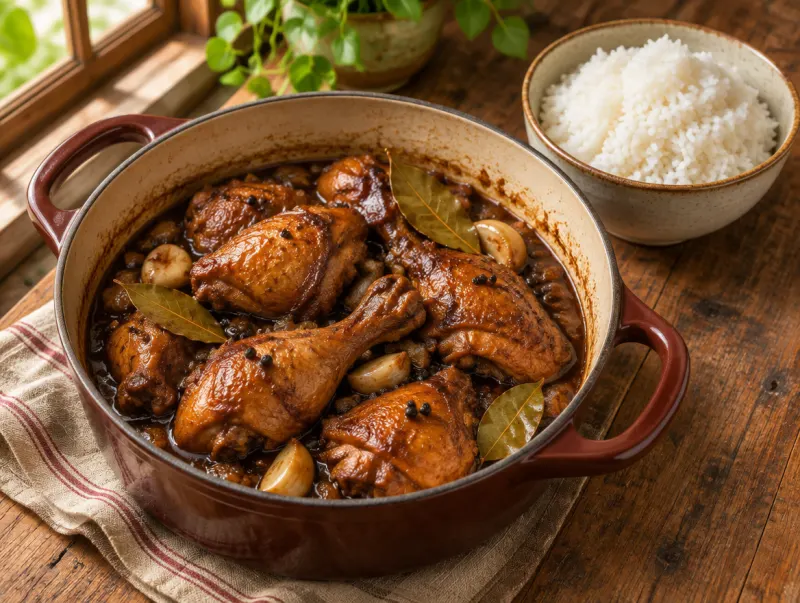
- Name the dish and the country. "A Filipino chicken adobo with what I have" gives a sounder recipe than "something with chicken, vinegar and soy sauce", because the model leans on a real dish.
- Ask for weights and cues. Ask for grams and for what each stage should look, smell and sound like.
- Tell it your kitchen. No oven, one pan, no blender. Generated recipes assume a full kitchen unless you say otherwise.
If you would rather skip the checking, match your ingredients to recipes that have already been written and tested. Srbiny's free What can I cook? finder does that. It is not AI: you add what you have and it lists the recipes on this site you can make, with anything you are missing. For a deeper look at the generator side, read our guide to the AI recipe generator from ingredients.
FAQ
Are ChatGPT recipes good?
For everyday savoury cooking they are often good, especially soups, stews, stir-fries and simple pasta. They are weaker on baking, deep frying, long marinades and classic dishes with a specific method. Read the recipe once before cooking and compare named dishes with a tested version.
Are ChatGPT baking recipes reliable?
Less reliable than savoury ones. Baking depends on exact ratios of flour, liquid, fat and leavening, and small errors decide whether a bread rises or a cake sets. Use a tested baking recipe with weighed amounts, and use AI only to adapt it.
Why does ChatGPT get recipes wrong?
It writes text that looks like a recipe based on what it has read, without cooking or tasting the result. When online versions of a dish disagree, it can blend them and lose the step that matters. It also gives right and wrong answers in the same confident tone.
Is it safe to follow a ChatGPT recipe?
Usually, if you check it. Make sure meat, poultry and eggs have clear doneness cues, be careful with deep frying and preserving, and check every ingredient yourself for allergies. Follow your national food safety guidance where it differs from the recipe.
Can I trust the calories in a ChatGPT recipe?
Treat them as rough estimates. They are not calculated from a food database and can be well off. Recipes on Srbiny show nutrition calculated from USDA FoodData Central values for each ingredient.
 Italy
 Mexico
 Philippines