
Traditional Moroccan Dishes: A Home Cook's Guide to Moroccan Food
What Moroccan food is like
Moroccan food is home cooking first. Most of the great dishes come from family kitchens rather than restaurants, and a typical meal is shared from one central dish set in the middle of the table. Bread does the work of a fork: you tear off a piece of khobz and use it to scoop up meat, vegetables and sauce, eating with your right hand.
The flavours are warm rather than hot. Ground ginger, turmeric, cumin, sweet paprika, cinnamon and saffron appear again and again, often together in the spice blend ras el hanout (رأس الحانوت). Fresh coriander and flat-leaf parsley go into almost every pot. Two ingredients give Moroccan cooking its own character: preserved lemon, called l-hamd l-mrakked (الحامض المرقد), salty and fragrant rather than sour, and smen (سمن), an aged butter used in small amounts for its deep, cheesy taste.
Sweet and savoury meet more often than in most cuisines. Lamb is cooked with prunes and honey, chicken pie is dusted with cinnamon and sugar, and couscous can be crowned with caramelised onions and raisins.
Tagines: the everyday slow-cooked dish
The word tagine (طاجين) means both the cone-lidded clay pot and the stew cooked in it. Meat, fish or vegetables simmer slowly with onions, spices and very little water, and the lid sends the steam back down so everything stays moist. The result is a thick sauce made to be mopped up with bread.
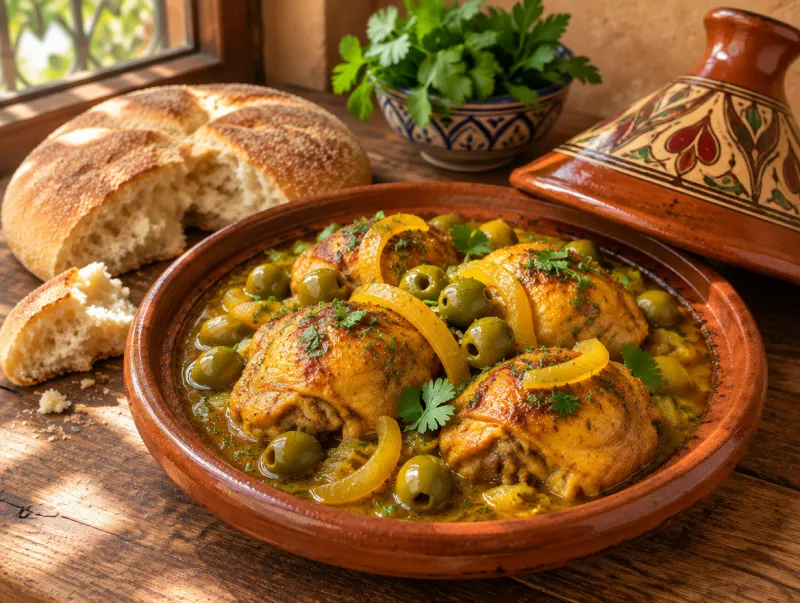
The most famous is chicken with preserved lemon and olives, known as djaj mqualli (دجاج مقلي): chicken braised with saffron, ginger and grated onion until the sauce turns golden and glossy. Our Moroccan chicken tagine is a classic home version you can make in an ordinary heavy pot.
Other tagines you will meet in Moroccan homes:
- Lamb with prunes and almonds (lham b'l-barkouk, لحم بالبرقوق): sweet, sticky and spiced with cinnamon, often made for weddings and holidays.
- Kefta tagine (كفتة): small meatballs simmered in a cumin-scented tomato sauce, with eggs cracked in at the end.
- Fish tagine: popular in coastal towns, with fish marinated in chermoula (a herb, garlic and lemon paste) and layered over potatoes, tomatoes and peppers.
- Vegetable tagine: carrots, potatoes, courgettes and peas in the same spiced sauce, an everyday dish in many homes.
Harira, bissara and Moroccan soups
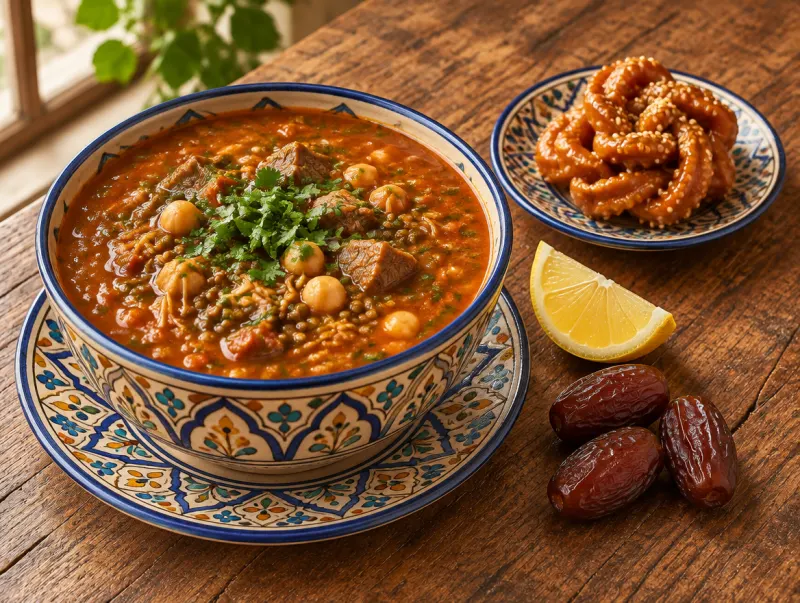
Harira (حريرة) is the soup most Moroccans grew up with. It is a tomato soup thick with lentils, chickpeas, fresh herbs and a little meat, finished with tadouira, a flour and water mix that makes it silky. During Ramadan it is the soup that breaks the fast at sunset, set on the table with dates, hard-boiled eggs and honeyed pastries. The rest of the year it is a warming family supper, and a small cup makes a good starter on a Thanksgiving table with sides from around the world. Try our harira recipe with dried chickpeas.
Bissara (بيصارة) is the other great Moroccan soup: dried split fava beans cooked and blended until smooth, then finished at the table with a pool of olive oil, ground cumin and paprika. In the north it is often made with dried split peas. It is cheap, filling and sold by street stalls on cold mornings.
Couscous and celebration dishes
Couscous, called seksu (سكسو) in Darija, is the Friday dish. Families gather after the midday prayer around a large platter of hand-rolled semolina, steamed two or three times over a simmering broth of meat and vegetables in a two-tiered pot called a keskas. The well-known version is couscous with seven vegetables. Couscous tfaya is topped with onions slowly cooked with raisins, cinnamon and honey.
Pastilla, or bastila (بسطيلة), is the dish for special occasions and is closely tied to Fez. Layers of paper-thin warqa pastry wrap shredded pigeon or chicken cooked with onions and spices, herbed eggs and fried almonds. The pie is baked until crisp, then dusted with icing sugar and cinnamon. A seafood pastilla, filled with fish, prawns and vermicelli, is a popular savoury version.
Rfissa (رفيسة) is pure comfort: shredded msemen or thin flatbread soaked in a chicken broth flavoured with fenugreek, lentils and ras el hanout. It is traditionally cooked for a new mother and for big family gatherings.
Mechoui (مشوي) is lamb, often a whole animal, slow-roasted until the meat falls off the bone. It is pulled apart by hand and eaten with salt and cumin. Tanjia (طنجية) is Marrakech's own slow-cooked dish: beef or lamb with preserved lemon, garlic, cumin, saffron and smen, sealed in a tall clay jar and left for hours in the embers of a hammam furnace. Around Eid al-Adha many families also make mrouzia (مروزية), lamb cooked with raisins, honey, almonds and ras el hanout.
Salads, breads and breakfast
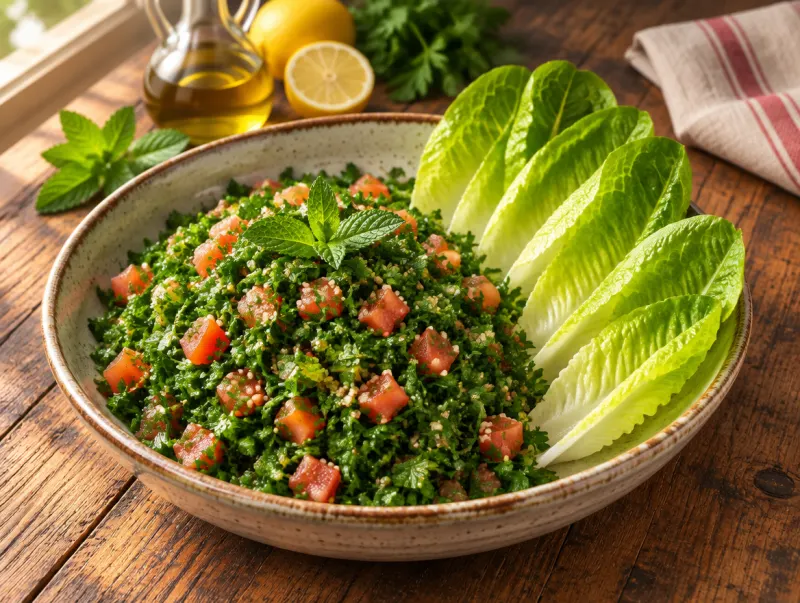
Moroccan salads are mostly cooked salads, served at room temperature at the start of a meal with bread. Zaalouk (زعلوك) is aubergine and tomato cooked down with garlic, cumin and paprika until soft enough to spread. Taktouka (تكتوكة) is roasted green peppers and tomatoes cooked the same way. They are quite different from the raw herb salads of the Levant, such as Lebanese tabbouleh.
Bread is on every table. Khobz (خبز) is the round, slightly flat everyday loaf, still baked at home or taken to the neighbourhood oven in many towns. Msemen (مسمن) is a square, layered flatbread cooked on a griddle, and baghrir (بغرير) is a spongy semolina pancake covered in tiny holes. Both are eaten at breakfast or with afternoon tea, spread with melted butter and honey.
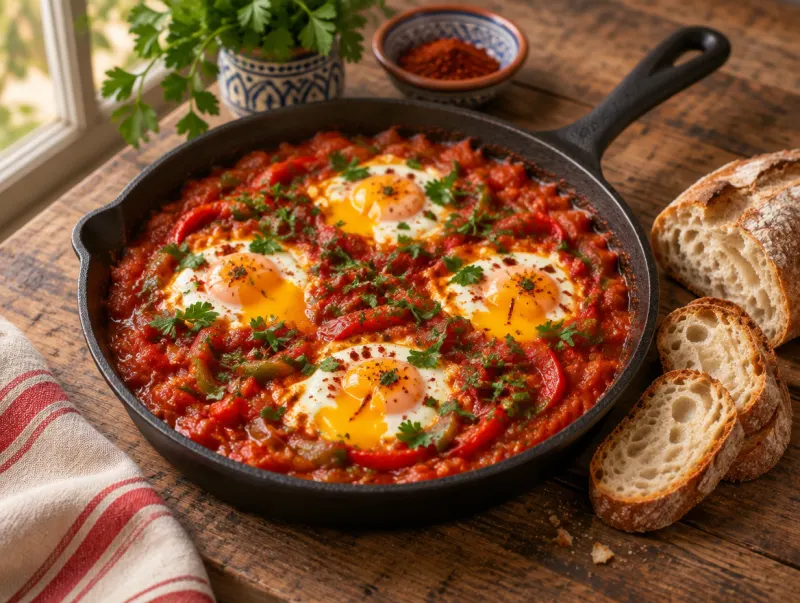
Eggs are a breakfast favourite too. One common dish is eggs poached in a spiced tomato sauce, bayd b'matisha (بيض بالماطيشة), a close cousin of the Tunisian shakshuka. Another is khlii (خليع), spiced dried meat preserved in its own fat, fried with eggs.
Sweets and mint tea
Moroccan sweets lean on almonds, sesame, honey and orange blossom water. Chebakia (شباكية) are flower-shaped pastries fried and soaked in honey, then covered in sesame seeds; they are the sweet of Ramadan. Sellou (سلو) is a rich, crumbly mix of toasted flour, almonds, sesame and honey, eaten by the spoonful. Kaab el ghazal (كعب الغزال), or gazelle horns, are crescents of thin pastry filled with almond paste.
Then there is atay (أتاي), green tea brewed with fresh mint and sugar and poured from a height so it foams in the glass. It is offered to every guest and closes almost every meal.
Where to start cooking Moroccan food at home
Start with a tagine and a soup. They use the same few spices, need no special equipment, and teach you the slow, gentle cooking that runs through the whole cuisine. A heavy pot with a lid does everything a clay tagine does.
A basic Moroccan pantry is short: ground ginger, turmeric, cumin, sweet paprika, cinnamon, a little saffron, a jar of preserved lemons, green olives, and fresh coriander and parsley. With those you can cook most of the dishes on this page.
FAQ
What is the national dish of Morocco?
Couscous is usually named as Morocco's national dish, and it is the traditional Friday family meal. Tagine is the dish most families cook through the week, and harira is the soup of Ramadan, so all three have a strong claim.
What do Moroccans eat for breakfast?
A typical Moroccan breakfast is bread or msemen and baghrir with olive oil, butter, honey and olives, eggs, and mint tea or coffee. In winter, a bowl of bissara with olive oil and cumin is common, especially from street stalls.
Is hummus Moroccan food?
No. Hummus comes from the Levant and is a staple in Lebanon, Syria and Palestine. You can find it in some Moroccan restaurants, but it is not a traditional Moroccan dish, and neither is falafel. For the real thing, see our Lebanese hummus recipe.
Is Moroccan food spicy?
Mostly not. Moroccan cooking is aromatic and warm, built on ginger, cumin, cinnamon and saffron rather than chilli heat. Harissa and hot peppers are used in some homes and regions, but they are usually served on the side.
Do I need a tagine pot to cook Moroccan food?
No. A tagine is lovely to cook in and serve from, but any heavy pot or Dutch oven with a tight lid gives the same slow, covered braise. If you do buy a clay tagine, use it over low heat with a heat diffuser.