
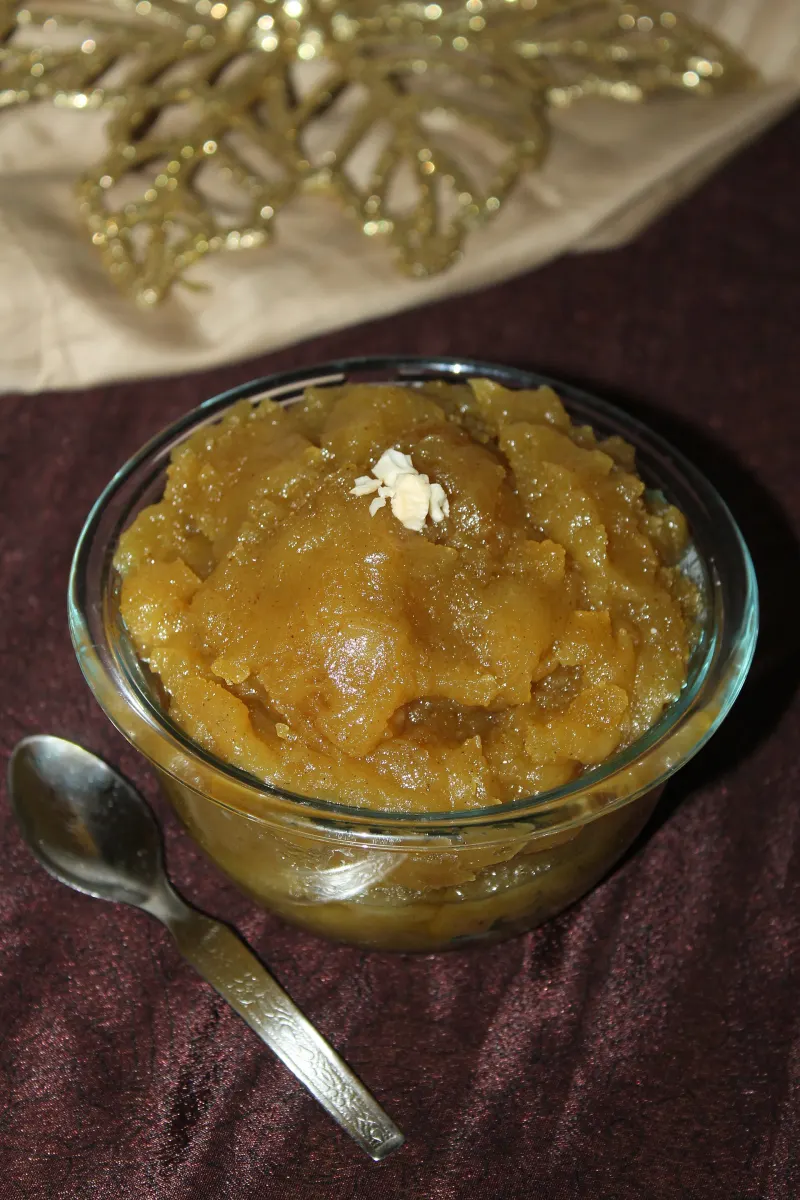
Kada Prasad Recipe: Gurudwara-Style Atta Halwa
 India
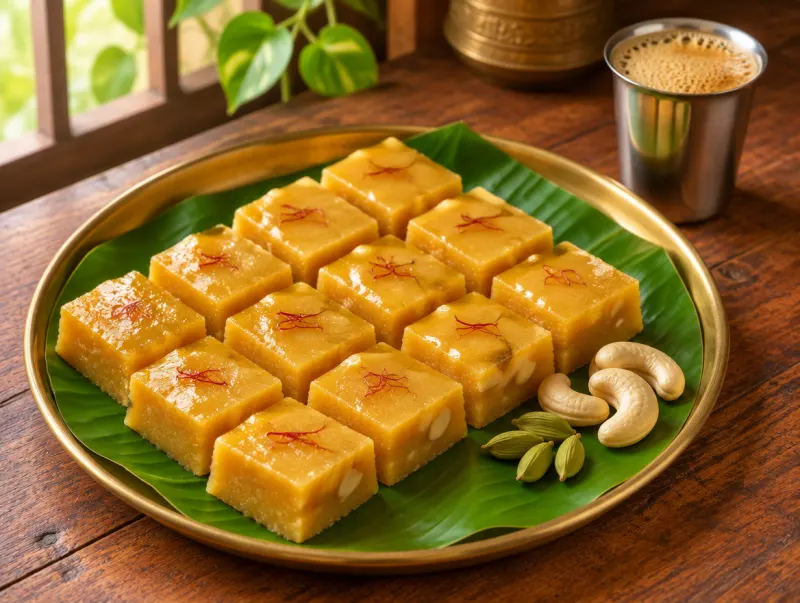
Kada prasad, also written karah parshad, is the soft, glossy wheat halwa served in every Sikh gurdwara. It is offered after prayers and handed to everyone present, cupped in both hands, whatever their faith. At home it is made for Gurpurab, Guru Nanak Jayanti, weddings and any day that calls for thanks.
Prep 5 min · Cook 25 min · Dessert
Method
- Step 1 of 7 · 5 min
Make the sugar syrup
Put the sugar and water in a small pan over medium heat and stir until the sugar has fully dissolved and the syrup just comes to a boil. Turn the heat to the lowest setting and keep the syrup hot while you roast the flour.
You needwhole wheat floursugarwater - Step 2 of 7
Melt the ghee
Melt the ghee in a heavy-bottomed kadai or wide pan over low heat. A heavy pan spreads the heat evenly and keeps the flour from catching on the bottom.
You needwhole wheat flourghee - Step 3 of 7
Add the flour
Tip the whole wheat flour into the ghee and stir with a flat spatula until no dry lumps remain. It will look like a loose, pale paste at first.
You needwhole wheat flourghee - Step 4 of 7 · 15 min
Roast low and slow
Keep the heat low and stir the flour and ghee constantly, scraping the bottom. It turns frothy, then loosens and slowly darkens. Stop when it is an even golden brown, like light caramel, and smells deeply nutty.
You needwhole wheat flourghee - Step 5 of 7
Pour in the syrup
Stand back and pour the hot sugar syrup into the roasted flour in a slow stream, stirring all the time. It will hiss and splutter hard. Keep stirring so the halwa stays smooth and free of lumps.
You needwhole wheat floursugar - Step 6 of 7 · 4 min
Cook until it leaves the pan
Keep stirring over low heat as the flour drinks up the syrup. The halwa thickens, turns glossy and starts to pull away from the sides in one soft mass, with ghee shining around the edges.
You needwhole wheat flourghee - Step 7 of 7
Finish and serve warm
For a home version, stir in the ground cardamom, raisins and slivered almonds now. Leave them out for the plain gurdwara-style offering. Serve the kada prasad warm, a spoonful per person.
You needslivered almondsraisinsground cardamom
About this dish
It has only four ingredients, used in equal parts by volume: whole wheat flour (atta), ghee and sugar, plus about three parts water. Nothing is added for flavour. The taste comes entirely from roasting the flour in ghee, slowly and patiently, until it smells nutty and turns the colour of light caramel.
That roasting is the whole technique. Keep the heat low and stir without stopping. Rushed on high heat, the flour scorches before the inside is cooked, and the halwa tastes raw and bitter. Done right, the ghee separates from the halwa at the end and it leaves the sides of the pan in one shining mass.
Tips
- Equal volumes of atta, ghee and sugar is the traditional measure, so you can scale it with any cup or bowl. Use about three times that volume of water.
- Never raise the heat to save time. The outside of the flour browns long before the inside cooks, and burnt atta makes the whole batch bitter.
- Hot syrup into hot flour gives a smooth halwa. Cold water poured in makes lumps and can seize the mixture.
- If it turns stiff while cooking, add a splash of hot water. If it stays loose, cook it a minute or two longer; it firms as it cools.
- Coarse atta gives the grainy, melting texture of gurdwara kada prasad, but regular whole wheat flour works well too.
Variations
- Aate ka halwa: the home version of the same dish, often finished with cardamom, nuts and raisins.
- Jaggery: swap the sugar for the same volume of grated jaggery, dissolved in the water and strained, for a darker, more caramel taste.
- Less sweet: some families use a little less sugar than flour; keep the ghee the same so it still leaves the pan cleanly.
Storing and reheating
Best eaten warm on the day. It keeps 3 to 4 days covered in the fridge. Reheat in a pan over low heat with a spoonful of hot water, stirring until soft and glossy again.
What to serve with it
- Served on its own, warm, as prasad
- After langar or a festive meal at home
Questions
What is the ratio for kada prasad?
The traditional ratio is equal parts whole wheat flour, ghee and sugar by volume, with about three parts water. So 1/2 cup each of atta, ghee and sugar takes about 1 1/2 cups of water. Some cooks use a little less water for a firmer halwa.
Is kada prasad made with suji or atta?
Gurdwara kada prasad is made with whole wheat flour (atta). A halwa made with semolina (suji) is a different dish, usually called suji halwa or sheera, though some homes call it prasad too.
Why is my kada prasad bitter or raw-tasting?
Bitterness usually means the flour was roasted on heat that was too high and scorched. A raw taste means it was not roasted long enough. Keep the heat low and stir until the flour is evenly golden brown and smells nutty.
Can I make kada prasad with jaggery?
Yes. Use the same volume of grated jaggery in place of sugar, dissolve it in the water, strain out any grit and add the hot syrup to the roasted flour exactly as with sugar. The halwa will be darker with a caramel flavour.