

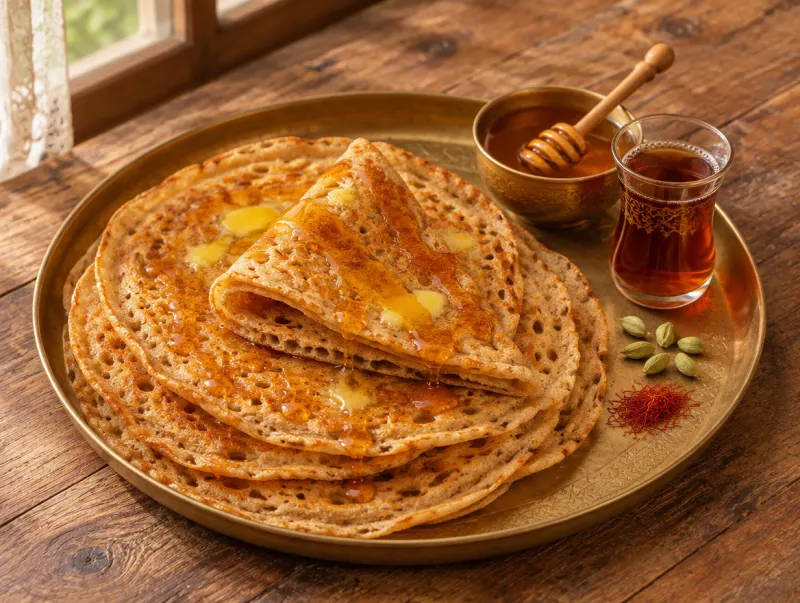
Marahif: Saudi Whole Wheat Griddle Bread with Ghee and Honey
 Saudi Arabia
Marahif are thin, soft breads from Najd in central Saudi Arabia, made from a pourable batter rather than a dough. The batter is mostly brown whole wheat flour, called burr, loosened with water and lifted with a little yeast, then spread in rounds on a hot saj or flat pan. They are a breakfast and afternoon-tea favourite, especially in the colder months.
Prep 30 min · Cook 35 min · Breakfast
Method
- Step 1 of 10
Bloom the saffron
Crumble the pinch of saffron threads into 1 tbsp warm water and leave it while you measure everything else. The water should turn a deep orange-gold.
You needsaffron threadswarm water - Step 2 of 10
Mix the dry ingredients
In a large bowl or a blender jug, combine the whole wheat flour, white flour, milk powder, sugar, instant yeast, ground cardamom and salt. Stir or pulse a few times so the yeast and salt are spread evenly through the flour.
You needwhole wheat flourplain white flourmilk powdersugarinstant yeastground cardamomsalt - Step 3 of 10
Blend the batter
Add the egg, olive oil, saffron water and about 550 ml of the warm water. Whisk hard or blend for 30 seconds into a smooth batter with no lumps. It should pour easily from a ladle, a little thinner than pancake batter. Add the rest of the water if it looks thick.
You needsaffron threadseggolive oilwarm wateroil - Step 4 of 10 · 20 min
Rest the batter
Cover the bowl and leave the batter in a warm spot for 20 minutes. Small bubbles will rise to the surface and it will thicken slightly as the whole wheat flour drinks in the water. Stir it once and loosen with a spoon of water if needed.
You needwhole wheat flourplain white flourwarm water - Step 5 of 10
Heat the pan
Heat a saj, a flat griddle or a wide non-stick pan over medium heat for 2 to 3 minutes. Wipe it with a little oil on a folded paper towel. A drop of water flicked on it should sizzle and dance, not vanish at once.
You needolive oilwarm wateroil - Step 6 of 10
Spread the first marahif
Pour a small ladle of batter, about 80 ml, into the centre of the pan and quickly spread it outwards with the back of the ladle in a spiral to a thin round about 20 cm across. Thin is the goal: you should almost see the pan through the edges.
- Step 7 of 10 · 2 min
Cook the first side
Cook for about 1 1/2 minutes, until the top is covered in tiny holes, looks dry and the edges lift and turn golden. The underside should be golden brown in patches.
- Step 8 of 10 · 1 min
Flip and finish
Flip it with a wide spatula and cook the second side for 30 to 45 seconds, just until it has light brown spots. Move it to a plate and cover with a clean cloth to keep it soft.
- Step 9 of 10
Cook the rest
Repeat with the remaining batter, wiping the pan with a little oil every two or three breads and stirring the batter now and then. You should get about 12 marahif. Lower the heat slightly if they brown before the top sets.
You needolive oiloil - Step 10 of 10
Serve with ghee and honey
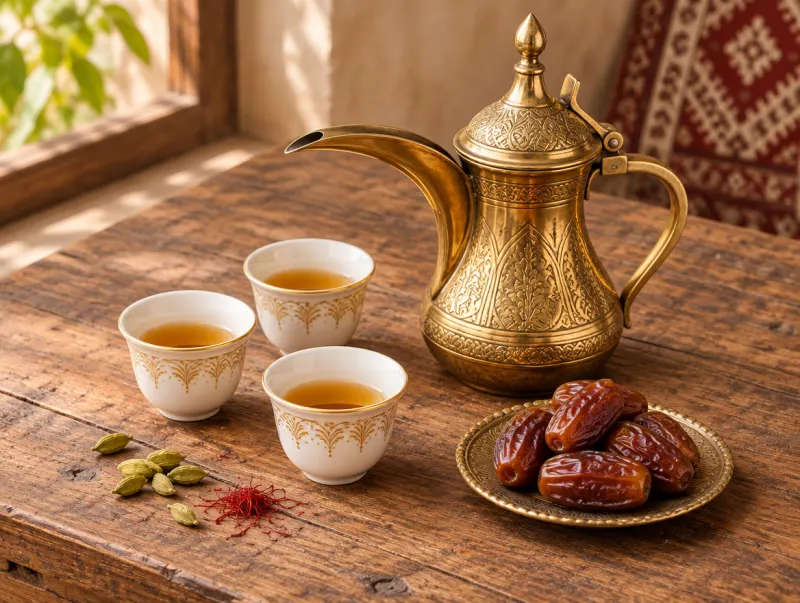
Brush each warm marahif with melted ghee and drizzle with honey or date syrup, stacking them as you go. Serve at once, folded into quarters or torn by hand, with tea or Arabic coffee.
You needgheehoney
About this dish
Think of them as somewhere between a pancake and a crepe: thin enough to fold, but with the nutty taste of whole wheat. A spoon of milk powder and an egg make them tender, while cardamom and a pinch of saffron give the gentle perfume that marks many Najdi sweets and breads.
The way to eat them is simple. Stack them hot, brush each one with ghee and drizzle with honey or date syrup, then tear and share with a glass of tea or a cup of Arabic coffee. This version keeps the sugar low so the honey on top does the sweetening.
Tips
- Spread the batter as soon as it hits the pan. It sets within seconds, and a thick round cooks up heavy instead of soft and thin.
- Keep the heat at medium. Too hot and the bottom scorches before the top sets; too low and the breads turn dry and pale.
- Whole wheat flours differ in how much water they take. If the batter thickens while it rests, add water a spoon at a time until it pours easily again.
- Stack the cooked breads under a cloth. The trapped steam keeps them soft and foldable until you serve.
Variations
- All whole wheat: use 300 g whole wheat flour and add about 50 ml extra water for a darker, nuttier bread.
- Date-sweetened: swap the sugar for 3 tbsp date powder and serve with date syrup.
- Savoury: leave out the sugar and cardamom, then top the warm breads with white cheese or a fried egg.
- Quicker: replace the yeast with 2 tsp baking powder and cook the batter straight away without resting.
Storing and reheating
Best eaten warm on the day. Cool completely, stack without ghee or honey, wrap well and keep in the fridge for 2 days or freeze for 1 month with paper between them. Warm each one in a dry pan for 20 seconds per side before topping.
What to serve with it
- Melted ghee and honey
- Date syrup (dibs)
- Black tea or milk tea
- Arabic coffee and dates
Questions
What are marahif?
Marahif are thin, soft griddle breads from Najd in central Saudi Arabia. They are made from a pourable whole wheat batter cooked on a saj or flat pan, then served warm with ghee and honey or date syrup, usually for breakfast or with afternoon tea.
What is the difference between marahif and pancakes?
Marahif are much thinner and are spread wide on the pan like a crepe. They are mostly whole wheat flour, lightly sweet and scented with cardamom, and are eaten brushed with ghee and honey rather than stacked thick with butter and syrup.
Can I make marahif without yeast?
Yes. Use 2 teaspoons of baking powder instead of the yeast and cook the batter straight away. The breads are just as soft but have slightly fewer holes and a less rounded, wheaty flavour.
What flour is used for marahif?
Traditionally brown whole wheat flour, known in Saudi Arabia as burr. Many home cooks mix in some white flour for a lighter texture, as in this recipe. Fine whole wheat or chapati flour both work well.
Why are my marahif thick and heavy?
The batter is too thick or was not spread quickly enough. It should pour easily from a ladle, and you need to spread it outwards the moment it touches the hot pan, before the bottom sets.
 Yemen
 Turkey