

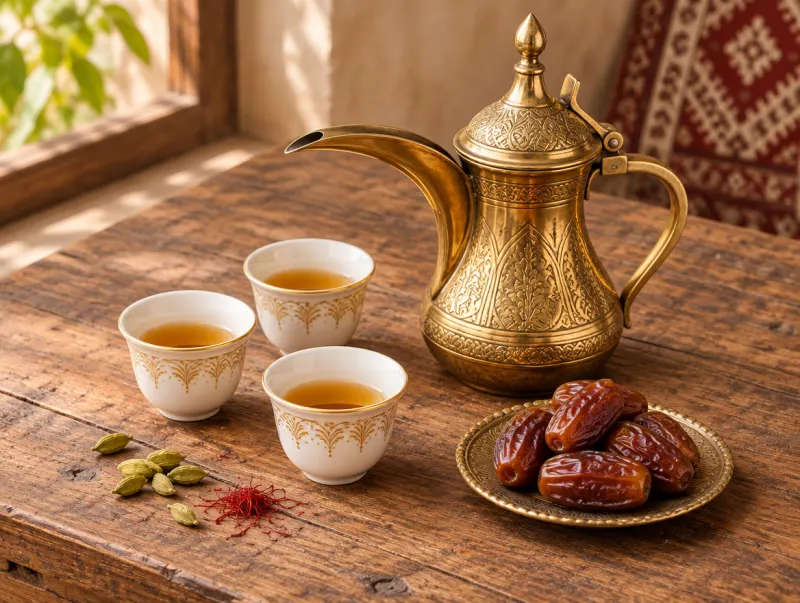
Arabic Coffee Recipe (Qahwa) with Cardamom and Saffron
 Saudi Arabia
Arabic coffee, called qahwa or gahwa, is the pale, golden, cardamom-scented coffee poured across Saudi Arabia and the Gulf to welcome guests. It looks nothing like espresso or Turkish coffee: the beans are roasted only lightly, so the drink is thin, amber and gently bitter, with the spice doing most of the talking.
Prep 5 min · Cook 25 min · Drink
Method
- Step 1 of 7 · 5 min
Boil the water
Pour the water into a small saucepan or a stovetop dallah and bring it to the boil over medium-high heat.
You needwater - Step 2 of 7
Add the coffee
Take the pan off the heat for a moment and stir in the light roast Arabic coffee so it does not foam over. The water will turn a light, cloudy brown.
You needwaterlight roast Arabic coffee - Step 3 of 7 · 12 min
Simmer gently
Return the pan to low heat and let the coffee simmer gently, uncovered, without a hard boil. Watch it: if the foam rises to the rim, lift the pan off the heat until it settles. The coffee should turn a clear, golden amber.
You needlight roast Arabic coffee - Step 4 of 7 · 4 min
Add the spices
Stir in the ground cardamom and the whole cloves and simmer for a few more minutes, just until the kitchen smells strongly of cardamom. Adding the cardamom late keeps its scent fresh rather than cooked.
You needground cardamomwhole cloves - Step 5 of 7 · 5 min
Add the saffron and rest
Turn off the heat and drop in the saffron threads. Leave the pot to rest so the grounds and spices sink to the bottom and the saffron colours the coffee a deeper gold.
You needlight roast Arabic coffeesaffron threads - Step 6 of 7
Pour off the grounds
Pour the coffee slowly into a warmed thermos or serving dallah, stopping before the sediment at the bottom. For a clearer cup, pour it through a fine strainer or a small piece of clean fibre, as many Gulf cooks do.
You needlight roast Arabic coffee - Step 7 of 7
Serve with dates
Serve the coffee hot in small finjan cups, filling each only a third or halfway, with the dates on the side. Offer refills until each guest gently shakes the empty cup to say they have had enough.
You needlight roast Arabic coffeedates
About this dish
It is made in a pot, simmered rather than boiled hard, then left to settle so the grounds sink. It is poured from a dallah, a tall spouted coffee pot, or a thermos into small handleless cups called finjan, only a few sips at a time, and always with dates on the side.
This version follows the common home method: simmer the light-roast coffee first, add the ground cardamom, saffron and cloves near the end, let it rest, then pour it off the grounds. Use it as a starting point. Every family has its own balance of cardamom, and some regions add more saffron or none.
Tips
- Use light roast coffee sold as Arabic or Saudi coffee. Dark roast beans make a bitter, heavy drink that tastes nothing like qahwa.
- Never let it boil hard once the coffee is in. A rolling boil makes it bitter and cloudy.
- Freshly crushed green cardamom pods give a far brighter scent than old ground cardamom.
- Warm the thermos or dallah with hot water first so the coffee stays hot through a long visit.
- Taste and adjust the cardamom. Some families use nearly as much cardamom as coffee, others half this amount.
Variations
- A few drops of rose water in the thermos is a common addition in parts of the Gulf.
- In some regions a little ground ginger joins the cardamom for a warmer cup.
- For a stronger, more coffee-forward cup, use a medium roast and cut the cardamom by a third.
- Leave out the saffron and cloves for the plain cardamom version served in many homes every day.
Storing and reheating
Arabic coffee is best within a few hours of making. Keep it hot in a thermos for an afternoon of guests. Leftovers keep in a covered jar in the fridge for a day; reheat gently without boiling. Store light roast coffee and cardamom in airtight jars away from light.
What to serve with it
- Dates, the classic partner
- Luqaimat or other small sweets
- Plain biscuits or ma'amoul
- A glass of water on the side
Questions
What makes Arabic coffee different from Turkish coffee?
Arabic coffee uses lightly roasted beans and is simmered, settled and poured off the grounds, so it is pale, thin and scented with cardamom. Turkish coffee uses dark, powder-fine coffee boiled with sugar and is served thick with the grounds in the cup.
Is Arabic coffee served with sugar?
Usually not. Traditional qahwa is drunk unsweetened, and the sweetness comes from the dates or sweets served alongside it.
How much cardamom goes in Arabic coffee?
It varies a lot by family and region. This recipe uses about one tablespoon and a half for 750 ml. Some homes use nearly as much cardamom as coffee, while others prefer a lighter scent.
Can I use regular coffee to make Arabic coffee?
You can make a spiced coffee with it, but it will be darker and more bitter. For the true golden colour and taste, buy light roast coffee sold as Arabic, Saudi or Gulf coffee.
Why is Arabic coffee served in such small cups?
Qahwa is a gesture of hospitality, poured a few sips at a time and refilled often. Guests usually drink a cup or a few, then gently shake the cup to signal they are finished.
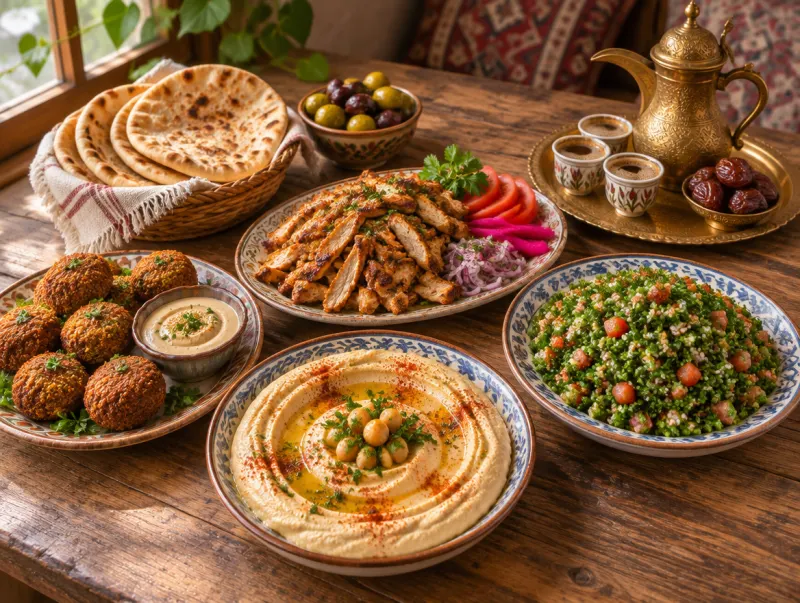
 Yemen
 Turkey
 Lebanon