
Best Mashed Potatoes Recipe: Creamy, Buttery and Never Gluey
 United States
Mashed potatoes are the side dish nobody skips at an American Thanksgiving, and the one that turns up next to roast chicken, meatloaf and gravy all year round. The idea is simple: boiled potatoes mashed with butter and warm milk until smooth and soft enough to hold a pool of gravy.
Prep 15 min · Cook 30 min · Side
Method
- Step 1 of 8
Cut the potatoes evenly
Peel the potatoes and cut them into chunks of about 5 cm, all roughly the same size so they cook at the same speed. Rinse them briefly in cold water to wash off loose surface starch.
You needYukon Gold or russet potatoes - Step 2 of 8 · 10 min
Start in cold salted water
Put the potatoes in a large pot and cover with cold water by about 3 cm. Add the tablespoon of salt and bring to a boil over high heat. Starting cold lets the chunks heat through evenly so the outsides do not fall apart before the middles are cooked.
You needYukon Gold or russet potatoessaltsalt - Step 3 of 8 · 15 min
Simmer until tender
Lower the heat to a steady simmer and cook until a knife slides into the biggest chunk with no resistance and the edges are just starting to crumble.
- Step 4 of 8 · 5 min
Warm the milk, cream and butter
While the potatoes simmer, gently heat the milk, cream and butter in a small saucepan until the butter has melted and the mixture is hot but not boiling. Cold dairy cools the potatoes and makes them stiff and uneven.
You needYukon Gold or russet potatoesunsalted butterwhole milkheavy cream - Step 5 of 8 · 2 min
Drain and dry
Drain the potatoes well in a colander, then tip them back into the empty pot over low heat. Shake the pot gently for a minute or two until the steam stops rising and the surfaces look dry and floury.
You needYukon Gold or russet potatoes - Step 6 of 8
Mash by hand
Take the pot off the heat and mash the potatoes with a potato masher, or press them through a ricer or food mill for the smoothest texture, until no lumps remain. Do not use a blender or food processor: it breaks the starch and turns the potatoes gluey.
You needYukon Gold or russet potatoes - Step 7 of 8
Fold in the warm dairy
Pour in about two thirds of the hot milk and butter and stir gently with a wooden spoon or spatula until absorbed. Add the rest a little at a time until the potatoes are soft, creamy and hold soft peaks. Add a splash more milk if they still feel stiff.
You needYukon Gold or russet potatoesunsalted butterwhole milk - Step 8 of 8
Season and serve
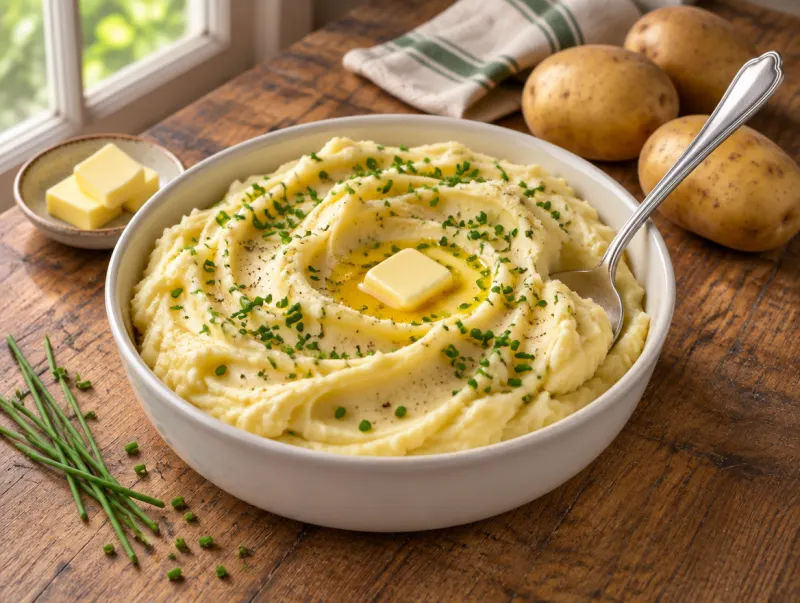
Stir in the salt and pepper, taste and adjust. Spoon into a warm bowl, make a swirl on top with the back of the spoon, add a small piece of butter to melt in the hollow and scatter with chives. Serve hot.
You needsaltunsalted buttersaltblack pepperfresh chives
About this dish
This version uses Yukon Gold potatoes for a naturally creamy, buttery mash, or russets if you like them lighter and fluffier. Half the potatoes can be one and half the other. A mix of whole milk and a little cream gives richness without making them heavy.
Three things make the difference. Start the potatoes in cold, well-salted water so they cook evenly. Dry them in the hot pot for a minute after draining. And warm the milk and butter before they go in, then mash by hand only until smooth: overworking, or using a blender, is what turns mashed potatoes gluey.
Tips
- Choose your potato for the texture you want: Yukon Gold gives a dense, creamy, buttery mash; russets give a lighter, fluffier one. A half-and-half mix gives you both.
- Salt the cooking water well. Potatoes absorb seasoning while they cook, and it is hard to make up for bland potatoes at the end.
- Always add the milk and butter hot. Cold dairy makes the mash stiff and cools it down before it reaches the table.
- Stir, do not whip. Once the potatoes are mashed, fold in the dairy gently; heavy beating with an electric mixer can make them gummy.
- For a make-ahead mash, keep it warm in a heatproof bowl set over a pan of barely simmering water, covered, for up to 2 hours, stirring in a splash of hot milk before serving.
Variations
- Sour cream or cream cheese mash: replace the heavy cream with 120 g sour cream or softened cream cheese, stirred in after the milk, for a tangier, thicker result.
- Garlic mashed potatoes: simmer 4 to 6 peeled garlic cloves with the potatoes and mash them in, or warm 2 crushed cloves in the butter.
- Skin-on mash: use thin-skinned red or Yukon Gold potatoes, scrub them and leave the skins on, and mash more roughly for a rustic texture.
- Dairy-free: use olive oil or a plant butter and warm unsweetened oat or soy milk, or some of the potato cooking water.
Storing and reheating
Keeps covered in the fridge for 3 to 4 days. Reheat in a covered pan over low heat or in the microwave, stirring in a splash of hot milk and a little butter to bring back the creamy texture. Mashed potatoes rich in butter and cream freeze for up to a month, but the texture can turn slightly grainy; stir well while reheating.
What to serve with it
- Roast turkey and gravy
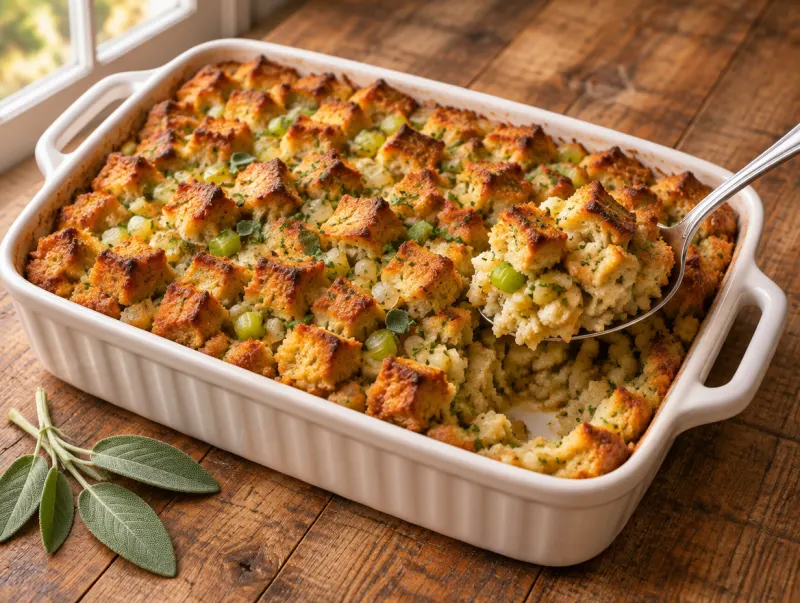
- Stuffing
- Green bean casserole
- Cranberry sauce
Questions
What are the best potatoes for mashed potatoes?
Yukon Gold potatoes give the creamiest, most buttery mash, while russets give the lightest and fluffiest. Both work well. Waxy potatoes such as small new potatoes hold their shape and can turn gluey when mashed, so save them for skin-on, roughly mashed versions.
Why are my mashed potatoes gluey?
Gluey mashed potatoes come from overworking. A blender, food processor or long beating with a mixer bursts the starch cells and turns the potatoes sticky. Mash by hand or use a ricer, and fold in the warm milk and butter gently.
Should I use milk or heavy cream in mashed potatoes?
Either works. Whole milk gives a lighter mash, heavy cream a richer one. This recipe uses mostly milk with some cream for balance. Whatever you use, warm it first so the potatoes stay hot and absorb it evenly.
Can I make mashed potatoes ahead of time?
Yes. Make them up to 2 days ahead, chill, then reheat gently in a covered pan or in the oven with a splash of hot milk and a little butter, stirring until smooth. For the same day, keep them warm over barely simmering water or in a slow cooker on low.
How do you make mashed potatoes without milk?
Use some of the hot potato cooking water, warm stock or warm unsweetened plant milk in place of the milk and cream, with butter or olive oil for richness. Add the liquid gradually until the potatoes are as soft as you like.