
Easy Homemade Stuffing Recipe for Thanksgiving (From Scratch)
 United States
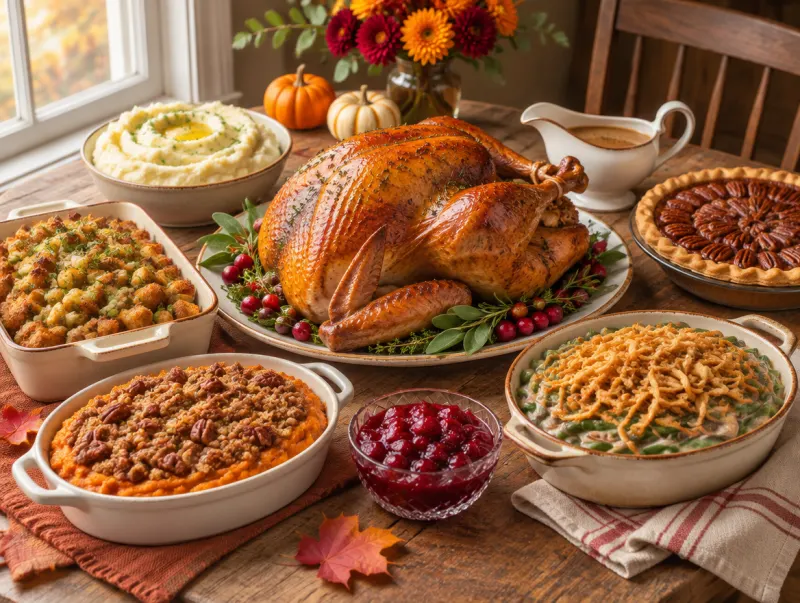
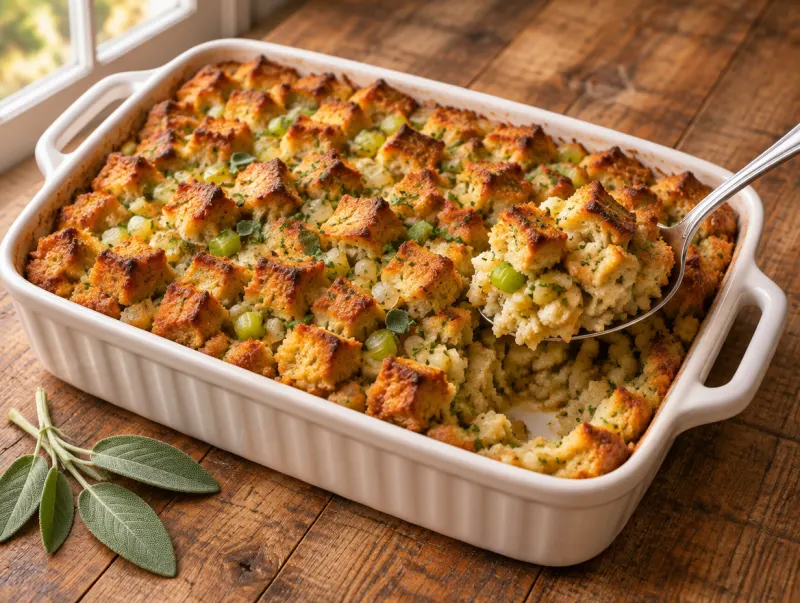
Stuffing is the bread side dish at the heart of an American Thanksgiving: cubes of dried bread tossed with onion and celery softened in butter, fresh sage and thyme, then moistened with broth and baked. It comes out with a crisp, golden top and a soft, savoury middle that soaks up gravy. Many families in the South call it dressing when it is baked in a dish rather than inside the bird.
Prep 25 min · Cook 1 h 15 · Side
Method
- Step 1 of 9 · 25 min
Dry the bread cubes
Heat the oven to 150°C (130°C fan, 300°F). Spread the bread cubes over two large baking trays in a single layer and bake, stirring once, until they feel dry and firm but have hardly coloured. If your cubes have already sat out overnight and feel stale, you can skip this.
You needwhite bread or French bread - Step 2 of 9
Heat the oven and butter the dish
Tip the dried bread into your largest mixing bowl. Turn the oven up to 190°C (170°C fan, 375°F) and rub a little butter over a 23 x 33 cm baking dish, about 3 litres.
You needwhite bread or French breadbutter - Step 3 of 9 · 10 min
Soften the onion and celery
Melt the butter in a large frying pan over medium heat. Add the onions and celery with a pinch of the salt and cook, stirring now and then, until soft and translucent but not browned.
You needbutteronionscelery stalkssalt - Step 4 of 9 · 1 min
Add garlic and herbs
Stir the garlic, sage and thyme into the onion and celery and cook for about 1 minute, until the herbs smell fragrant. Take the pan off the heat and stir in the parsley, the rest of the salt and the black pepper.
You needonionscelery stalksgarlicfresh sagefresh thyme leavesfresh parsleysaltblack pepper - Step 5 of 9
Toss with the bread
Scrape the buttery onion, celery and herbs over the bread cubes, including all the butter in the pan, and toss with a large spoon until every cube is lightly coated.
You needwhite bread or French breadbutteronionscelery stalks - Step 6 of 9
Moisten with broth and eggs
Whisk the eggs into the warm broth, pour it over the bread and fold gently until the liquid is absorbed. The bread should feel evenly moist and soft when squeezed, with no dry pockets and no puddle at the bottom. Add the extra broth a little at a time only if it still feels dry.
You needwhite bread or French breadchicken or turkey brotheggs - Step 7 of 9 · 25 min
Bake covered
Spoon the stuffing into the buttered dish without pressing it down, so the top stays loose and craggy. Cover with foil and bake on the middle shelf.
- Step 8 of 9 · 25 min
Bake uncovered until golden
Remove the foil and bake until the top is deep golden and crisp at the edges and the middle feels set when pressed with a spoon.
- Step 9 of 9 · 5 min
Rest and serve
Let the stuffing rest for 5 minutes, then serve hot with turkey and gravy.
About this dish
This version is baked in a dish, which is the easiest and safest way to make it. The bread cooks evenly, the top gets crunchy, and you do not have to wait for the turkey to finish before it is safe to eat. Two eggs whisked into the broth hold it together so it scoops cleanly without turning dense.
The one step that makes the difference is drying the bread properly. Dry, firm cubes drink up the broth and keep their shape; fresh soft bread turns to paste. Use a plain white loaf, French bread or a mix, cut it the day before and leave it out, or dry it in a low oven for half an hour.
Tips
- Dry bread is the secret. Fresh, soft bread turns soggy and pasty; firm, dry cubes soak up the broth and keep their shape.
- Add the broth gradually. Different breads absorb very different amounts, so stop when the cubes are moist all the way through.
- Do not pack the dish. A loose top gives you more crisp, golden edges, which most people fight over.
- Taste your broth before salting. With a salty shop-bought broth, cut the salt to half a teaspoon.
- To make ahead, assemble up to the end of step 6, cover and chill overnight, then bake straight from the fridge, adding about 10 minutes to the covered bake.
Variations
- Sausage stuffing: brown 450 g pork sausage meat, broken up, before cooking the onion and celery, and use a little less butter.
- Vegetarian: use vegetable broth; add 250 g sliced mushrooms with the onions for depth.
- Cornbread dressing: replace half or all of the bread with dried cubes of unsweetened cornbread, as in many Southern homes.
- Apple and cranberry: add 1 diced apple with the celery and 60 g dried cranberries with the parsley.
Storing and reheating
Keeps covered in the fridge for 3 to 4 days. Reheat in a covered dish at 180°C for 20 to 25 minutes with a splash of broth, uncovering for the last 5 minutes to crisp the top. Freezes for up to 2 months; thaw in the fridge before reheating.
What to serve with it
- Roast turkey and gravy
- Cranberry sauce
- Green bean casserole
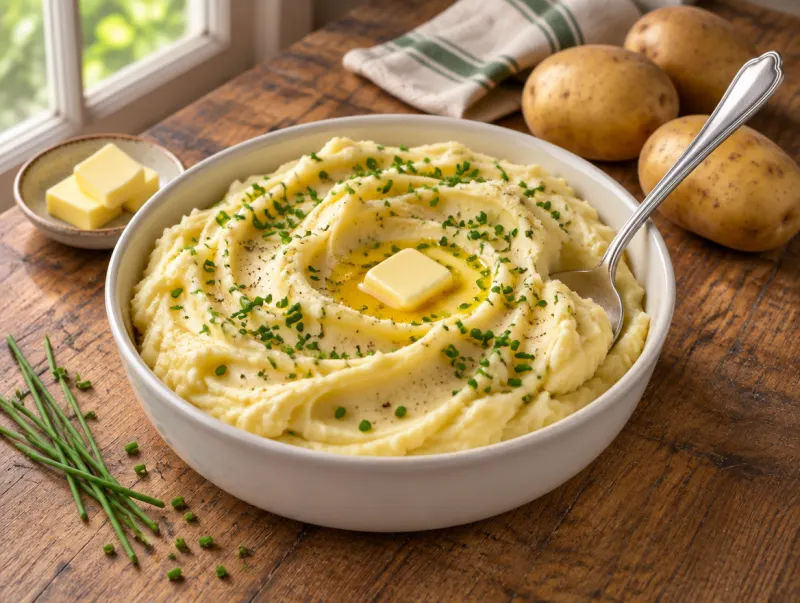
- Mashed potatoes
Questions
What is the difference between stuffing and dressing?
Traditionally stuffing is cooked inside the turkey and dressing is baked in a separate dish. Today the words are mostly regional: many people in the South say dressing for any version, while most other Americans say stuffing even when it is baked in a dish, like this one.
What kind of bread is best for stuffing?
A sturdy plain white loaf, French bread or a mix of both works best. Cut it into cubes and let it go stale or dry it in a low oven. Very soft sandwich bread works if dried well; sourdough adds a tangy flavour.
Can I make stuffing the day before?
Yes. Assemble it in the baking dish, cover and refrigerate overnight, then bake it straight from the fridge with about 10 extra minutes under the foil. You can also bake it fully a day ahead and reheat it covered with a splash of broth.
Why is my stuffing soggy?
Usually the bread was too fresh or there was too much broth. Dry the cubes until firm, add the broth gradually, and bake the last part uncovered so the excess moisture evaporates and the top crisps.
Do you need eggs in stuffing?
No, but they help. Eggs bind the bread so the stuffing scoops cleanly and has a slightly richer, set texture. Without eggs it is looser and more crumbly, which some families prefer; use a little less broth if you leave them out.