
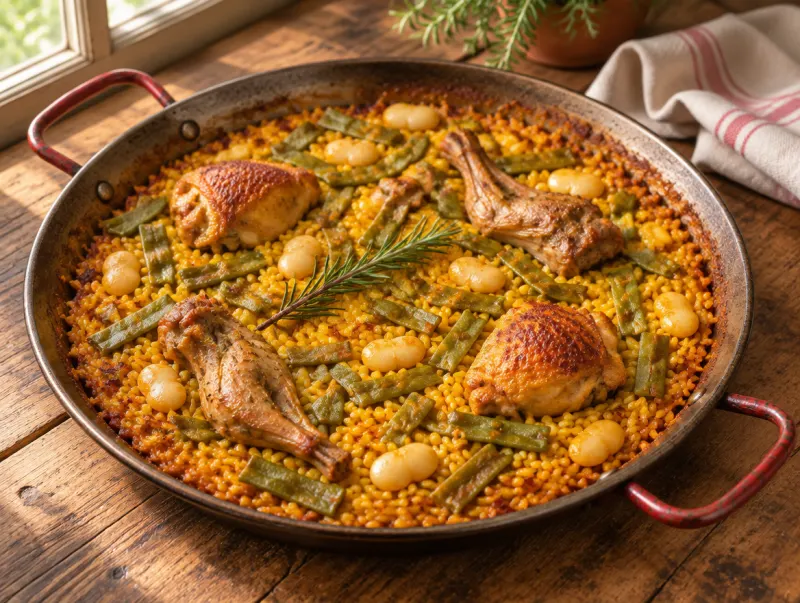
Paella Valenciana Recipe: Authentic Chicken and Rabbit Paella
Paella comes from Valencia, on Spain's eastern coast, where it is a Sunday lunch dish often cooked outdoors over a wood fire. The original version has no seafood and no chorizo. It is made with chicken, rabbit, flat green beans, large white beans called garrofó, tomato, paprika, saffron and short-grain rice.
Prep 20 min · Cook 1 h 15 · Main
Method
- Step 1 of 9 · 20 min
Brown the meat
Set the paella pan over medium-high heat and add the olive oil. Season the chicken and rabbit with a little of the salt and lay them in the pan. Brown slowly, turning often, until deep golden on all sides, about 15 to 20 minutes. This browning is where most of the flavour comes from.
You needolive oilchickenrabbitsalt - Step 2 of 9 · 5 min
Add the beans
Push the meat to the edges of the pan. Add the green beans and garrofó to the centre and fry, stirring, until the green beans darken in spots and soften slightly, about 5 minutes.
You needflat green beansgarrofó or large lima beans - Step 3 of 9 · 4 min
Cook the tomato and paprika
Clear a space in the middle and add the grated tomato. Cook, stirring, until it darkens and thickens into a jammy paste, 3 to 4 minutes. Stir in the paprika for only a few seconds, as it burns quickly.
You needlarge ripe tomatosweet paprika - Step 4 of 9 · 25 min
Make the broth
Immediately pour in the water, which stops the paprika from scorching. Crumble in the saffron and add the remaining salt. Bring to the boil, then simmer for 25 minutes so the meat flavours the water. Taste: it should be well seasoned, slightly saltier than soup.
You needsweet paprikawatersaffron threadssalt - Step 5 of 9
Check the liquid level
The broth should reach roughly the rivets where the handles join the pan. If it has reduced below that, top up with hot water and bring back to a boil. The right amount of liquid now decides whether the rice cooks through.
You needwaterbomba rice - Step 6 of 9 · 10 min
Add the rice
Scatter the rice evenly over the whole pan and nudge it with a spoon so it sits in an even layer under the broth. From this moment, do not stir again. Cook over high heat for 10 minutes, rotating the pan if your burner is smaller than the base.
You needbomba rice - Step 7 of 9 · 8 min
Finish cooking the rice
Lower the heat to medium-low and cook for about 8 minutes more, until the liquid has been absorbed and the rice is tender with a slight bite. Lay the rosemary sprig on top for the last few minutes if using.
You needbomba ricesprig fresh rosemary - Step 8 of 9 · 2 min
Make the socarrat
Turn the heat up to high for 1 to 2 minutes. Listen for a gentle crackling and a toasty smell, and check the bottom with a spoon at the edge: you want a crisp golden crust, not a burnt one.
- Step 9 of 9 · 5 min
Rest and serve
Take the pan off the heat, remove the rosemary and cover with a clean tea towel. Leave to rest for 5 minutes so the rice settles. Serve straight from the pan at the table, scraping up the crust.
You needbomba ricesprig fresh rosemary
About this dish
The rice is cooked in a wide, shallow pan in a thin layer, so it absorbs the broth evenly and never turns creamy like risotto. Once the rice goes in, you stop stirring. That is how the bottom layer caramelises into socarrat, the crisp, toasty crust everyone fights over.
This recipe builds the flavour in the pan itself. The meat is browned slowly, the vegetables and tomato go in next, and water is added to make a quick broth before the rice. A 38 to 40 cm paella pan is right for four people.
Tips
- Use a proper wide paella pan and a burner or grill that heats its whole base. On a small hob, use two burners or rotate the pan regularly so the rice cooks evenly.
- Bomba and other Spanish short-grain rices absorb lots of broth while staying separate. Long-grain or risotto rice will give you a very different texture.
- Never stir the rice once it is in. Stirring releases starch and stops the socarrat forming.
- Season the broth properly before the rice goes in. Once the rice has absorbed it, you cannot fix bland paella.
Variations
- All chicken: replace the rabbit with the same weight of extra chicken thighs. Very common at home.
- Paella de verduras: skip the meat, use more beans plus artichokes and red pepper, and make the broth with vegetable stock.
- Some Valencian cooks add snails or a few artichoke quarters in season, and leave out the rosemary.
Storing and reheating
Paella is at its best freshly made. Leftovers keep in the fridge for up to 2 days. Reheat in a frying pan with a splash of water over medium heat, covered, until hot through.
What to serve with it
- A simple lettuce and tomato salad
- Crusty bread
- Lemon wedges, if you like (not traditional in Valencia)
Questions
What is in a traditional paella valenciana?
The traditional Valencian recipe uses chicken, rabbit, flat green beans, garrofó beans, tomato, sweet paprika, saffron, olive oil, water, salt and short-grain rice. Some cooks add snails or rosemary. Seafood, chorizo and peas are not part of the classic version.
What is the best rice for paella?
Spanish short-grain rice such as bomba is the best choice. It absorbs a lot of broth while the grains stay whole and separate. Calasparra and other Valencian short-grain rices also work well.
Do you stir paella?
Only before the rice goes in. Once the rice is spread across the pan, leave it alone. Stirring makes the rice creamy and prevents the crisp socarrat from forming on the bottom.
What is socarrat?
Socarrat is the thin layer of rice that caramelises and crisps on the bottom of the paella pan in the last minutes of cooking. It has a toasty, slightly sweet flavour and is considered the best part of a good paella.