
Pasta Frola Recipe: Argentine Quince Lattice Tart
 Argentina
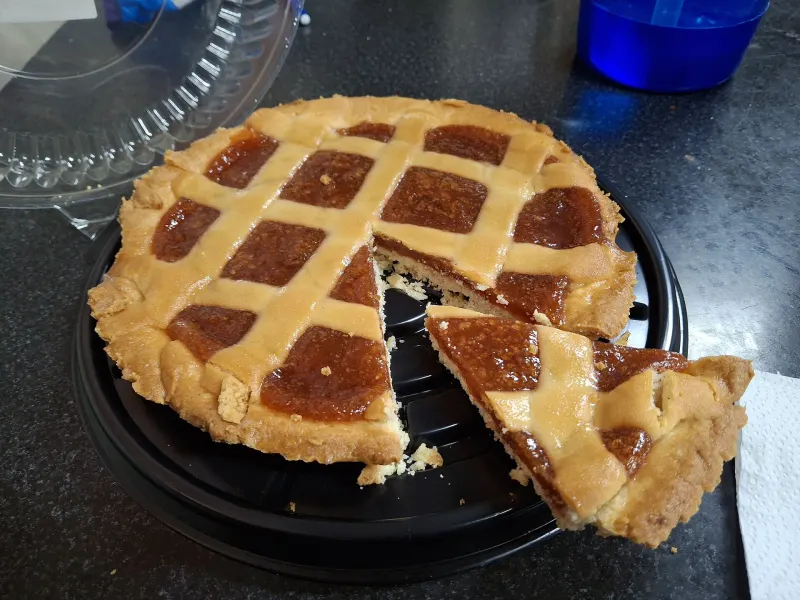
Pasta frola is the lattice jam tart of Argentina, Uruguay and Paraguay, the one that sits on the table at almost every afternoon mate. A soft, crumbly shortcrust scented with lemon zest and vanilla holds a thick layer of dulce de membrillo, the firm quince paste sold in blocks across the region, and a criss-cross of dough strips covers the top.
Prep 30 min · Cook 40 min · Baking
Method
- Step 1 of 10
Cream the butter and sugar
Heat the oven to 180°C (160°C fan) and butter a 24-26 cm tart tin with a removable base. In a large bowl, beat the soft butter and sugar with a wooden spoon or whisk until pale and creamy, about 2 minutes.
You needunsalted buttersugar - Step 2 of 10
Add the eggs and flavourings
Beat in the eggs one at a time, then the vanilla extract and lemon zest. The mixture may look a little split at this point; that is fine and comes together once the flour goes in.
You needeggsvanilla extractlemon zestplain flouregg - Step 3 of 10
Bring the dough together
Mix the plain flour, baking powder and salt, then add them to the bowl. Stir, then use your hands to press everything into a soft, smooth dough that no longer sticks to your fingers. Do not knead it more than needed, or the crust turns tough.
You needplain flourbaking powdersalt - Step 4 of 10 · 30 min
Rest the dough
Cut off about one third of the dough for the lattice. Wrap both pieces and chill them in the fridge until firm enough to roll without sticking.
- Step 5 of 10 · 5 min
Soften the quince paste
Put the quince paste cubes and water in a small pan over low heat. Stir and mash with a fork until it melts into a thick, spreadable, glossy paste with only small lumps. Take it off the heat and let it cool a little.
You needquince pastewater - Step 6 of 10
Line the tin
Roll the larger piece of dough on a floured surface to a round about 5 mm thick and lift it into the tin. Press it into the base and up the sides, trim the top edge and prick the base a few times with a fork.
- Step 7 of 10
Fill
Spread the softened quince paste evenly over the dough with the back of a spoon, right to the edges. Keep the layer level so the lattice sits flat on top.
You needquince paste - Step 8 of 10
Make the lattice
Roll the smaller piece of dough to about 4 mm and cut it into strips 1.5 cm wide. Lay half the strips across the tart in one direction and the rest on the diagonal to make diamonds. Press the ends onto the edge and brush the strips with the beaten egg.
You needegg - Step 9 of 10 · 40 min
Bake
Bake on the middle shelf until the lattice and edges are deep golden and the filling bubbles a little between the strips. If the top browns too fast, lay a sheet of foil loosely over it.
- Step 10 of 10 · 1 h
Cool and slice
Let the pasta frola cool in the tin on a rack, then unmould it. The quince filling is soft when hot and sets as it cools, so wait until it is fully at room temperature before cutting into wedges.
You needquince paste
About this dish
The name comes from Italian pasta frolla, shortcrust pastry, carried over by Italian immigrants. A close cousin called pasta flora is baked in Greece and in Arab home kitchens, usually with apricot jam, which is why this tart is searched in so many languages.
This version uses a quick hand-mixed dough with a little baking powder, the way Argentine home bakers make it, so the crust bakes up tender rather than hard. The quince paste is softened with a splash of water so it spreads easily and stays glossy. Let the tart cool fully before slicing: the filling sets as it cools.
Tips
- Use soft butter, not melted. Creamed soft butter gives the tender, crumbly crust pasta frola is known for; melted butter makes it greasy and dense.
- If the dough is too soft to roll, roll it between two sheets of baking paper and chill it for 10 minutes before lifting it into the tin.
- Melt the quince paste with only a splash of water. Too much water and the filling runs and soaks the crust instead of sitting on top of it.
- If the lattice strips break, press them back together on the tart. Nobody will notice once it is baked and glazed.
Variations
- Pasta frola de batata: use dulce de batata, sweet potato paste, softened the same way, a favourite in Argentina.
- Dulce de leche: spread a thick layer of firm, pastry-style dulce de leche instead of quince; do not heat it first.
- Pasta flora with apricot jam: the Greek and Arab-style version, using a thick apricot jam in place of quince paste.
- Guava: soften guava paste with a little water exactly like the quince.
Storing and reheating
Keep pasta frola covered at room temperature for up to 3 days; the fridge softens the crust. It also freezes well, wrapped whole or in slices, for up to 2 months. Thaw at room temperature.
What to serve with it
- Mate in the afternoon
- Black coffee or café con leche
- Tea at merienda time
Questions
What is pasta frola made of?
Pasta frola is a shortcrust tart made from butter, sugar, eggs, flour and a little baking powder, flavoured with lemon zest and vanilla. In Argentina the classic filling is quince paste, dulce de membrillo, with a lattice of dough on top.
What is the difference between pasta frola and pasta flora?
They are the same idea, a lattice jam tart named after Italian pasta frolla. Pasta frola is the Argentine, Uruguayan and Paraguayan spelling, usually filled with quince. Pasta flora is the name used in Greece and Arab countries, most often with apricot jam.
Can I use jam instead of quince paste?
Yes, but use a thick jam, such as a firm apricot jam, and do not add water to it. A loose jam runs during baking and makes the base soggy. Guava paste and sweet potato paste work just like quince.
Why is my pasta frola dough so sticky?
The butter was probably too warm or melted. Chill the dough for 30 minutes, then roll it between two sheets of baking paper with a little flour. Avoid adding lots of extra flour, which makes the crust dry and hard.
Should pasta frola be refrigerated?
No, it keeps best covered at room temperature for 2 to 3 days. The fridge makes the crust lose its crumbly texture. For longer storage, freeze it.
 United States