

Can AI Cook? What It Can Do in Your Kitchen and What It Can't
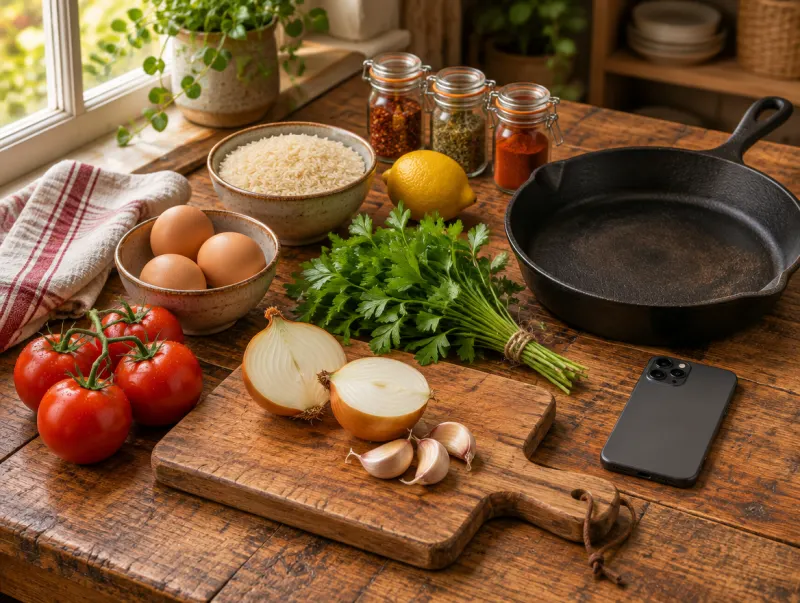
The short answer: it depends on which AI you mean
"AI" covers two very different things, and the answer to "can AI cook?" is different for each.
The first is software: chat assistants, voice assistants and recipe apps. These are language tools. They read your question and write an answer. They can describe how to fry an onion in great detail, but they cannot fry one. They cannot see your pan, smell when garlic starts to burn or taste whether the soup needs salt.
The second is hardware: cooking machines that heat and stir in one bowl, connected ovens, grills and air fryers, and robotic arms in some commercial kitchens. These do physically cook. Some use AI for things like recognising food through a camera or adjusting a program; many simply run pre-written cooking programs with sensors and timers. They work best on dishes they were designed for, such as soups, sauces, rice, fried snacks and grilled meat.
So when someone asks "can AI cook for me?", the honest answer is: a machine can cook some dishes for you, and a chatbot can help you cook almost anything, but nothing yet walks into a home kitchen and makes dinner from what is in your fridge.
| What you mean by AI | Can it physically cook? | What it actually does | Where it falls short |
|---|---|---|---|
| Chatbot or voice assistant | No | Plans meals, writes recipes, answers questions, converts units | Can be confidently wrong on times, temperatures and classics |
| Recipe app with AI features | No | Scales, swaps and explains a specific tested recipe | Only as good as the recipe it starts from |
| Cooking machine or smart appliance | Yes, within its programs | Heats, stirs, times and holds temperature | Limited dishes; you still shop, prep and load it |
| Commercial kitchen robot | Yes, for narrow tasks | Repeats one job such as frying or flipping | Built for restaurants, not homes |
What AI software can do for your dinner
Treat a chat assistant as a helper who has read a lot of cookbooks but has never stood at a stove. That helper is useful for the thinking parts of cooking:
- Deciding what to make. Give it a few ingredients and it will suggest dishes. You can do the same without AI: our free what can I cook finder matches the ingredients you tick against real recipes on this site. It is a simple ingredient match, not an AI, so every suggestion is a recipe that has been written out in full.
- Planning the order. "I am making rice, a curry and a salad, what do I start first?" is a good question for a chatbot. It is good at sequencing.
- Swaps and scaling. No yogurt, half the guests, cups to grams: quick answers that save searching.
- Explaining a step. If a recipe says "fry the paste until the oil separates", you can ask what that looks like.
We cover these uses in more detail in our guide to what an AI cooking assistant can and cannot do.
What you still have to do yourself
Cooking is mostly judgement made with your senses, and that part stays with you.
Seeing doneness. A recipe can say "6 to 8 minutes", but eggs in a shakshuka are ready when the whites are set and the yolks still wobble, and only you can see that in your pan, on your stove.

Smelling and tasting. Spices that are toasted versus burnt, a sauce that needs acid, rice that needs one more minute: a chatbot cannot know. It does not know how salty your stock is or how hot your chillies are.
Handling food safely. Washing hands and boards, keeping raw meat apart, chilling leftovers and cooking poultry through are physical habits. Software can remind you; it cannot do them.
Baking by feel. In a cake, the method matters as much as the list. For a soft Turkish pudding cake, the eggs and sugar are whisked until pale and thick before the oil and flour go in, and the cake only comes out when a skewer comes out clean. A chatbot can tell you that. Only you can see when the batter falls in a ribbon.

How to split the work: AI plans, you cook
The most useful way to "let AI cook" today is to divide the job. Here is a simple routine that works with any chat assistant:
- Start from a tested recipe, not a blank page. Pick a real recipe, such as a chicken biryani, and paste or describe it. Generated recipes are least reliable for baking, frying and classic dishes, as we explain in are ChatGPT recipes reliable.
- Ask the AI to adapt it. Scale it to your number of people, swap what you do not have, or turn it into a shopping list.
- Ask for a cooking timeline. "I want to eat at 7:30. When do I start each step?" This is where AI saves the most stress on a busy evening.
- Cook with your senses, not the clock. Use the times as a guide and the cues in the recipe (colour, smell, texture) as the real signal.
- Ask when you get stuck. Mid-cook questions ("my sauce split, what now?") are a good use of a voice assistant while your hands are busy.
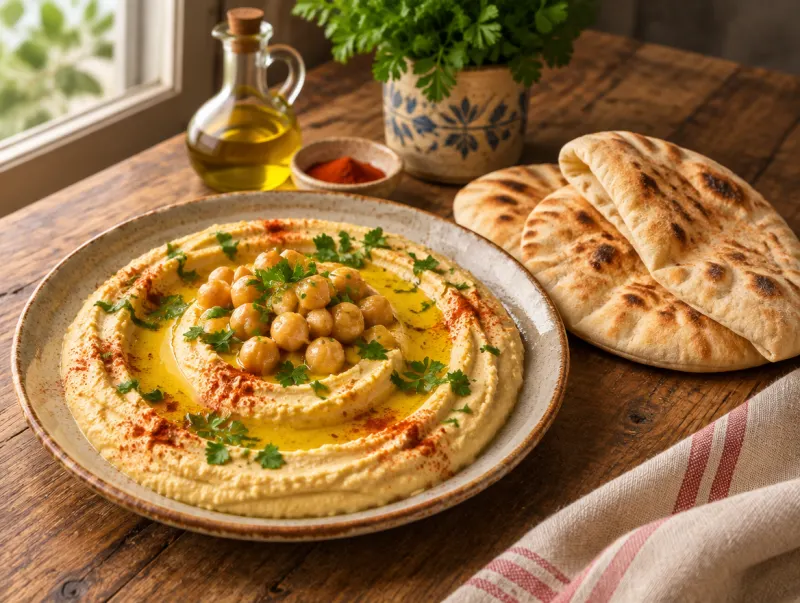
For dishes with little to go wrong, such as a dip like hummus or a weeknight stir-fry, you can lean on AI more. For a cake, a deep fry or a festive roast, lean on a tested recipe.
Can a robot cook a full meal at home?
Not in the way the question usually imagines. Countertop cooking machines can make a soup, risotto or sauce with little help once you have weighed and added the ingredients, and connected grills or ovens can hold a temperature and tell you when meat is ready. Commercial kitchen robots handle single, repetitive tasks in some restaurants. A home robot that shops, chops, cooks several dishes and cleans up is not something you can buy and rely on today.
If what you really want is less effort at dinner, the practical options are a slow cooker, a rice cooker, a sheet-pan recipe or a one-pot dish, plus an AI or a recipe finder to decide what to make. That combination gets you most of the way there.
FAQ
Can AI cook food by itself?
Software cannot; it has no physical way to handle food. Cooking machines and smart appliances can cook some dishes by themselves once you have prepared and loaded the ingredients, mostly by running set programs.
Can AI cook a meal for me?
It can plan the meal, write the shopping list, adapt a recipe and talk you through each step. The chopping, heating, tasting and judging when food is done are still your job in a home kitchen.
Will AI replace cooks?
Machines already take over some repetitive tasks in commercial kitchens, but cooking a good meal still depends on taste, smell, timing and judgement. For home cooking, AI works best as a helper rather than a replacement.
Is it safe to follow AI cooking instructions?
For simple, forgiving dishes, usually yes, if you read the recipe first. For poultry, deep frying, preserving and baking, check times and temperatures against a tested recipe, because a chatbot can state wrong numbers confidently.
What is the easiest way to cook from what I have without AI?
Use an ingredient matcher like our what can I cook finder, which shows real recipes that use the ingredients you have, then follow the recipe as written.
 Tunisia
 Turkey

 India
 Lebanon