

Traditional Middle Eastern Food: 18 Dishes and Where to Start
What counts as Middle Eastern food
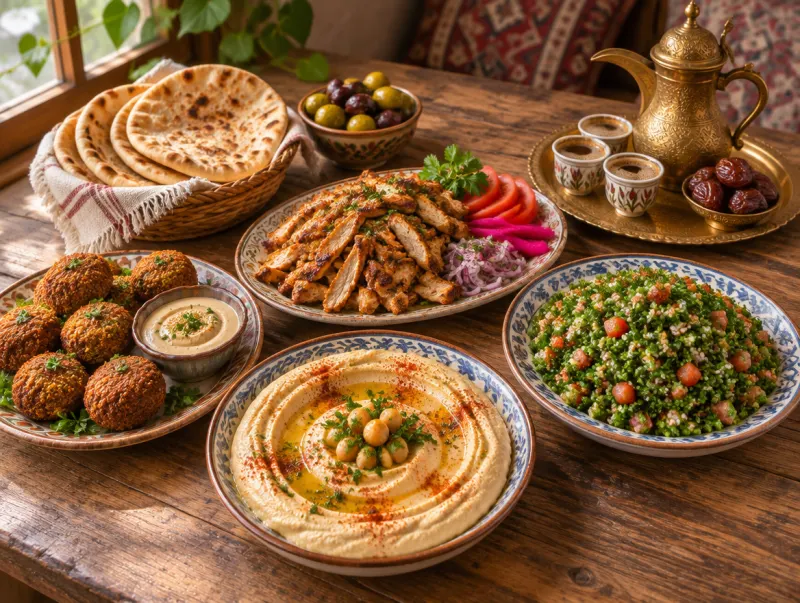
"Middle Eastern" covers a lot of kitchens: the Levant (Lebanon, Syria, Jordan, Palestine), Egypt, Iraq, the Gulf and Yemen, Turkey and Iran. Each has its own dishes and its own pride in them, and people from the region will happily tell you whose hummus is best.
Still, the cuisines share a lot. Chickpeas, lentils and fava beans. Bulgur and rice. Lamb and chicken more than beef. Flatbread on every table. Olive oil, lemon, garlic and parsley in the west of the region; more cardamom, dried lime and saffron as you move toward the Gulf and Iran. And above all, a habit of putting many dishes in the middle and eating together.
Dishes with a link have a full recipe on Srbiny. The list below is organised the way a meal actually happens, from the small plates to the coffee, so you can see how the dishes fit together rather than reading a random top-ten.
Traditional Middle Eastern food list
| Dish | Where it is from | What it is |
|---|---|---|
| Hummus | Levant | Chickpeas blended with tahini, lemon and garlic |
| Tabbouleh | Lebanon, Syria | Parsley salad with a little bulgur, tomato and lemon |
| Baba ganoush | Levant | Smoky roasted aubergine dip with tahini |
| Muhammara | Syria | Red pepper and walnut dip with pomegranate molasses |
| Fattoush | Lebanon | Chopped salad with toasted bread and sumac |
| Falafel | Egypt, Levant | Fried patties of ground chickpeas or fava beans |
| Kibbeh | Levant, Iraq | Bulgur shell filled with spiced minced meat |
| Manakish | Levant | Flatbread with za'atar and olive oil or cheese |
| Shawarma | Levant, Turkey | Marinated meat cooked on a vertical spit |
| Kebab | Whole region | Grilled skewers of minced or cubed meat |
| Mansaf | Jordan | Lamb cooked in fermented yogurt, served over rice |
| Kabsa | Saudi Arabia, Gulf | Spiced rice cooked with chicken or lamb |
| Zurbian | Yemen | Layered spiced rice with meat, potatoes and saffron |
| Maqluba | Palestine | "Upside-down" pot of rice, vegetables and meat |
| Koshari | Egypt | Rice, lentils and pasta with tomato sauce and fried onions |
| Ful medames and bissara | Egypt | Slow-cooked fava beans, whole or as a thick purée |
| Baklava and knafeh | Turkey, Levant | Syrup-soaked pastry with nuts; cheese pastry |
| Arabic coffee | Gulf, Levant | Light-roast coffee with cardamom, served in tiny cups |
Mezze: the heart of the table
A Levantine meal often starts with mezze, a spread of small dishes eaten with flatbread. You do not need many to make it feel generous. Three is a good number at home: one dip, one salad and one hot bite.
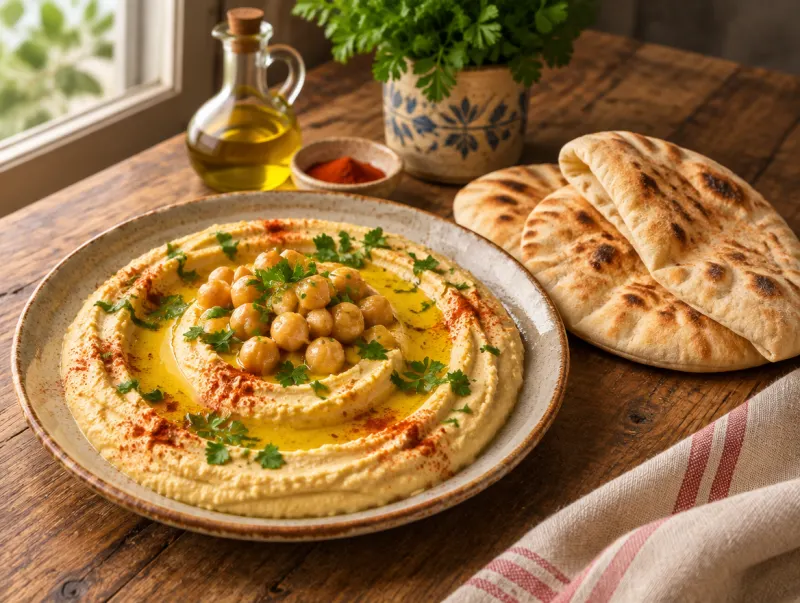
The dip is almost always hummus. A good one is smooth, loose enough to swirl, and tastes clearly of tahini and lemon rather than just chickpeas. Our hummus recipe cooks dried chickpeas with a little baking soda until very soft, then blends them with ice-cold water for that whipped texture.
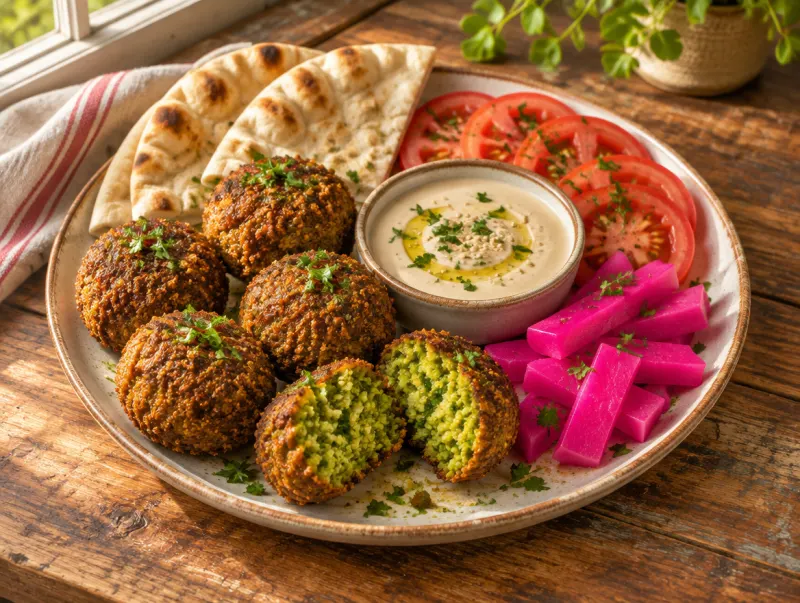
For the salad, make tabbouleh. Outside the region it is often served as a bulgur salad with some parsley; in Lebanon it is the other way round, mostly parsley with a spoon of bulgur, sharp with lemon. For the hot bite, falafel is the classic: made from soaked, uncooked chickpeas, never canned ones, so the inside stays light and green with herbs.
Grills, wraps and street food
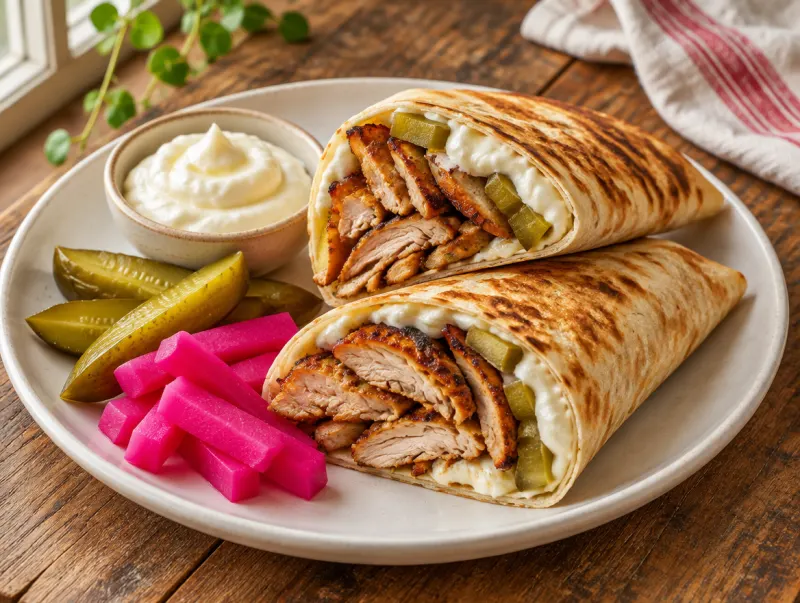
Grilled meat is the second big pillar. Kebabs in endless forms, shish taouk (marinated chicken skewers), and above all shawarma, the spit-roasted meat sliced thin and wrapped in bread with garlic sauce and pickles.
Most home kitchens do not have a vertical spit, so the home version cooks well-marinated chicken thighs in a hot pan or oven and slices them. Our chicken shawarma does exactly that, with a yogurt, lemon and spice marinade, a whipped garlic toum and pickles for the wrap.
Street food in Egypt looks different: falafel there is usually made with fava beans and called ta'meya, and the classic cheap, filling lunch is koshari.
Rice dishes for feasts
When there is a wedding, a holiday or guests to honour, the centrepiece is usually a big platter of rice with meat. Jordan has mansaf, lamb cooked in a sauce of fermented dried yogurt (jameed) and served over rice with toasted nuts. Saudi Arabia and the Gulf have kabsa. Palestine has maqluba, cooked in layers in one pot and flipped onto a tray at the table.
Yemen's version is zurbian: chicken or lamb marinated in yogurt and spices, cooked with rice, layered with fried potatoes and onions and finished with saffron. It is a weekend project, but most of the time is hands-off, and it feeds a crowd.
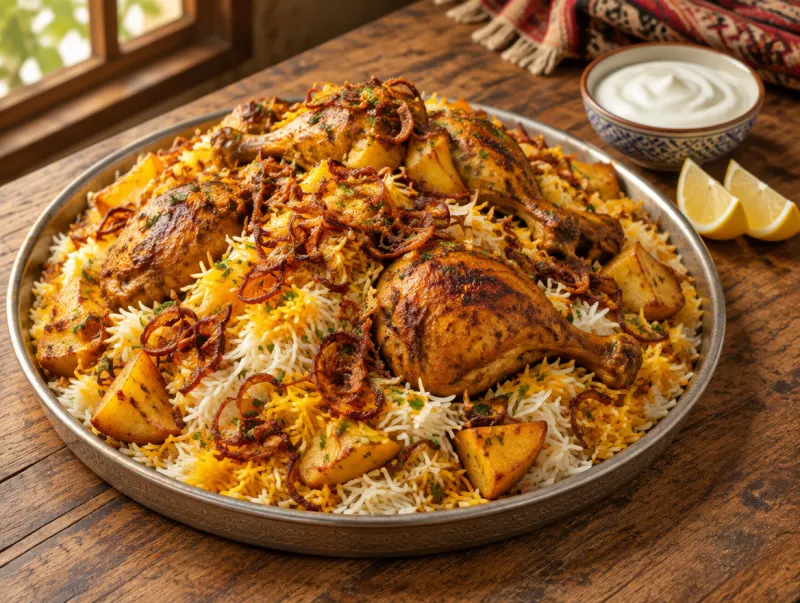
These dishes are meant to be shared from one large platter, with a simple tomato salad, yogurt and a hot chilli sauce on the side.
Breakfast: beans, eggs and bread
Breakfast across the region is savoury. In Egypt it is ful medames, fava beans cooked slowly and dressed with oil, lemon, cumin and garlic, or bissara, the green fava bean purée loaded with herbs. In the Levant you will find labneh with olive oil, za'atar, olives, cucumbers and manakish. In Turkey, menemen scrambles eggs into soft peppers and tomatoes, and shakshuka, originally from North Africa, is now a breakfast favourite across the Middle East too.
Sweets and coffee
A meal ends with something sweet and something to drink. Pastries soaked in syrup are the signature: baklava with layers of filo and pistachio or walnut, knafeh with its stretchy cheese under a crisp, orange top, and ma'amoul, the date-filled shortbread made for Eid and Easter.
Then comes coffee. Arabic coffee (qahwa) is a pale, light-roast coffee boiled with cardamom and sometimes saffron, poured in small cups and served with dates. It is a gesture of welcome as much as a drink, so it is often the first thing a guest is offered, not just the last.
Where to start at home
If you are new to the food, start with dishes that use ingredients you can find anywhere:
- Hummus and tabbouleh - no special equipment, ready in under an hour, and they teach you the region's basic balance of tahini, lemon, garlic and herbs.
- Chicken shawarma - a weeknight dinner once the chicken has marinated, and a good use of the hummus.
- Falafel - needs dried chickpeas soaked overnight, so plan a day ahead.
- A rice feast like zurbian - save it for a weekend and a full table.
Stock a few pantry staples and most of the list opens up: tahini, bulgur, dried chickpeas, sumac, za'atar, pomegranate molasses, cardamom and a good olive oil. Flatbread can be bought; the dips and salads are where homemade makes the biggest difference.
FAQ
What is the most popular Middle Eastern food?
Hummus, falafel and shawarma are the best-known dishes outside the region and are eaten widely inside it too. In each country, though, the national favourite is often a rice dish served at gatherings, such as mansaf in Jordan or kabsa in Saudi Arabia.
What do people in the Middle East eat for breakfast?
Usually a savoury spread: fava beans (ful medames), labneh, olives, cheese, eggs, fresh vegetables and bread, with tea. Egyptian bissara, Turkish menemen and shakshuka are popular cooked breakfast dishes.
Is Middle Eastern food healthy?
Many traditional dishes are built on beans, vegetables, whole grains like bulgur, olive oil and herbs, which makes for a varied diet. Like any cuisine it also includes fried foods, rich meat dishes and very sweet pastries, so it depends on what you choose.
What is the difference between Middle Eastern and Mediterranean food?
They overlap. The Levant and Turkey sit on the Mediterranean, so dishes like hummus and tabbouleh belong to both. "Middle Eastern" also takes in the Gulf, Iraq, Yemen and Iran, with more rice dishes, cardamom, dried lime and saffron.
Is Middle Eastern food spicy?
Mostly it is aromatic rather than hot. Cumin, cinnamon, allspice, cardamom and sumac give flavour without much heat. Chilli is usually served on the side, as a sauce like Yemeni sahawiq or a dish of sliced green chillies.
 Lebanon
 Yemen