
Egyptian Bissara Recipe: Green Fava Bean Dip with Crispy Onions
 Egypt
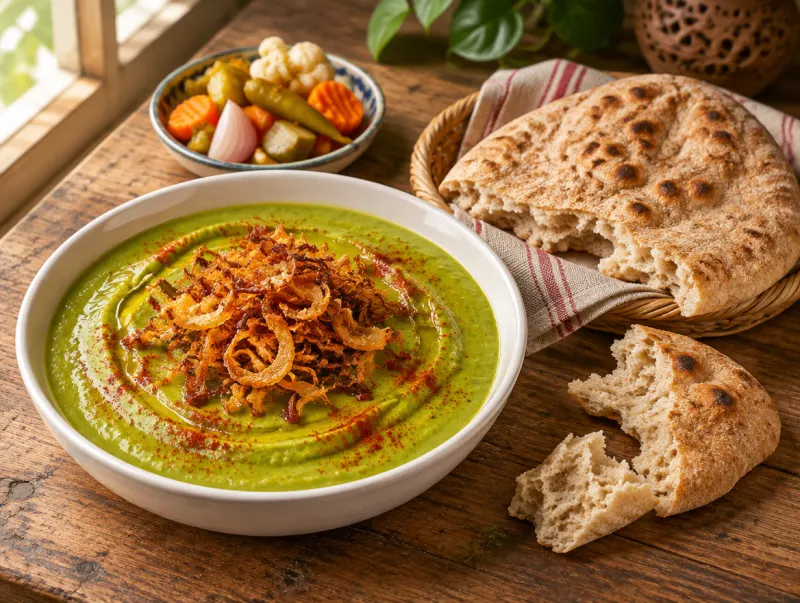
Bissara, spelled bessara or besara in Egypt, is a thick, bright green purée of dried split fava beans cooked with a big handful of fresh herbs. It is everyday home food across Egypt, eaten for breakfast or a light supper with warm baladi bread, pickles and fresh vegetables, much like ful medames.
Prep 20 min · Cook 55 min · Breakfast
Method
- Step 1 of 8 · 8 h
Soak and rinse the fava beans
Cover the dried split fava beans with plenty of cold water and soak them overnight, or for at least 8 hours. Drain, then rinse them in a sieve, picking out any dark or unpeeled pieces. They should look plump and pale yellow.
You needdried split peeled fava beanswater - Step 2 of 8 · 10 min
Start the beans with onion and garlic
Put the soaked fava beans in a large pot with the chopped onion, garlic cloves and 1.2 litres of water. Bring to the boil and skim off the foam that rises to the top so the bissara stays clean and green.
You needdried split peeled fava beansoniongarlicwateronions - Step 3 of 8 · 30 min
Simmer until the beans collapse
Lower the heat, partly cover and simmer, stirring now and then, until the fava beans are completely soft and falling apart when pressed against the side of the pot. Add a splash of hot water if it gets thick before they are done.
You needdried split peeled fava beanswater - Step 4 of 8 · 5 min
Add the herbs and chilli
Stir the parsley, fresh coriander, dill and green chilli into the pot with the ground cumin, ground coriander and salt. Simmer for a few minutes, just until the herbs wilt and turn bright green. Do not cook them longer or they lose their colour.
You needgreen chillifresh parsleyfresh corianderfresh dillground cuminground coriandersalt - Step 5 of 8 · 20 min
Fry the onions
While the beans cook, heat the sunflower oil in a frying pan over medium heat. Fry the sliced onions, stirring often, until they are deep golden brown and crisp. Lift them out onto paper towels; they crisp up more as they cool.
You needdried split peeled fava beansoniononionssunflower oilolive oil - Step 6 of 8
Blend until smooth
Blend the beans, onion, garlic, herbs and cooking liquid with a stick blender, or in batches in a blender, until smooth and green. It should be like a thick, spoonable dip. Add hot water to loosen it or simmer a few minutes to thicken.
You needdried split peeled fava beansoniongarlicwateronions - Step 7 of 8
Season with lemon
Stir in the lemon juice, then taste and add more salt, lemon or cumin as needed. The bissara should taste fresh and herby with a gentle heat from the chilli. It thickens further as it cools, so keep it a little loose.
You needgreen chilliground cuminsaltlemon juice - Step 8 of 8
Top and serve
Spoon the bissara into shallow bowls or a wide plate. Pile the crispy fried onions on top, drizzle with olive oil and sprinkle with paprika. Serve warm or at room temperature with bread.
You needoniononionssunflower oilolive oilpaprika
About this dish
The Egyptian version is very different from the Moroccan bissara soup. Here the peeled, split yellow fava beans are simmered with onion, garlic, green chilli, dill, parsley and fresh coriander until they collapse, then blended into a smooth, spoonable dip seasoned with cumin and ground coriander and finished with lemon.
What makes it is the topping. A generous layer of thinly sliced onions fried slowly until deep golden and crisp goes on just before serving, along with a drizzle of olive oil and a pinch of paprika. The sweet, crunchy onions against the cool, grassy purée are the whole point.
Tips
- Use split, peeled yellow fava beans, not whole brown ones. Whole beans need peeling and give a darker, grainier purée.
- Add the herbs only at the end and blend soon after. Long cooking turns them dull olive green.
- Fry the onions slowly over medium heat. Too hot and they burn at the edges before the middle crisps.
- Make it a little looser than you want. Bissara sets firm as it cools and in the fridge.
- Keep the onion frying oil: it is lightly sweet and good for cooking eggs or more onions.
Variations
- Some Egyptian cooks add a handful of fresh mint or dried molokhia with the herbs for a deeper green flavour.
- For a soup-like bissara, add more water at the blending step and serve it hot in bowls.
- Leek in place of the onion gives a milder, sweeter base.
- Moroccan bissara is a different dish: a soup of the same beans seasoned with olive oil, cumin and paprika, without the green herbs.
Storing and reheating
Keep bissara covered in the fridge for up to 4 days; store the fried onions separately in an airtight jar at room temperature so they stay crisp. It thickens when cold: reheat gently with a splash of water, or eat it at room temperature. It freezes well for up to 3 months.
What to serve with it
- Warm baladi bread or pita
- Egyptian pickles (torshi)
- Sliced tomatoes, cucumbers and spring onions
- Ful medames or ta'ameya at breakfast
- Hot sweet tea
Questions
What is Egyptian bissara made of?
Egyptian bissara is made from dried split fava beans cooked with onion, garlic, green chilli and lots of fresh dill, parsley and coriander, seasoned with cumin and ground coriander, blended smooth and topped with crispy fried onions.
What is the difference between Egyptian and Moroccan bissara?
Both use split fava beans. Egyptian bissara is a thick green dip full of fresh herbs and topped with fried onions. Moroccan bissara is usually a yellow soup seasoned with olive oil, cumin and paprika, without the green herbs.
Do you have to soak fava beans for bissara?
Soaking overnight is best: the beans cook faster and more evenly and blend smoother. If you are short on time, a few hours of soaking works, but expect the simmering to take longer.
Is bissara eaten hot or cold?
Both. In Egypt it is often eaten warm or at room temperature with bread, and leftovers are eaten cold straight from the fridge, where it firms up into a thick spread.
Can I use whole fava beans for bissara?
You can, but you need to peel off the tough brown skins after soaking, which takes time, and the purée will be darker. Split peeled fava beans are the usual choice.
 Tunisia
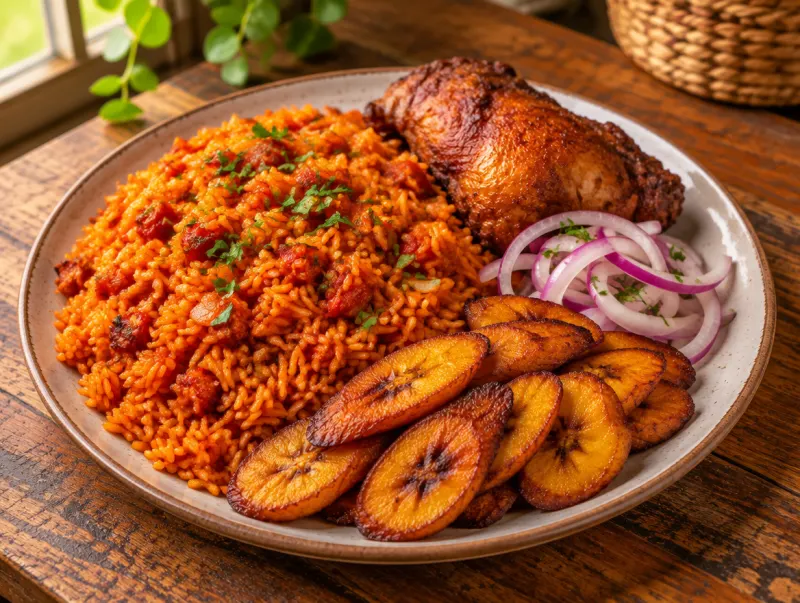
 Nigeria
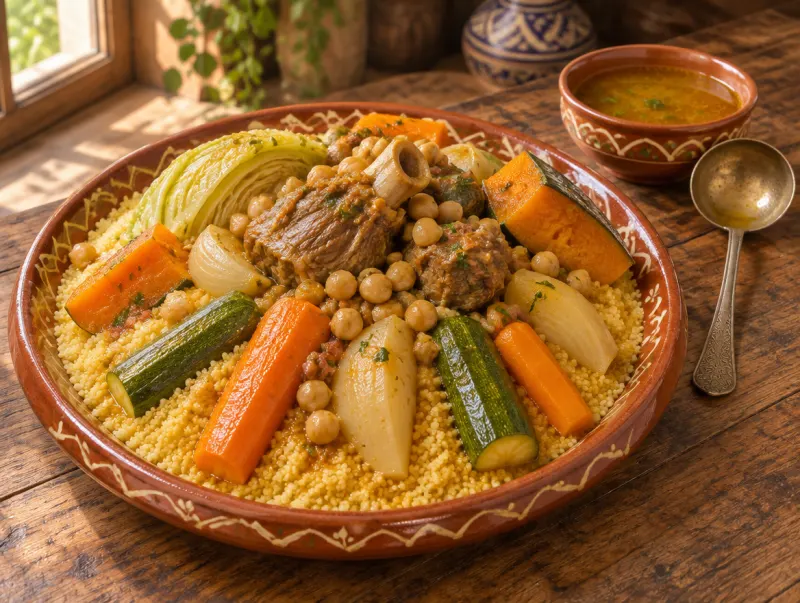
 Morocco