

ChatGPT Meal Plan Prompt: 6 Copy-and-Paste Templates
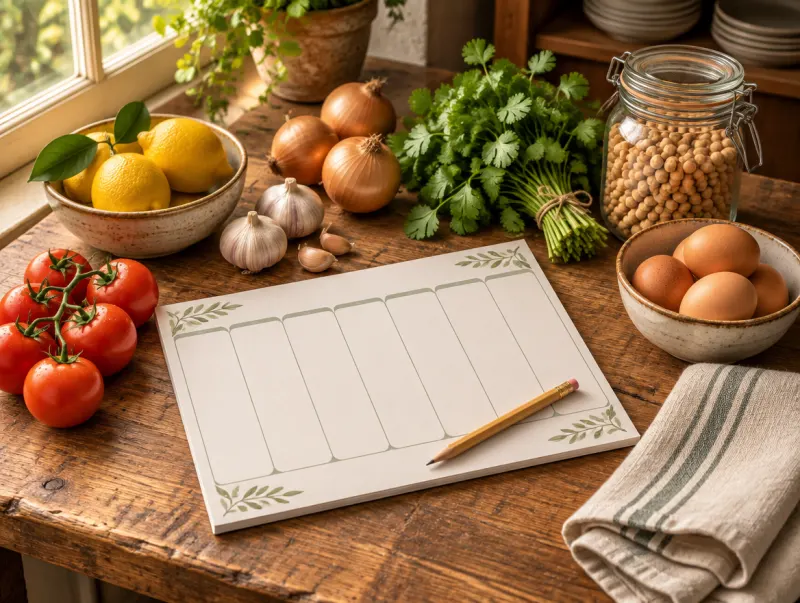
What a meal plan prompt needs to say
A chatbot knows nothing about your household. Ask it for "a healthy meal plan for the week" and it fills every gap with an average: two adults, a full kitchen, an hour to cook each night and an empty fridge. The plan reads well and fits nobody.
The fix is plain information, not a clever trick. These details change the answer most.
| Tell it | Example | What it changes |
|---|---|---|
| Who is eating | 2 adults, 2 children aged 6 and 9 | Portions and how adventurous the meals are |
| When you can cook | Free on Sunday and Wednesday, 30 minutes other nights | Which nights get the long dishes |
| What to avoid | No pork, one child dislikes mushrooms | Removes meals you would have swapped anyway |
| What you have | Rice, canned tomatoes, eggs, half a cabbage | Shortens the shopping list, cuts waste |
| Dishes you want | Harira, chicken adobo, one pasta | Anchors the week in food you trust |
| Equipment | No oven, one large pot, a rice cooker | Stops it planning roasts you cannot make |
| Output format | A table, then one grocery list by aisle | Makes the plan usable at a glance |
Who, when and format matter most.
Template 1: the weekly dinner plan
This is the one to start with. Replace the parts in brackets.
Plan 7 dinners for [3 adults]. I can cook properly on [Sunday and Wednesday]; the other nights need [30 minutes] or less. We do not eat [pork or shellfish]. Include these dishes: [harira, chicken adobo, shakshuka]. Plan at least one leftover night on purpose. Give the plan as a table with the day, the dish, the active cooking time and a note on what can be prepared ahead.
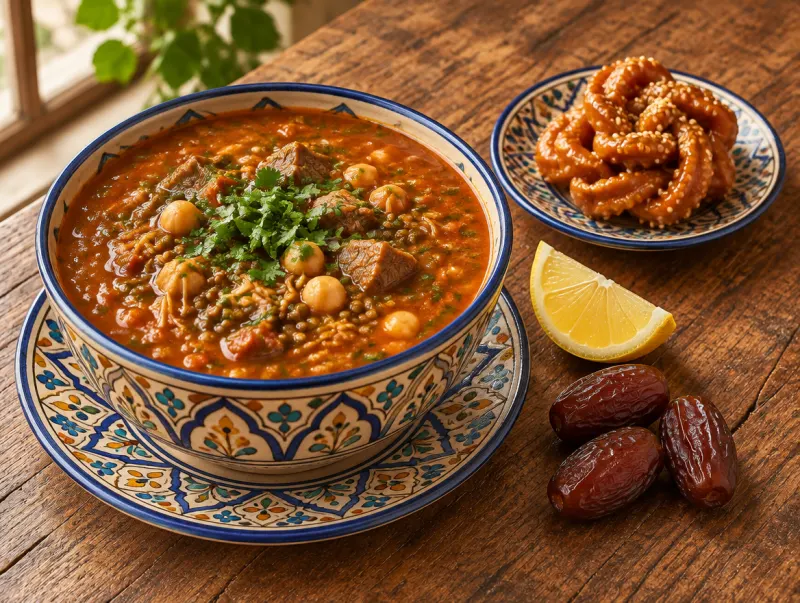
Naming dishes is the most useful line in it. A plan built from dishes somebody has already cooked is far safer than seven recipes written on the spot, for the reasons covered in are ChatGPT recipes reliable?. Pick a big pot for a free day, such as Moroccan harira, and fast dishes such as shakshuka or menemen for the short nights.
Template 2: meal plan and grocery list together
A plan without a list is half a job. Ask for both in the same message so the quantities match.
Using the plan above, write one combined grocery list for the whole week. Group it by supermarket section. Give quantities in grams or pieces, add up ingredients that appear in more than one meal, and put anything I said I already have in a separate "check at home" section.
Then read the list against each recipe before you shop. Chatbots sometimes leave off an ingredient that appears in a step, or count an onion once when three meals need one.
Template 3: start from what is in your kitchen
When the fridge is half full, plan around it instead of around a blank page.
I have these ingredients: [chickpeas, eggs, rice, canned tomatoes, half a cabbage, carrots, onions, yogurt, chicken thighs]. Plan 4 dinners that use as many of them as possible. For each dinner, list what I already have and what I still need to buy. Keep the extra shopping to 8 items or fewer.
For this job you can also skip the chatbot. The free What can I cook? finder on this site takes the ingredients you tick and lists the recipes here that you can make with them, plus what is missing. It is not AI: it simply matches your ingredients against written, tested recipes. Once it has given you a few dishes, paste their names into template 1 and let the chatbot arrange the week.
If chickpeas or eggs are what you have most of, the chickpeas and eggs pages list every recipe that uses them.
Template 4: a family plan with one base and two versions
Feeding children and adults from the same pot is where plans usually break. Ask for it directly.
Plan 5 family dinners for 2 adults and 2 children aged [6 and 9]. Each dinner should be one base dish that can be served plain for the children and with more spice or sauce for the adults. No dinner should need more than one pan and one pot. Tell me which part to take out for the children and when.
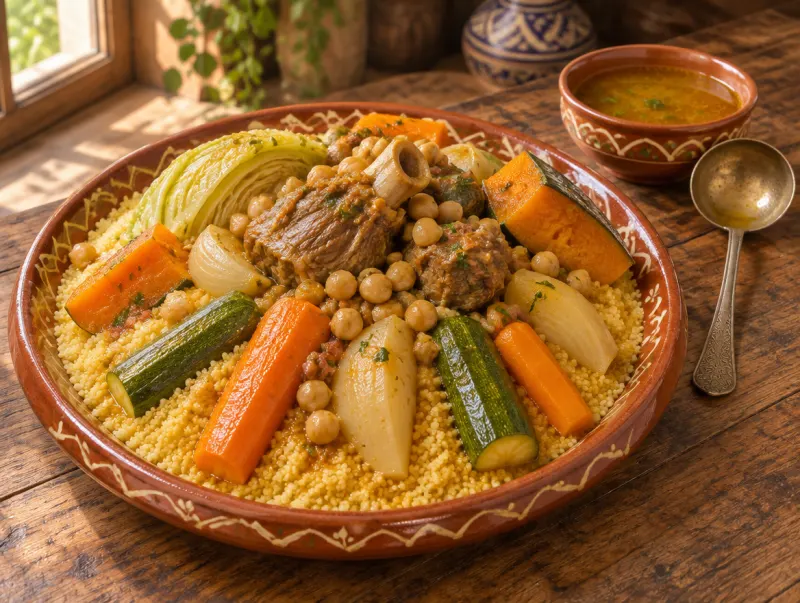
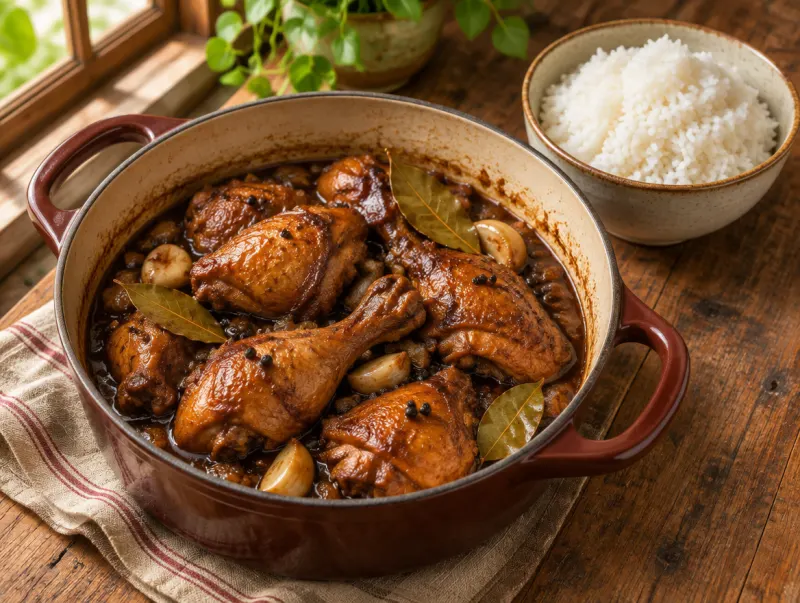
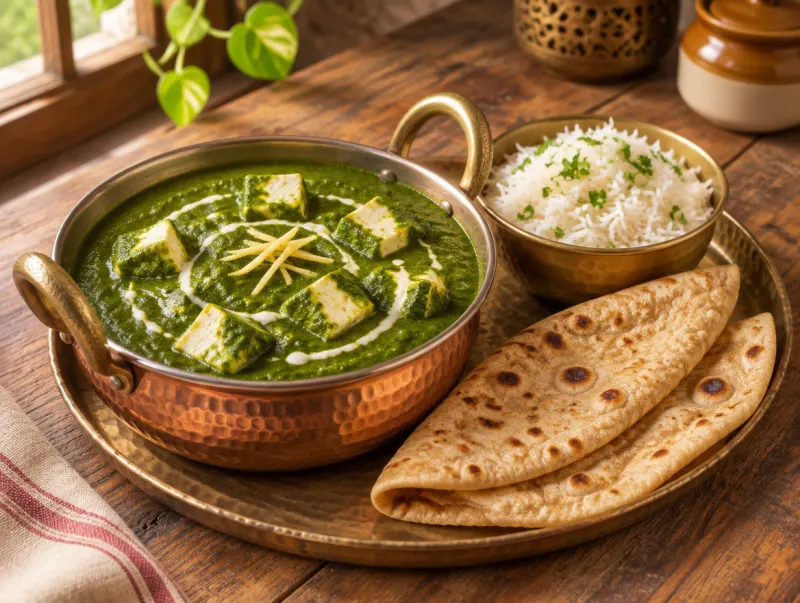
Dishes that are served in parts suit this well. With Moroccan couscous, everyone takes the couscous, vegetables and meat they like and adds broth at the table. Chicken adobo with plain rice is mild enough for most children, and palak paneer can be made gentle and spiced up with chili on the adult plates.
Template 5: the budget week
A chatbot cannot see the prices in your shop, so do not ask it for a total in money. Ask it to control the things that drive cost instead.
Plan 6 dinners for [4 people] on a tight budget. Use dried or canned beans, lentils, eggs, rice and seasonal vegetables as the base. Use meat in no more than 2 dinners. Every fresh ingredient must appear in at least 2 meals so nothing is wasted. Give the grocery list with quantities so I can price it myself.
The rule that every fresh item appears twice does the most work: the coriander bought for falafel on one night also goes into a pot of soup on another.
Template 6: let it interview you first
If you are not sure what to put in the prompt, turn it around.
I want a weekly meal plan. Before you write anything, ask me up to 8 short questions about my household, schedule, tastes, kitchen and budget. Wait for my answers, then write the plan as a table with one grocery list.
This takes a few minutes longer, but the questions bring up details you would not have thought to mention, such as a late training night or a full freezer.
Follow-up prompts that fix a plan
The first plan is a draft. Short follow-ups improve it faster than rewriting the original prompt.
- "Swap Thursday for something with no chopping." Change one meal without touching the rest.
- "Thursday's dinner must use Wednesday's leftovers." Turns two cooking nights into one.
- "Give me a Sunday prep list: what can I wash, chop, cook or marinate ahead?" One hour at the weekend shortens every weeknight.
- "Update the grocery list for the changes." Always ask again after swapping meals, or the list will be out of date.
For the wider picture of what planners do well and where they go wrong, see our guide to the AI meal planner.
What not to ask a chatbot to decide
Prompts for weight loss, fitness and "nutrition plans" are some of the most searched, and they need care. A chatbot can organise meals around a calorie or protein target that a professional has given you. It should not be the one setting that target. The calorie numbers it prints next to each meal are estimates, not measurements.
The same goes for allergies and medical diets. Say them clearly in the prompt, but still read every label and every recipe yourself. If you are planning food for a medical condition, pregnancy, a child with allergies or a specific weight goal, get the plan from a doctor or a registered dietitian and use the chatbot only to turn their advice into a schedule and a shopping list.
FAQ
What is the best ChatGPT prompt for a meal plan?
One that gives the number of people, the nights you can cook, foods to avoid, what you already have and the format you want. Ask for a table of dinners and one grocery list grouped by section. Naming a few dishes you already trust improves the plan more than any other line.
Can ChatGPT make a meal plan with a grocery list?
Yes. Ask for both in the same conversation and tell it to combine ingredients that appear in several meals. Check the list against each recipe before shopping, because an ingredient used in a step is sometimes missing from the list.
Is a ChatGPT meal plan prompt free to use?
The prompts are plain text, so they work in the free version of ChatGPT and in other chat assistants. Paid plans do not change how the prompt is written. What you get back depends mostly on how much detail you give.
Can I use a ChatGPT meal plan for weight loss?
It can arrange meals around targets you already have from a doctor or registered dietitian. Do not rely on it to set those targets, and treat any calorie figures it gives as rough estimates.
How do I get ChatGPT to use what I already have?
List your ingredients in the prompt and ask for dinners that use as many as possible, with a short list of what is missing. To find tested recipes for your ingredients instead of generated ones, use the free What can I cook? finder.
 Morocco
 Philippines
 India