
Christmas Desserts from Around the World: 13 to Know and Make
Most lists of Christmas desserts stop at a photo and a line of description. This one is sorted the way a home cook needs it: by how far ahead you can make each dessert. A few of them we have full, tested recipes for; the rest are classics worth knowing, with an honest note on what they involve.
Weeks ahead: the rich, keeping desserts
The oldest Christmas desserts were built to last. Dried fruit, sugar, butter and often alcohol keep them good for weeks, and many get better as they wait.
Stollen (Germany). A dense, buttery yeast bread packed with dried fruit, candied peel and nuts, often with a rope of marzipan through the middle, brushed with melted butter and buried in icing sugar. The Dresden version is the most famous. It is usually baked a couple of weeks before Christmas and wrapped tightly so the flavours settle.
Christmas pudding (United Kingdom and Ireland). A dark, steamed pudding of dried fruit, suet, breadcrumbs, spices and dark sugar, usually soaked with brandy. Families traditionally make it well before Christmas, then steam it again on the day and bring it to the table flaming, with brandy butter or custard.
Black cake and rum cake (Caribbean). In Jamaica, Trinidad and across the Caribbean, dried fruit is soaked in rum and wine for weeks or months, then blended into a very dark, moist cake. It is made ahead and kept fed with more alcohol.
Melomakarona (Greece). Soft biscuits made with olive oil, orange and spices, dipped in honey syrup and topped with chopped walnuts. They keep for a couple of weeks in a tin and are baked in large batches for visitors.
A few days ahead: pies, cakes and puddings
These need a day or two at most, which makes them the backbone of a stress-free dessert table.
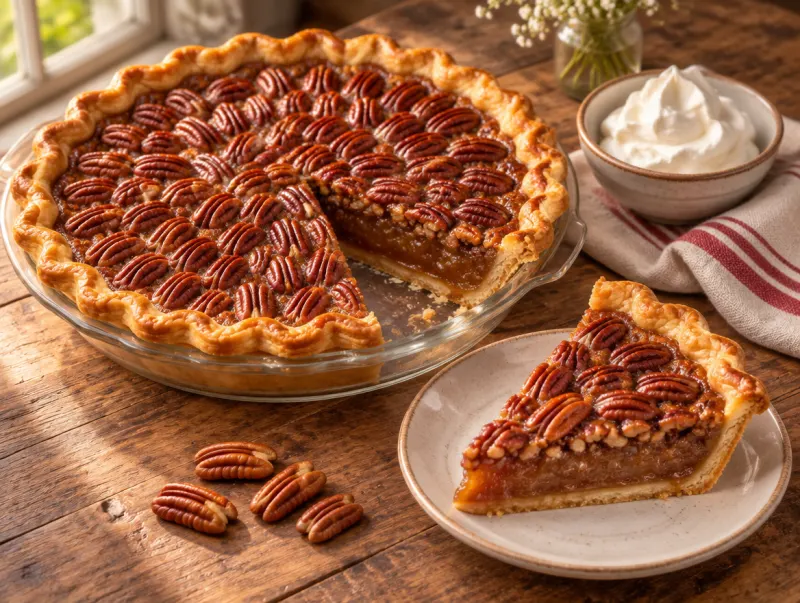
Pecan pie (United States). A sweet custard of eggs, syrup, sugar and butter with pecans that float to the top as it bakes. It is a fixture of both Thanksgiving and Christmas in the US and keeps well for a couple of days. Our pecan pie recipe uses a homemade crust and a filling that sets cleanly every time.
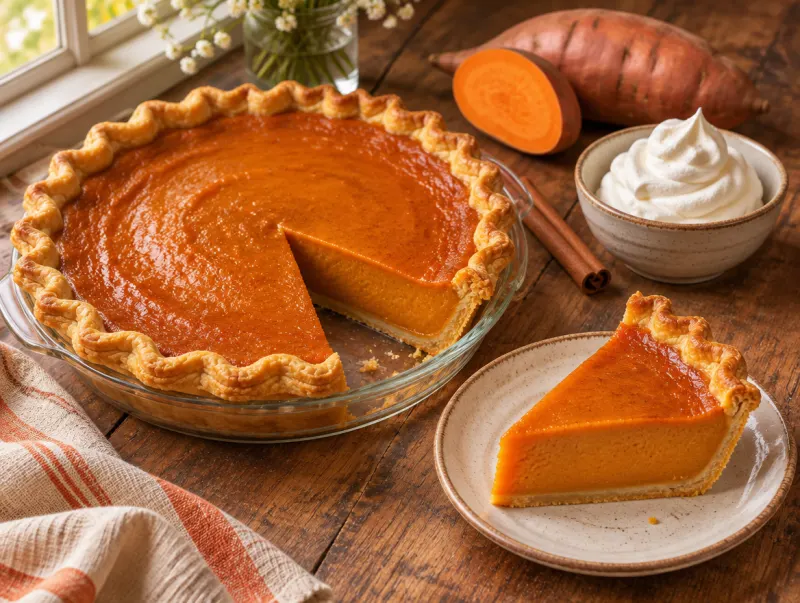
Sweet potato pie (American South). A spiced custard pie of mashed sweet potatoes, butter, eggs and milk, and a soul food centrepiece at Christmas as well as Thanksgiving. It is best made the day before so it slices cleanly. See our sweet potato pie from scratch.
Risalamande (Denmark). Cold rice pudding folded with whipped cream and chopped almonds, served with warm cherry sauce on Christmas Eve. One whole almond is hidden in the bowl, and whoever finds it wins a small prize. The rice base is cooked a day ahead.
Bûche de Noël (France and Belgium). A rolled sponge cake filled and covered with chocolate buttercream or ganache, then marked with a fork to look like bark on a Yule log. The sponge and filling can both be made a day in advance and the log assembled the morning of serving.
Panettone and pandoro (Italy). Tall, airy, slowly risen sweet breads from Milan and Verona. Most Italian families buy them rather than bake them, because the dough takes several days and a strong starter. If you do bake one, start at least two days ahead.
On the day: desserts best eaten fresh
Some of the most loved Christmas sweets cannot be made ahead at all. They are part of the celebration precisely because they are made and eaten together.
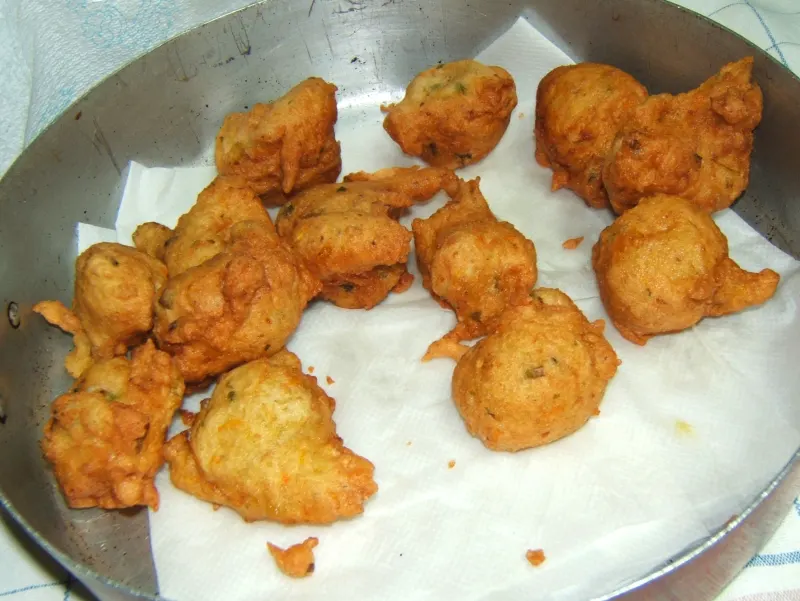
Pettole (Puglia, Italy). Little balls of wet, yeasted dough fried until puffed and golden, then eaten hot with honey, vincotto or simply a pinch of salt. In Taranto they are made for Santa Cecilia on 22 November, and across Puglia on the eve of the Immacolata and on Christmas Eve. Only four ingredients go in the dough: flour, water, yeast and salt. Our pettole recipe walks through the hand-squeezed shaping.
Buñuelos (Mexico, Colombia and Spain). Fried dough in many forms: thin crisp discs dusted with cinnamon sugar in Mexico, round cheese fritters in Colombia, small puffs in Spain. All are best warm, straight from the oil.
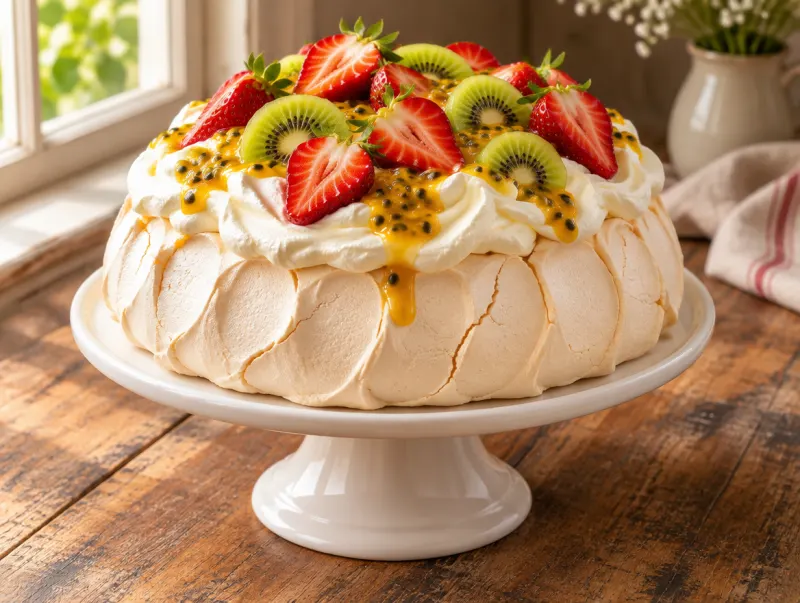
Pavlova (Australia and New Zealand). Christmas falls in summer in the southern hemisphere, so the classic dessert is light: a baked meringue with a crisp shell and a soft, marshmallow middle, topped with whipped cream and fresh fruit. The meringue can be baked the day before, but the cream and fruit go on just before serving, or it softens. Here is our pavlova recipe with a crisp shell.
Japanese Christmas cake (Japan). A light sponge layered with whipped cream and fresh strawberries. Christmas is not a religious holiday for most people in Japan, but this cake has become the Christmas treat, and it is best eaten within a day of assembling.
Christmas desserts at a glance
| Dessert | Country | Make ahead | Effort |
|---|---|---|---|
| Stollen | Germany | Up to 2-3 weeks | High |
| Christmas pudding | UK, Ireland | Weeks | Medium |
| Black cake | Caribbean | Weeks (fruit soaks longer) | Medium |
| Melomakarona | Greece | 1-2 weeks | Medium |
| Pecan pie | United States | 1-2 days | Medium |
| Sweet potato pie | American South | 1 day | Easy |
| Risalamande | Denmark | 1 day (rice base) | Easy |
| Bûche de Noël | France, Belgium | 1 day | High |
| Panettone | Italy | 2-3 days of rising | Very high |
| Pettole | Italy (Puglia) | Dough the same day | Medium |
| Buñuelos | Mexico, Colombia, Spain | Fry to serve | Medium |
| Pavlova | Australia, New Zealand | Meringue 1 day | Medium |
| Japanese Christmas cake | Japan | Same day | Medium |
How to build a global Christmas dessert table
You do not need fourteen desserts. Three, chosen from different columns of the table above, is plenty and keeps Christmas Day calm. To match them to a main course, see our guide to Christmas food around the world.
- One keeper, made weeks ahead. Stollen, melomakarona or a Christmas pudding. It is done before December gets busy, and it covers visitors over the whole holiday.
- One make-the-day-before. A pecan pie, a sweet potato pie or the meringue of a pavlova. Bake it on the 23rd or 24th and forget about it.
- One fresh, shared moment. Fry pettole after dinner or top the pavlova at the table. This is the dessert people remember.
Balance rich and light, too. A heavy pudding or a nut pie sits well next to something fresh: a fruit-topped pavlova or a bowl of cold risalamande with cherry sauce. If you are cooking for a crowd that does not drink, choose desserts where the alcohol is optional, such as pecan pie or bûche de Noël, rather than a rum-soaked cake.
If you want a dessert that is not strictly Christmassy but feeds a crowd with no oven at all, Italian tiramisu is made the day before and only gets better overnight.
FAQ
What is the most popular Christmas dessert in the world?
There is no single answer, because every country has its own. Some of the most widely known are German stollen, British Christmas pudding, the French bûche de Noël and Italian panettone, and in Australia and New Zealand, pavlova.
What desserts are eaten at Christmas in Italy?
Panettone and pandoro are the national favourites, usually bought. Regions have their own homemade sweets: in Puglia, families fry pettole for the Immacolata and Christmas Eve, and in Naples struffoli, small fried dough balls in honey, are piled onto plates.
What Christmas desserts can be made ahead?
Stollen, Christmas pudding, Caribbean black cake and Greek melomakarona keep for weeks. Pecan pie, sweet potato pie, risalamande and the sponge for a bûche de Noël can be made a day or two before.
Why do so many Christmas desserts use dried fruit?
Dried fruit, sugar and spirits keep well, so desserts made from them could be prepared ahead of winter feasts and stored for weeks. That is why stollen, Christmas pudding and black cake are all rich, fruit-packed and long-lasting.
What is a Christmas dessert in a hot country?
In Australia and New Zealand, where Christmas is in summer, pavlova topped with cream and fresh fruit is the classic. Cold desserts such as trifle and ice cream puddings are popular there too.
 Italy
 Australia
 United States