
Pettole Recipe: Fried Dough Balls from Puglia (Pettole Pugliesi)
 Italy
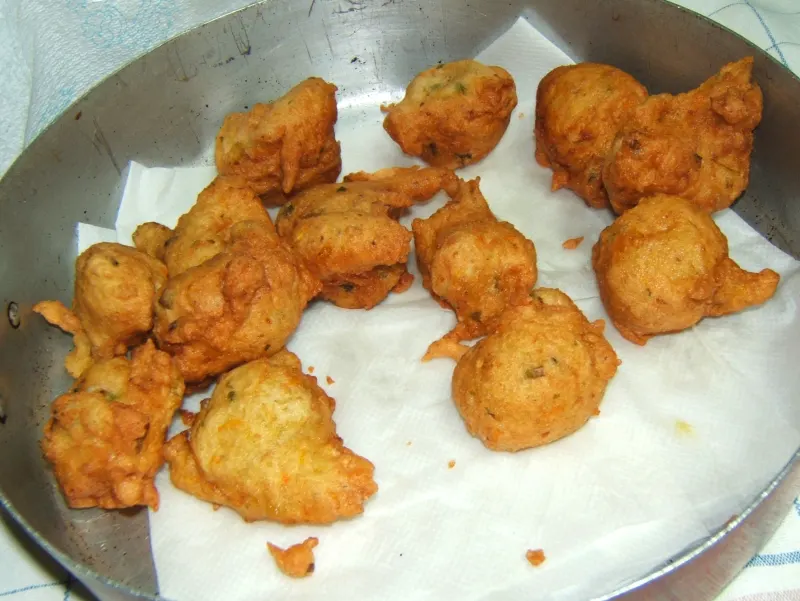
Pettole are small balls of soft, yeasted dough fried until puffed and golden, crisp outside and full of holes inside. In Puglia they open the Christmas season: in Taranto families fry them on the morning of Santa Cecilia, 22 November, and across the region they are eaten on the eve of the Immacolata and on Christmas Eve. In Salento they are called pittule.
Prep 20 min · Cook 30 min · Street food
Method
- Step 1 of 8 · 10 min
Wake up the yeast
Stir the yeast and sugar into about 100 ml of the lukewarm water and leave it for 10 minutes, until it looks foamy on top. If nothing happens, the water was too hot or the yeast is old; start again with fresh yeast.
You needlukewarm wateractive dry yeastsugar - Step 2 of 8
Mix a wet dough
Put the flour in a large bowl and pour in the yeast mixture and most of the remaining lukewarm water. Stir with a wooden spoon, then add the salt and the last of the water. The dough should be very soft and sticky, much wetter than bread dough.
You needplain flourlukewarm wateractive dry yeastfine saltsalt - Step 3 of 8 · 10 min
Beat the dough
Beat the dough with one hand or the spoon for about 10 minutes, lifting it and slapping it back into the bowl. It will go from lumpy to smooth, glossy and stretchy, pulling away from the bowl in long strands. Add a splash more water if it feels stiff.
You needlukewarm water - Step 4 of 8 · 2 h
Let it rise
Cover the bowl with cling film and a towel and leave the dough somewhere warm, away from draughts, for about 2 hours. It is ready when it has at least doubled and the surface is full of bubbles.
- Step 5 of 8
Heat the oil
Pour the sunflower or peanut oil into a deep, heavy pan to a depth of about 6 cm and heat it to 170-175 °C. Without a thermometer, drop in a tiny piece of dough: it should sink, then rise at once and sizzle steadily.
You needsunflower or peanut oil - Step 6 of 8
Shape and drop the pettole
Wet one hand and a tablespoon in a glass of water. Take a handful of dough, close your fist and squeeze a walnut-sized ball out between thumb and index finger. Scoop it off with the wet spoon and slide it into the oil. Fry 6 to 8 at a time.
You needlukewarm watersunflower or peanut oil - Step 7 of 8 · 4 min
Fry until golden
Fry the pettole, turning them with a slotted spoon, until puffed and evenly golden brown all over. They often turn themselves once the underside is done. Keep the oil steady; if they brown in under a minute the oil is too hot and the inside will stay raw.
You needsunflower or peanut oil - Step 8 of 8
Drain and serve hot
Lift the pettole onto paper towels to drain. For savoury pettole sprinkle them with salt straight away; for sweet ones drizzle with warm honey or vincotto. Fry the rest of the dough the same way and serve while still hot.
You needfine saltsalthoney
About this dish
The Taranto version is the plainest and, for many, the best: only flour, water, yeast and salt. There is no egg, milk or potato. The secret is a very wet, sticky dough, almost a thick batter, that rises until it doubles and turns bubbly. That high water content is what makes the inside light rather than bready.
This recipe makes about 40 pettole. Shaping takes a little practice: you squeeze a walnut-sized piece of dough out of your fist and drop it into the hot oil with a spoon. Irregular shapes are normal. Eat them hot, sprinkled with salt or drizzled with honey.
Tips
- Keep the dough wet. A dough you can knead on a board gives heavy, bready pettole; it should be too sticky to handle without wet hands.
- Do not skip the beating. Ten minutes of slapping the dough builds the stretch that traps air and gives the open, honeycomb inside.
- Dip your hand and spoon in water before every pettola so the dough slides off cleanly into the oil.
- Fry a test pettola first and break it open. If the centre is doughy, lower the heat slightly and fry a little longer.
- Pettole are at their best within minutes of frying. Have everyone at the table before you start.
Variations
- Pittule salentine: in Salento the same dough is often filled with small pieces of cauliflower, black olives, anchovy, salt cod or capers, folded in just before frying.
- Potato pettole: some families in Bari and elsewhere add a boiled, mashed potato to the dough for an even softer inside.
- Sweet pettole: roll the hot pettole in sugar, or a mix of sugar and cinnamon, instead of honey.
- Overnight rise: use only 3 g of dry yeast and let the dough rise slowly for 8 to 10 hours in a cool room.
Storing and reheating
Pettole are best eaten fresh and hot. Leftovers keep for a day in a paper bag at room temperature; reheat them in a 180 °C oven for 5 minutes to bring back some crispness. Unfried dough does not keep well once it has risen.
What to serve with it
- honey or vincotto
- a sprinkle of salt
- baccalà and other Christmas Eve fish dishes
- a glass of Primitivo or Negroamaro
Questions
What are pettole in English?
Pettole are fried yeasted dough balls from Puglia in southern Italy. In English they are usually described as Italian fried dough balls or Apulian doughnuts, although they contain no egg or sugar in the dough and are eaten salted as well as sweet.
When are pettole eaten in Puglia?
In Taranto pettole are made on the morning of Santa Cecilia, 22 November, which opens the Christmas season there. Across Puglia they are also fried for the eve of the Immacolata on 7 December, for Christmas Eve, and in some towns for San Martino.
Why are my pettole heavy or raw inside?
Usually the dough was too dry, did not rise enough, or the oil was too hot. Make a very wet dough, let it at least double, and fry at about 170-175 °C so the pettole puff and cook through before the outside browns.
What is the difference between pettole and zeppole?
Both are Southern Italian fried doughs, and the names overlap from town to town. Pettole are made from a simple wet yeast dough dropped by hand into the oil. Zeppole often means a choux-style or ring-shaped pastry, such as the zeppole of San Giuseppe.
Are pettole vegan?
The plain Taranto pettole are vegan: flour, water, yeast, salt and frying oil. Only the honey topping is not, so for a vegan version serve them with a sprinkle of salt, sugar or vincotto instead.