

What Can I Make With These Ingredients? A 5-Step Method
Start by sorting, not searching
Most people open the fridge, see fifteen unrelated things and type the whole list into a search box. The results are usually long roundups of pantry recipes that assume a pantry you do not have.
It is faster to sort first. Put everything you could cook with tonight into four groups. It takes two minutes and can be done in your head.
| Group | What goes in it | Examples |
|---|---|---|
| Base | The filling part of the meal | Rice, pasta, bread, potatoes, couscous, bulgur, flour |
| Protein | What makes it a dinner | Eggs, chicken, minced meat, chickpeas, lentils, cheese, canned fish |
| Vegetables | Fresh first, then frozen or canned | Tomatoes, onions, peppers, spinach, cabbage, carrots |
| Flavour | Small amounts that decide the cuisine | Garlic, lemon, spices, herbs, soy sauce, tomato paste, yogurt |
A meal needs something from at least three of the four groups. If one group is empty, that is your real shopping list, and it is usually one or two items instead of a full trip.
Pick the ingredient that has to go first
Do not try to use everything. Choose one ingredient to build the meal around, and choose it by how soon it will be wasted.
- Use today: fresh meat or fish near its date, soft herbs, salad leaves, ripe tomatoes, opened cream.
- Use this week: eggs, peppers, zucchini, cooked rice or cooked beans in the fridge, yogurt, most cheese.
- Can wait: onions, carrots, cabbage, potatoes, anything dried, canned or frozen.
Whatever is in the first row is tonight's main ingredient. Things in the last row are support: they will still be there next week.
If you are ever unsure whether something is still safe, especially meat, fish or cooked rice, do not build a dinner around it. Throwing it away costs less than the meal going wrong.
Match it to a dish pattern
Home cooking around the world rests on a small number of patterns. Once you know which one your ingredients fit, the question changes from "what can I make?" to "which version of this do I want?".
| If you have | The pattern | A tested recipe |
|---|---|---|
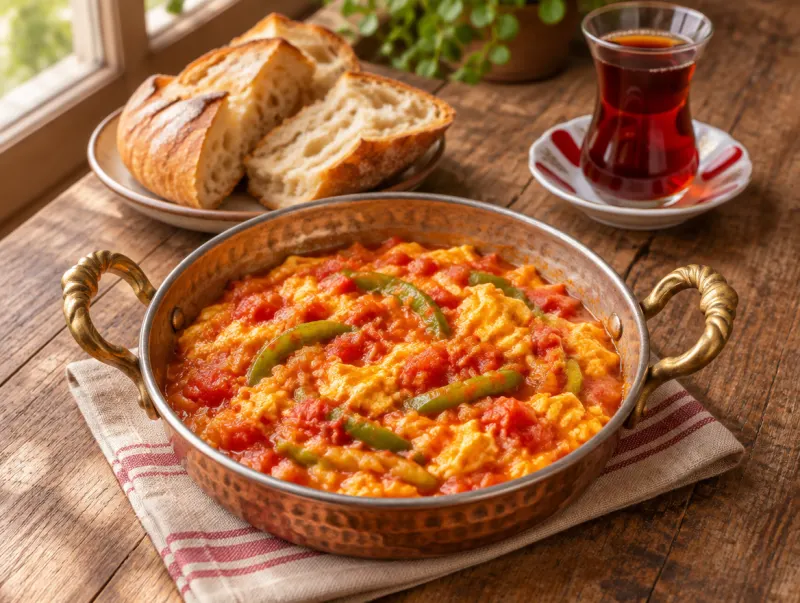
| Eggs, tomatoes, onion, peppers | Eggs cooked in sauce | Shakshuka or menemen |
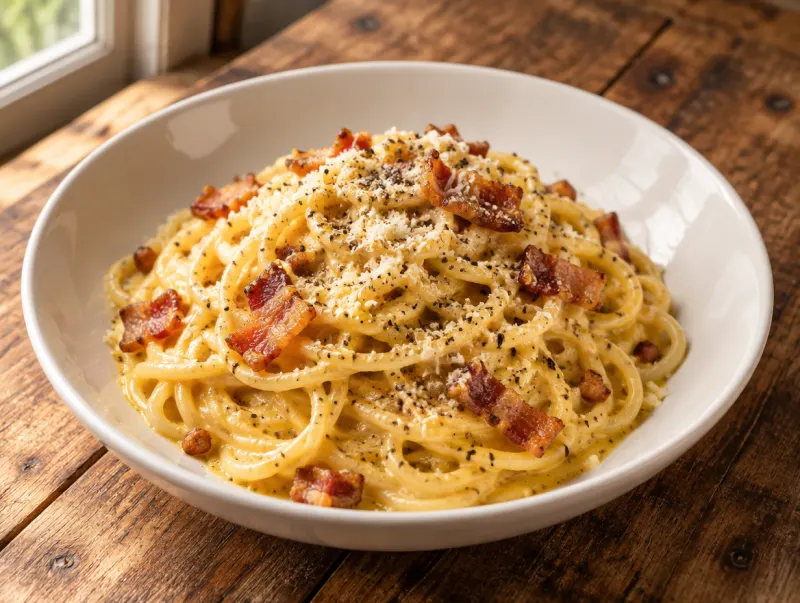
| Pasta, eggs, hard cheese, cured pork | Pasta with an egg sauce | Spaghetti carbonara |
| Rice, eggs, mixed vegetables, a little beef | Rice bowl with toppings | Bibimbap |
| Chicken pieces, soy sauce, vinegar, garlic | Braise served over rice | Chicken adobo |
| Rice, tomatoes, peppers, onion | One-pot seasoned rice | Jollof rice |
| Lentils, chickpeas, tomatoes, herbs | Thick soup | Harira |
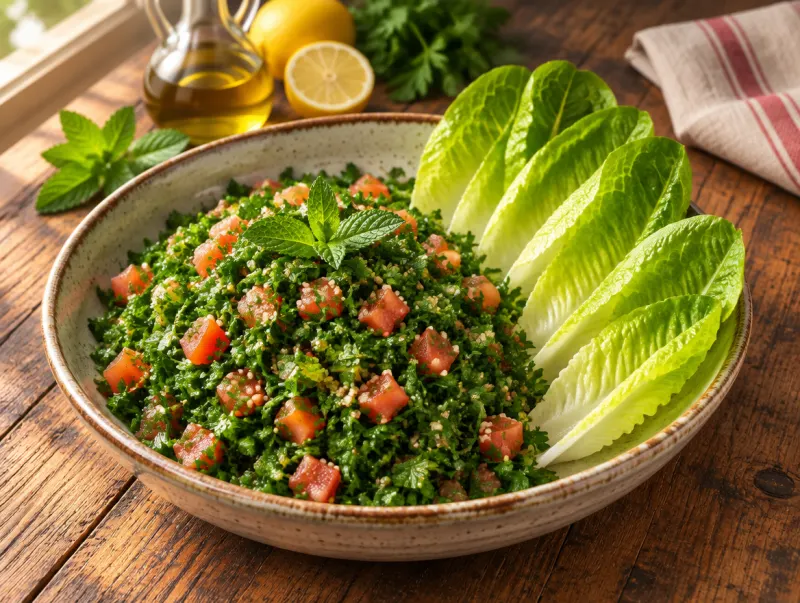
| Parsley, tomatoes, lemon, bulgur | Herb salad | Tabbouleh |
| Chicken, yogurt, tomatoes, butter, spices | Marinated chicken in sauce | Butter chicken |
| Spinach, onion, a firm fresh cheese | Greens in a spiced sauce | Palak paneer |
| Flour, yeast, canned tomatoes, mozzarella | Flatbread with toppings | Margherita pizza |
Eggs and tomatoes are the most common starting point, and they are also the fastest. On this site menemen takes about 30 minutes from start to finish and shakshuka about 45, and both use ingredients most kitchens already hold.

Check a real recipe before you start
A pattern tells you the kind of dish. A recipe tells you the amounts, the order and the times, and that is where dinners are won or lost.
There are two ways to get one. You can ask a chatbot to write a recipe around your list, which is quick but untested, as explained in our guide to the AI recipe generator from ingredients. Or you can match your ingredients against recipes that have already been written and cooked.
The What can I cook? page on Srbiny is the second kind. Tick the ingredients you have and it lists the recipes on this site that use them, along with what each one is still missing. It is a plain ingredient match, not AI, and it is free. If you already know your main ingredient, the ingredient pages go straight to the list, for example eggs, chicken, chickpeas, rice and tomatoes.
Whichever route you take, read the recipe to the end before turning on the heat. Look for two things: an ingredient you assumed you had but do not, and a long wait hidden in the middle, such as a marinade or a dough that needs to rise.
When you are one ingredient short
A missing ingredient does not always mean a different dinner. Ask what job it does in the dish, then look for something in your kitchen that does the same job.
| Missing | Its job | What usually works |
|---|---|---|
| Fresh tomatoes | Body and acidity in a sauce | Canned tomatoes |
| Lemon juice | Sharpness at the end | A mild vinegar, used sparingly |
| Fresh herbs for cooking | Background flavour | A smaller amount of dried herbs, added earlier |
| Double cream in a sauce | Richness | Whole-milk yogurt stirred in off the heat |
| Stock | Savoury depth | Water with extra onion, garlic and salt |
| A named chili | Heat | Any chili you have, added a little at a time |
Some things cannot be swapped. Falafel needs dried chickpeas that have been soaked, not canned ones, or it falls apart in the oil. Carbonara is not carbonara with cream. And in baking, amounts and ingredients matter far more than in a stew: a pavlova is a good use for six leftover egg whites, but the sugar and the low oven are not negotiable.
A useful rule: swap freely in soups, braises, rice dishes and salads. Follow the recipe closely for doughs, batters, meringues and anything deep-fried.
A worked example
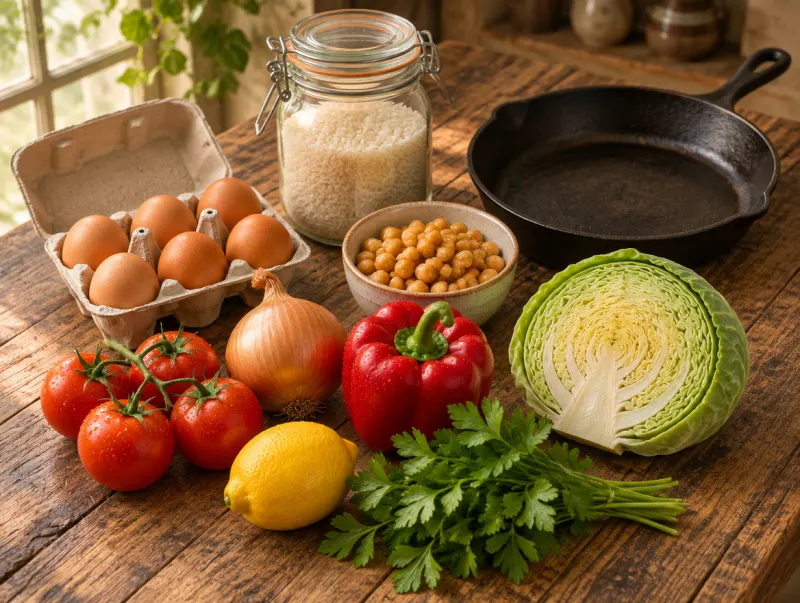
Say the kitchen holds eggs, two ripe tomatoes, an onion, half a cabbage, rice, a can of chickpeas, a lemon and some parsley.
- Sort. Base: rice. Protein: eggs, chickpeas. Vegetables: tomatoes, onion, cabbage. Flavour: lemon, parsley.
- Pick. The tomatoes are ripe and the parsley will wilt, so they go first. The cabbage and the can will keep.
- Match. Eggs, tomatoes and onion fit the eggs-in-sauce pattern.
- Check. A menemen recipe calls for green peppers, which are missing. Shakshuka wants peppers too, plus garlic and paprika.
- Decide. Buy peppers on the way home, or cook the tomato and onion base without them, finish with the parsley and serve it over the rice. The chickpeas and cabbage wait for tomorrow.
One item to buy, nothing wasted, and dinner is settled in a few minutes.
FAQ
Is there a website where I can enter ingredients and get recipes?
Yes. Ingredient finders let you select what you have and return recipes that use it. Srbiny's free What can I cook? page does this with the recipes on this site and shows what each dish is still missing. It is an ingredient match, not AI.
What can I make with these ingredients for dinner if I have very little?
Start with eggs or a can of beans or chickpeas as the protein, add any onion and tomato you have, and serve it with rice, bread or pasta. Eggs cooked in a tomato sauce, a simple bean soup and fried rice all work with five or six ingredients.
Can AI tell me what to make with my ingredients?
A chatbot can suggest dishes and write a recipe for your exact list in seconds. The recipe has not been cooked by anyone, so check the amounts, times and food safety yourself. It is often safer to ask it only for dish names, then cook from a tested recipe.
How many ingredients do I need to make a proper meal?
Fewer than most people think. A base, a protein, one or two vegetables and something for flavour are enough, and salt, oil and an onion carry a lot of dishes. Many classic home meals use under ten ingredients.
What should I always keep at home so I can cook from what I have?
Things that keep and fit many patterns: rice or pasta, eggs, onions, garlic, canned tomatoes, canned or dried chickpeas or lentils, oil, a lemon or vinegar, and two or three spices you like. With those, most fresh ingredients can be turned into dinner.
 Tunisia
 Turkey
 Italy
 Lebanon