
Authentic Korean Bibimbap Recipe with Gochujang Sauce
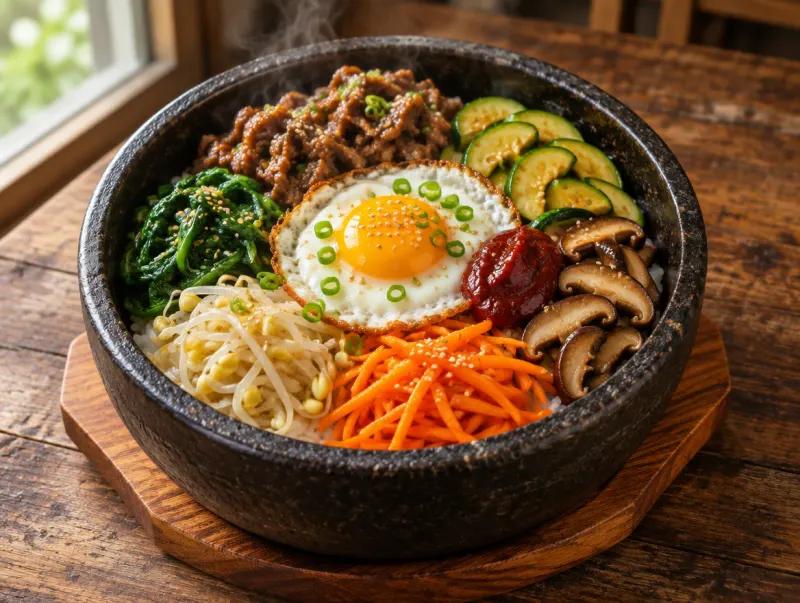
Bibimbap means mixed rice in Korean, and that is exactly how it is eaten. A bowl of warm short-grain rice is topped with neat piles of seasoned vegetables, called namul, a little stir-fried beef and a fried egg. At the table you add gochujang sauce and stir everything together until every grain is coated.
Prep 30 min · Cook 40 min · Main
Method
- Step 1 of 9 · 25 min
Cook the rice
Rinse the rice in several changes of cold water until it runs nearly clear, then drain. Put it in a heavy pot with 480 ml water and bring to a boil. Cover, turn the heat to the lowest setting and cook for 15 minutes, then rest off the heat, covered, for 10 minutes.
You needshort-grain white ricewater - Step 2 of 9 · 15 min
Marinate the beef
Toss the beef with 1.5 tbsp soy sauce, 2 tsp sugar, 1 grated garlic clove and 1 tsp sesame oil. Leave it to marinate while you prepare the vegetables, at least 15 minutes.
You needbeef ribeye or sirloinsoy saucesugargarlictoasted sesame oilneutral oil - Step 3 of 9
Mix the sauce
Stir together the gochujang, rice vinegar, 1 tbsp sesame oil, 2 tsp sugar, 1 grated garlic clove, 1 tsp sesame seeds and 1 tbsp water until smooth and glossy. Taste and add a little more sugar if your gochujang is very salty.
You needshort-grain white ricewatersoy saucesugargarlictoasted sesame oilneutral oilgochujangrice vinegar - Step 4 of 9
Blanch the spinach
Bring a pot of salted water to a boil. Blanch the spinach for 30 seconds, just until wilted, then cool it in cold water and squeeze out as much water as you can. Cut it into short lengths and season with 1 grated garlic clove, 1 tsp sesame oil, 1 tsp sesame seeds and a pinch of salt.
You needwatergarlictoasted sesame oilspinachneutral oilsalttoasted sesame seeds - Step 5 of 9 · 5 min
Cook the sprouts
Boil the soybean sprouts in the same water for 5 minutes with the lid on, until they lose their raw, beany smell; mung bean sprouts need only 1 minute. Drain, cool briefly and season with the last garlic clove, 1 tsp sesame oil, 1 tsp sesame seeds and salt.
You needwatergarlictoasted sesame oilsoybean sproutsneutral oilsalttoasted sesame seeds - Step 6 of 9
Sauté the vegetables
Heat 1 tsp oil in a frying pan over medium-high heat and cook the carrot with a pinch of salt for 1 to 2 minutes until just tender. Set aside. Repeat with the courgette, then cook the shiitake in 1 tsp oil with 1.5 tsp soy sauce for 2 to 3 minutes until glossy.
You needsoy saucetoasted sesame oilcarrotcourgettefresh shiitake mushroomsneutral oilsalt - Step 7 of 9
Cook the beef
Turn the heat to high, add 1 tsp oil and stir-fry the beef for 2 to 3 minutes, until browned with no pink left and the marinade has cooked down to a glaze.
You needbeef ribeye or sirlointoasted sesame oilneutral oil - Step 8 of 9
Fry the eggs
Wipe the pan, heat the remaining oil over medium heat and fry the eggs for 2 to 3 minutes, until the whites are set with crisp edges and the yolks are still runny. Season each with a little salt.
You needtoasted sesame oilneutral oileggssalt - Step 9 of 9
Assemble and mix
Divide the warm rice between four wide bowls. Arrange the spinach, sprouts, carrot, courgette, mushrooms and beef in separate piles around the top, set an egg in the middle and sprinkle with the remaining sesame seeds. Serve with the sauce, and mix everything together before eating.
You needshort-grain white ricebeef ribeye or sirloinsoy saucespinachsoybean sproutscarrotcourgettefresh shiitake mushroomstoasted sesame seeds
About this dish
It is a true home dish in Korea, a way of turning side dishes and leftovers into a complete meal, and it is also served in restaurants across the country. The city of Jeonju is especially known for its version.
Each topping is seasoned and cooked on its own, so it keeps its own taste and texture. It looks like a lot of steps, but each takes only a few minutes, you can cook everything in one pan, and the toppings can be made a day ahead.
Tips
- Squeeze the spinach really well. Watery namul dilutes the sauce and makes the rice soggy.
- Cook the vegetables in order from lightest to darkest so you never need to wash the pan between them.
- Leftover rice works well; warm it in the microwave with a splash of water before topping.
- Gochujang brands vary a lot in heat and salt, so always taste the sauce before serving.
Variations
- Dolsot bibimbap: heat a stone or cast-iron bowl, brush with sesame oil, add the rice and toppings and cook over medium heat until the rice crackles and forms a golden crust.
- Vegetarian bibimbap: replace the beef with pan-fried firm tofu seasoned the same way.
- Add other namul you have on hand, such as fernbrake, radish, cucumber or bellflower root, and a few strips of toasted seaweed.
Storing and reheating
Keep the toppings and rice separately in the fridge for up to 3 days; the sauce keeps 2 weeks. Reheat the rice and beef until steaming, let the vegetables come to room temperature, and fry a fresh egg.
What to serve with it
- Kimchi
- A light soup such as doenjang guk or seaweed soup
- Pickled radish
Questions
What is bibimbap sauce made of?
The usual sauce is gochujang thinned and balanced with sesame oil, sugar, garlic, a little rice vinegar and water, plus sesame seeds. Some families serve it with soy sauce or a soybean paste sauce instead.
Is bibimbap spicy?
Only as spicy as you make it. The toppings are mild, and the heat comes from the gochujang sauce, which you add at the table. Use a small spoonful for gentle heat, or more if you like it hot.
What is the difference between bibimbap and dolsot bibimbap?
Dolsot bibimbap is served in a very hot stone bowl, so the rice touching the bowl turns into a crisp, golden crust while you eat. Regular bibimbap is served in an ordinary bowl and stays soft.
Can I make bibimbap ahead of time?
Yes. The namul, beef and sauce can be made a day ahead and kept in the fridge. Cook the rice and fry the eggs just before serving so the bowl is warm.