
Gremolata Recipe: Classic Italian Parsley, Lemon and Garlic
 Italy
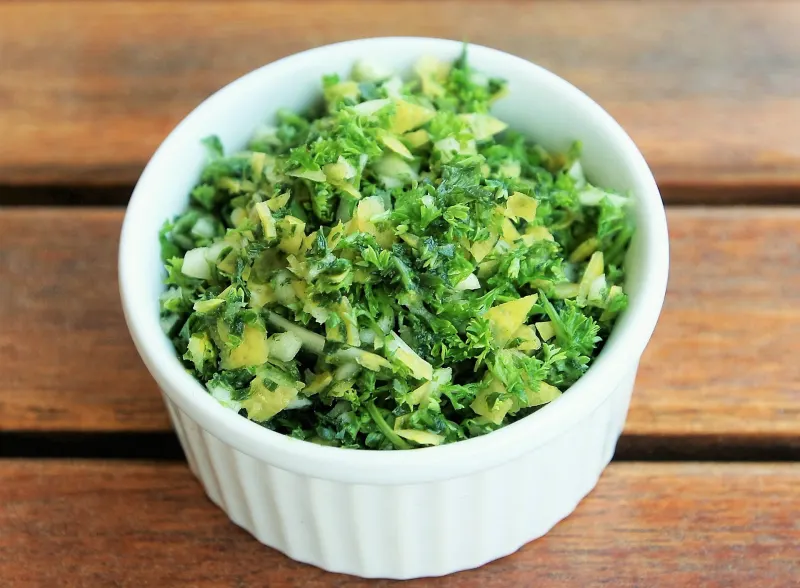
Gremolata is a fresh, uncooked garnish from Lombardy made from three things: flat-leaf parsley, lemon zest and raw garlic, chopped together until fine. In Milan it is the classic finish for osso buco alla milanese, scattered over the braised veal shanks just before they reach the table, where its sharp, green brightness cuts through the rich sauce.
Prep 10 min · Cook 0 min · Sauce
Method
- Step 1 of 7
Wash and dry the parsley
Rinse the parsley in cold water and dry it very well in a salad spinner or rolled in a clean towel. Wet parsley turns into a dark, mushy paste under the knife, while dry leaves chop into a light, fluffy mince.
You needfresh flat-leaf parsley - Step 2 of 7
Pick the leaves
Pull the parsley leaves and the thin, tender stems away from the thick lower stalks. Keep the thick stalks for stock. You should have a loose pile of leaves weighing about 30 g.
You needfresh flat-leaf parsley - Step 3 of 7
Zest the lemon
Wash and dry the lemon, then grate only the yellow zest on a fine grater, turning the fruit as you go. Stop when you see white pith, which is bitter. One large lemon gives about a tablespoon of zest.
You needunwaxed lemon - Step 4 of 7
Mince the garlic
Peel the garlic clove, cut it in half and remove any green shoot in the centre. Chop the garlic very finely, then press it with the side of the knife blade and a pinch of the salt into a rough paste.
You needgarlicflaky sea salt - Step 5 of 7
Chop the parsley
Gather the parsley leaves into a tight bundle and slice them with a sharp knife, then rock the knife back and forth over the pile until the parsley is finely and evenly chopped. A sharp blade cuts cleanly instead of bruising the leaves.
You needfresh flat-leaf parsley - Step 6 of 7
Chop everything together
Scatter the lemon zest and garlic over the parsley and chop through the pile for another minute, folding it over itself with the knife. This spreads the garlic and lemon oils through the parsley so every pinch tastes the same.
You needfresh flat-leaf parsleyunwaxed lemongarlicextra virgin olive oil - Step 7 of 7
Season and serve
Tip the gremolata into a small bowl and taste it. Add the black pepper if you like, and stir in the olive oil only if you want a spoonable version. Scatter it over osso buco or other hot food right at the table.
You needfreshly ground black pepperextra virgin olive oil
About this dish
The classic version has no oil, no cheese and no breadcrumbs. It is a dry, fluffy mince, not a sauce like pesto or salsa verde. What makes it work is balance: plenty of parsley, the zest of one whole lemon, and garlic used with a light hand so it lifts the dish rather than taking over.
This recipe makes enough to finish four portions of osso buco, a whole roast fish or a couple of steaks. It takes about ten minutes with a sharp knife and is best made just before serving, while the lemon oils and parsley are at their most fragrant.
Tips
- Use flat-leaf parsley, not curly. It has more flavour and chops into a softer, less fibrous mince.
- Make it within an hour of serving. The lemon zest and garlic lose their fresh edge quickly and the parsley starts to darken.
- Add gremolata at the very end. Cooking it dulls the colour and the raw garlic and lemon bite that you want.
- If raw garlic is too sharp for you, rub the cut clove over the board before chopping instead of mincing it in.
Variations
- Lemon and orange: use half lemon zest and half orange zest for lamb or duck.
- Looser version: add the olive oil and a squeeze of lemon juice for a bright, spoonable sauce to drizzle over grilled fish or steak.
- Breadcrumb gremolata: toss the mix with toasted breadcrumbs fried in olive oil for a crunchy topping on pasta or roast vegetables.
- Herb swap: replace a quarter of the parsley with fresh mint or basil for fish and summer vegetables.
Storing and reheating
Gremolata is best eaten the day it is made. Covered in the fridge it keeps for up to 1 day, though the colour fades. The version with olive oil keeps 2 to 3 days. Do not freeze it.
What to serve with it
- Osso buco alla milanese
- Risotto alla milanese
- Grilled or baked fish
- Grilled steak and lamb
- Roast potatoes and vegetables
Questions
What is gremolata made of?
Classic gremolata is made of only three ingredients: finely chopped flat-leaf parsley, grated lemon zest and minced raw garlic. Some cooks add a pinch of salt, and modern versions sometimes add olive oil, but the traditional Milanese garnish for osso buco is dry and uncooked.
What is the difference between gremolata and chimichurri?
Gremolata is an Italian dry garnish of parsley, lemon zest and garlic. Chimichurri is an Argentine sauce that also uses parsley and garlic, but it is loosened with plenty of oil and vinegar and often seasoned with oregano and chilli flakes, so it is wet and tangy.
What do you eat gremolata with?
Its classic partner is osso buco alla milanese, the braised veal shank. It is also very good scattered over grilled or baked fish, steak, lamb, roast chicken, roast potatoes, white beans, soups and simple pasta dishes.
Can you make gremolata ahead of time?
You can chop it a few hours ahead and keep it covered in the fridge, but it is at its best when made just before serving. The lemon zest and garlic lose their fresh aroma and the parsley darkens as it sits.
Is gremolata a sauce?
Not in the classic form. Traditional gremolata is a dry, fluffy mince that is sprinkled on food, a garnish rather than a sauce. Stirring in olive oil turns it into a looser, spoonable sauce, which many modern recipes call gremolata sauce.